Side by side

Compare seeds

Pick two or three seeds to see how they grow, side by side: sprouting, spacing, sun, water, frost and pet safety in one table.

Comparing Thyme vs. Chives vs. Basil

The comparison

Thyme vs. Chives vs. Basil

Units
Growing facts for Thyme, Chives and Basil, side by side
Fact
ThymeThymus vulgaris
ChivesAllium schoenoprasum
BasilOcimum basilicum
DifficultyModerateEasyEasy
Life cyclePerennialPerennialAnnual
Germination time14–21 days7–14 days5–10 days
Germination temperature18–21 °C64–70 °F18–21 °C64–70 °F18–21 °C64–70 °F
Sowing depthNot yet verified0.5–1 cm¼–⅜ in6 mm¼ in
Spacing between plants20–30 cm8–12 inNot yet verifiedNot yet verified
SunFull sun, partial shadeFull sun, partial shadeFull sun, partial shade
ContainersYesYesYes
Frost toleranceNot yet verifiedHardyTender (no frost)
Soil pHpH 6.3Not yet verifiedpH 6.0–6.5
Toxicity to catsNon-toxicToxicNon-toxic
Toxicity to dogsNon-toxicToxicNon-toxic
Links

Up close

Meet the seeds

What each one is, in a few lines, with the full growing guide one click away.

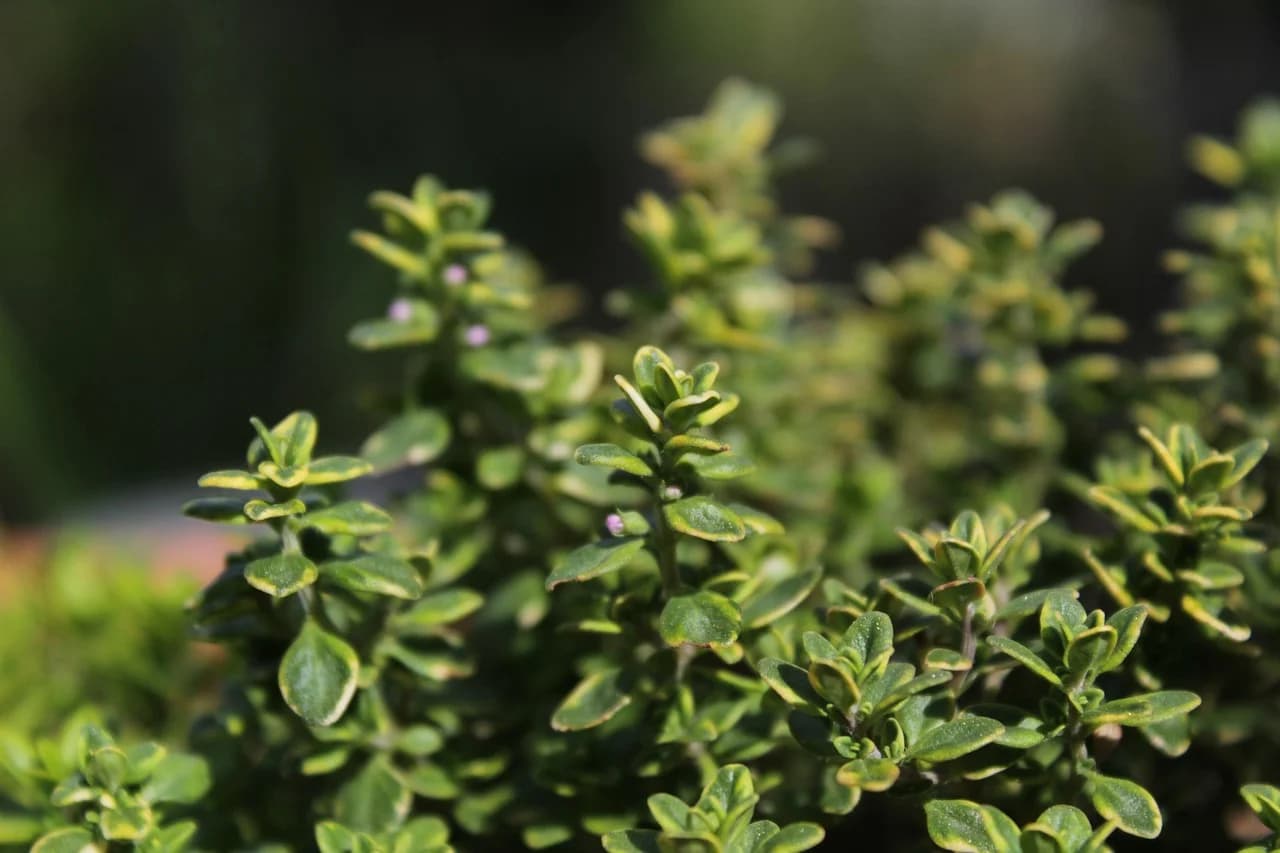
  • Thyme stems with small green leaves and tiny purple flowers against a dark blurred backgroundHerbs

    Thyme

    Thymus vulgaris

    Difficulty: ModerateGrows in pots

    Common thyme is a woody, evergreen perennial herb that forms a mound 6 to 12 inches tall in full sun. It can be started from seed, but germination is uneven, so many gardeners prefer cuttings or divisions.

    How to grow thyme
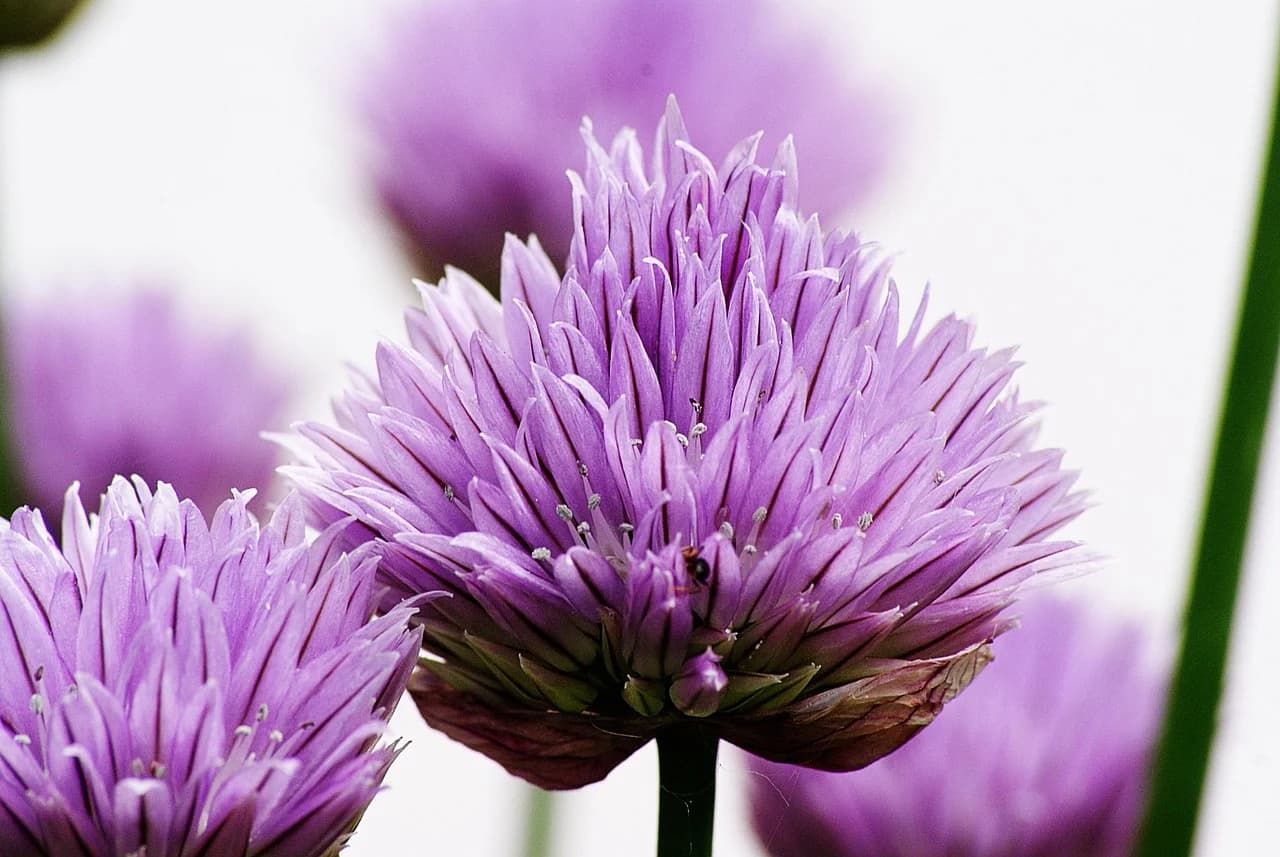
  • Chives flower heads with purple petals blooming on green stems against a white backgroundHerbs

    Chives

    Allium schoenoprasum

    Difficulty: EasyGrows in pots

    An easy, hardy perennial in the onion family with mild, onion-flavored leaves and edible flowers. Chives grow from seed or division, in pots or garden beds.

    How to grow chives
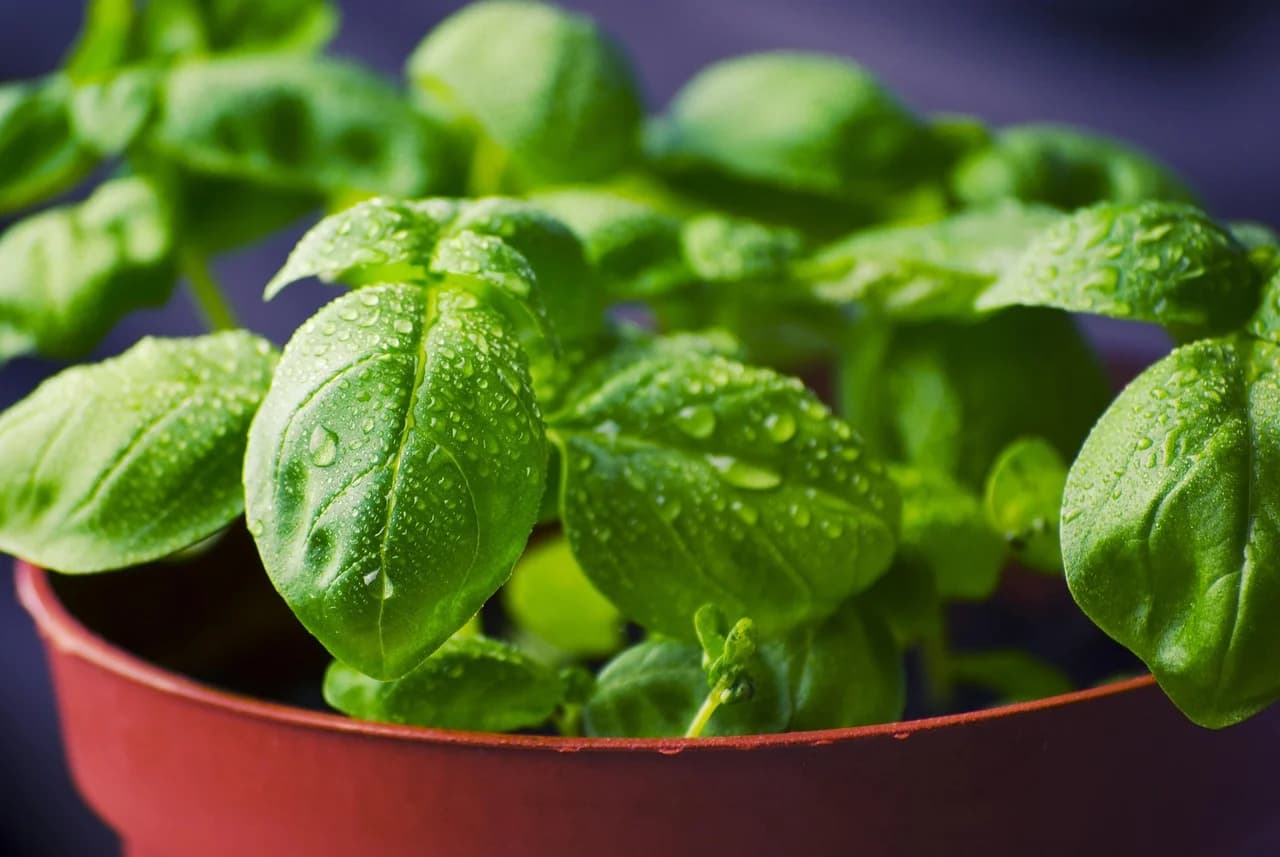
  • Basil plant with water droplets growing in a red terracotta potHerbs

    Basil

    Ocimum basilicum

    Difficulty: EasyGrows in pots

    A fragrant, warm-season herb that's easy to grow from seed and does especially well in sunny pots. Start it indoors and move it outside only after the last frost.

    How to grow basil

Keep comparing

Try another matchup

Add a third seed, or swap one for a close relative from the same category.

The table, row by row

How to read a comparison

Every row is a fact from each seed's own profile, lined up so the differences stand out.

  1. Sprouting

    Germination time and temperature

    How many days the seeds take to sprout, and the temperature range they sprout in.

  2. Sowing

    Sowing depth and spacing

    How deep to sow each seed and how far apart the plants should grow. “On the surface” means the seed isn't covered.

  3. Timing

    Days to maturity and life cycle

    How long until the plant is ready, counted from sowing or from transplanting (each value says which). Annuals live one year, biennials two, perennials longer.

  4. Light and water

    Sun and water

    Full sun means 6 or more hours of direct sun a day, partial shade a few hours. Water needs are rated low, moderate or high.

  5. Space and weather

    Containers, frost tolerance and soil pH

    Whether it grows in a pot, with the smallest pot when it's known. Frost tolerance runs from tender (no frost) to hardy. Soil pH 7 is neutral.

  6. Pets

    Toxicity to cats and dogs

    Whether the plant is toxic to cats and dogs.

Quick wins

Fastest to sprout

Days from sowing until the first shoots appear, in good conditions.

Pet friendly

Safe around cats and dogs

Listed as non-toxic to both cats and dogs. Each seed's page has the details.

Not safe for pets: borage, buckwheat, caraway, carnation and 14 more.

Comparing

Questions about comparing

How many seeds can I compare?
Two or three at a time. Pick them in the boxes at the top, or start from any seed's page with “Compare with another seed”.
Can I share a comparison?
Yes. Every comparison has its own address, like /compare-seeds/?seeds=thyme,chives, so you can copy the link from your browser and send it.
Where do the facts come from?
From each seed's profile. Every fact there is researched and reviewed by our editors before it goes live.
Can I see metric or imperial units?
Both. The table picks the units that match your browser's language, and the switch above it changes them. Your choice is remembered in this browser.
Do I need an account?
No. Comparing seeds, like every page on SeedBattle, is free and needs no account.

Found your seed?

Each seed's page explains how to grow it from seed, with facts researched and reviewed by our editors.