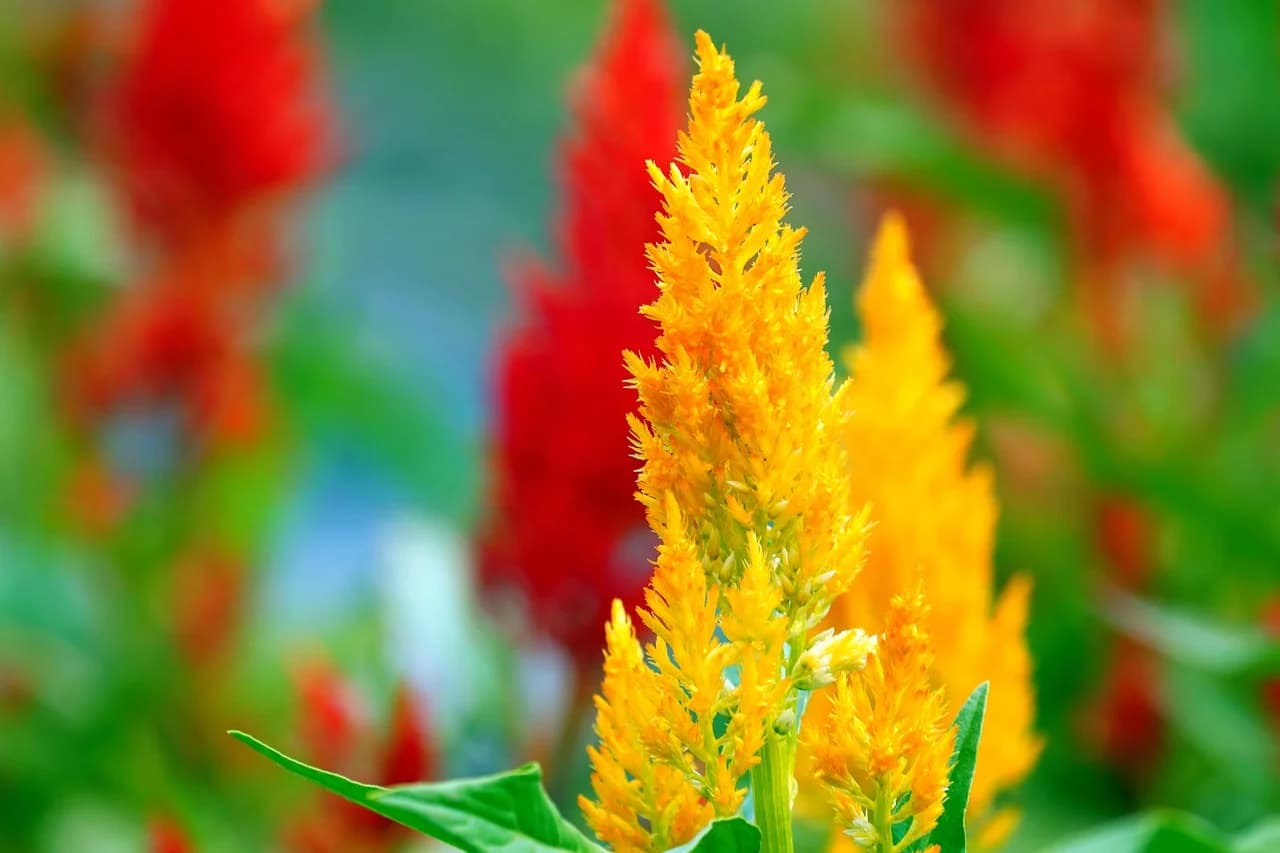
Celosia
Celosia argentea
Also called cockscomb, plumed celosia
Celosia argentea is a tropical annual with feathery, plume-like flowers that bloom until the first frost. It is easy to start from seed and grows best in full sun.
Quick facts
- Germination time
- 8–14 days
- Germination temperature
- 21–27 °C70–81 °F
- Sowing depth
- 3 mm⅛ in
- Spacing between plants
- Not yet verified
- Days to maturity
- Not yet verified
- Sun
- Full sun
Non-toxic to cats and dogs
By SeedBattle EditorsUpdated
Spotted a mistake or missing detail? Improve this page
01 · Overview
About celosia
Celosia argentea, also called cockscomb or plumed celosia, is a tropical herbaceous annual in the amaranth family that comes from Africa. Its small flowers grow in narrow, plume-like clusters in orange, red, purple and cream, and they bloom from late spring until the first frost. Some profiles describe it as an upright perennial that is usually grown as an annual. The flowers draw bees, butterflies and other pollinators.
Growing details
- Start indoors
- 4 weeks before the last frost
- Sow outdoors
- At the last frost
- Water
- Moderate
- Containers
- Yes
- Height
- Not yet verified
- Spread
- 23–30 cm9–12 in
- Frost tolerance
- Tender (no frost)
- Soil pH
- pH 6.0–8.0
- Life cycle
- Not yet verified
Sowing timeline
When to sow celosia seeds
Counted from your area's average last spring frost date. Find yours from a local weather service or garden center, then count back or forward.
- Germination time
- 8–14 days
- Germination temperature
- 21–27 °C70–81 °F
- Frost tolerance
- Tender (no frost)
02 · How to grow
How to grow celosia from seed
Start seeds indoors about 4 weeks before the last frost, in individual cells or pots rather than flats. Cover the seed very lightly, and keep it from drying out, since it can take 10 to 14 days under mist to sprout. Seed usually sprouts in 8 to 14 days when kept at 70 to 80 °F (21 to 27 °C). Grow the seedlings at 63 to 68 °F (17 to 20 °C).
You can also sow directly outdoors after the last frost, but only where the growing season is long. Sow about ⅛ inch (3 mm) deep.
Move seedlings outside when night temperatures stay above 65 to 70 °F (18 to 21 °C) and the plants have 2 to 4 leaves, about 4 weeks after sowing. Plant out after the last frost into moist but well-drained soil. Give plume types at least 24 inches (61 cm) between plants.
Plant in full sun, which means at least 6 hours of direct sun a day. Loam, sand and soil rich in organic matter all work, as long as the soil drains well.
03 · Care
Caring for celosia
Water regularly, aiming for about one inch of water each week from rain or irrigation after transplanting. Regular watering helps keep the flowers and foliage looking good. Feed with a balanced liquid fertilizer every 2 weeks.
Pinch young plants 2 weeks after transplanting to encourage more branches and flowers. Seedlings left too long in small pots become stunted and may never reach full size.
Plants can be grown in containers as well as in the ground. Deadhead spent flowers if you don’t want the plant to reseed.
At a glance
How celosia compares with other flowers
Worked out from the growing facts of the 79 seeds in Flowers on SeedBattle.
- Celosia
- Each of the other flowers
- Their average
- Germination timeAbout average
8–14 days
Average for flowers: 12 days, from 42 other seeds
- Germination temperatureWarmer than average
21–27 °C70–81 °F
Average for flowers: 21 °C70 °F, from 40 other seeds
- Sowing depthAbout average
3 mm⅛ in
Average for flowers: 4 mm⅛ in, from 25 other seeds
04 · Problems
Common celosia problems
Seedlings are vulnerable to damping-off. Green peach aphids and melon aphids can cluster on the growing tips and cause stunting or deformed flower heads. Overhead watering promotes leaf spot, so water early in the day so the foliage can dry.
Snails and slugs can be a problem, and the roots can rot in wet soil. Crowding, rain and high humidity can make the flowers rot. The plant can become weedy. Deer will browse it.
05 · Harvest
Harvesting celosia
Cut plume-type flowers when about half of the flowers are open. Leave two or three leaves on each stem to help draw water up and keep the flowers fresh. The flower heads are good for fresh and dried arrangements. To keep the colors, dry the stems rapidly.
06 · Safety
Celosia safety
The plant is listed as non-toxic for cats and dogs. Its leaves and young shoots are cooked and used in soups and stews.
Celosia questions
How long do celosia seeds take to germinate?
Celosia seeds usually sprout in 8 to 14 days when kept at 70 to 80 °F (21 to 27 °C).
When should I plant celosia seeds?
Start seeds indoors about 4 weeks before the last frost. You can also sow directly outdoors after the last frost, but only where the growing season is long.
Can I grow celosia in a pot?
Yes, the plants can be used in containers. The sources don’t state a pot size.
How much sun does celosia need?
Celosia needs full sun, which means at least 6 hours of direct sun a day.
Quick answers
More celosia questions
Short answers taken from the growing facts on this page.
How deep should I sow celosia seeds?
Sow them 3 mm⅛ in deep.
What temperature do celosia seeds need to sprout?
Celosia seeds germinate at 21–27 °C70–81 °F.
Can celosia survive frost?
No. Celosia is tender, so it can't take frost.
What soil pH does celosia need?
Aim for soil at pH 6.0–8.0.
How much water does celosia need?
Celosia has moderate water needs.
Is celosia safe for cats and dogs?
Yes. It's listed as non-toxic to cats and dogs.
Side by side
Compare celosia with…
Two seeds, every growing fact lined up, so you can pick the one that suits your space.
Flowers
More seeds like celosia
Other seeds in the Flowers category.
Find your next seed to grow
Browse all 223 seeds by sun, difficulty or pot size, or line celosia up against another seed.
