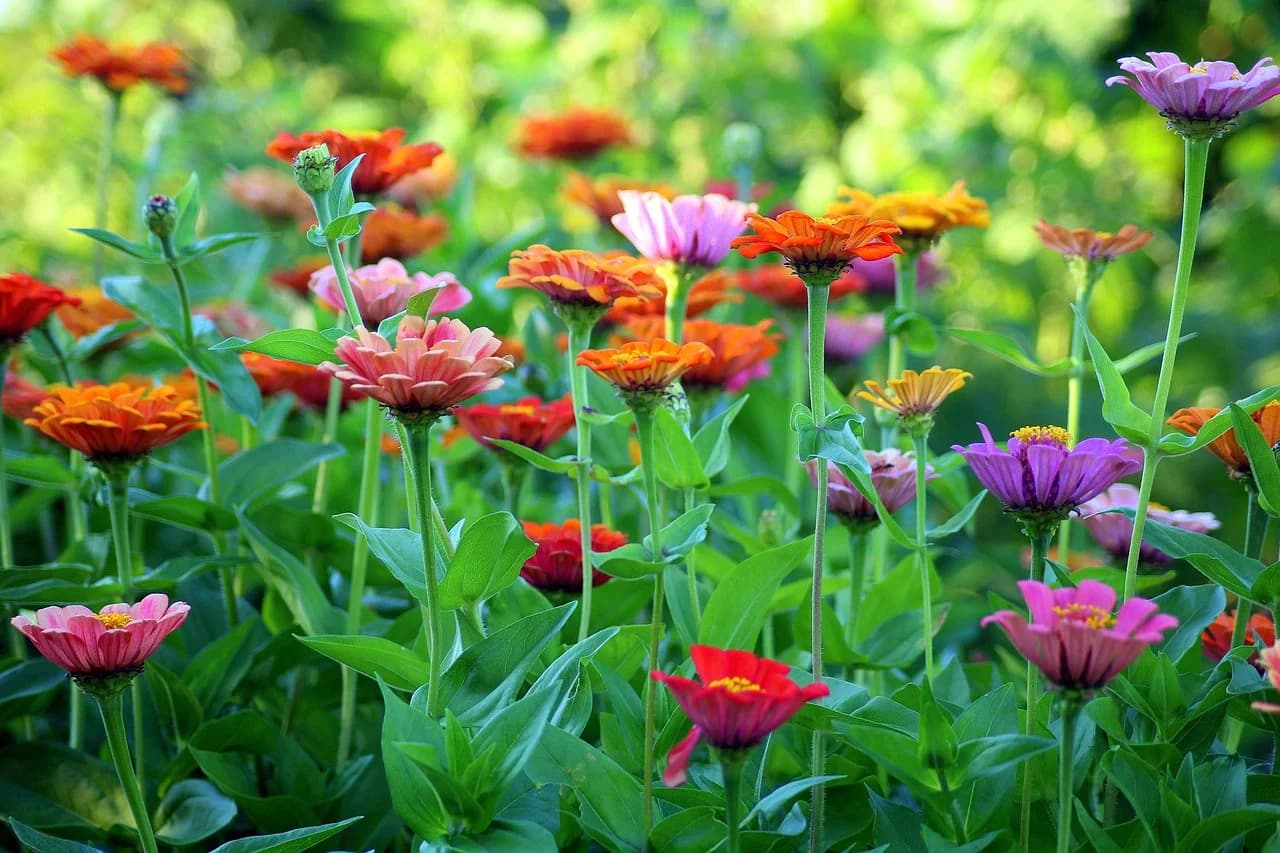
Zinnia
Zinnia elegans
Bright, easy summer annuals for borders, pots and cut flowers. Sow in warm soil after the last frost; seeds sprout within days and plants flower about 12 weeks after sowing.
Quick facts
- Germination time
- 3–7 days
- Germination temperature
- 21–29 °C70–84 °F
- Sowing depth
- 6 mm¼ in
- Spacing between plants
- Not yet verified
- Days to maturity
- 84 days from sowing
- Sun
- Full sun
Non-toxic to cats and dogs
By SeedBattle EditorsUpdated
Spotted a mistake or missing detail? Improve this page
01 · Overview
About zinnia
Zinnias (Zinnia elegans) are upright, flowering annuals in the aster family, originally from Mexico. They’re colorful, easy to grow and attract pollinators.
Height depends on the variety and on growing conditions, from dwarf bedding types about 8–10 inches (20–25 cm) tall to cut-flower varieties over 3 feet (1 m). The taller varieties make excellent cut flowers. Zinnias flower from summer into early autumn.
Growing details
- Start indoors
- Not yet verified
- Sow outdoors
- Not yet verified
- Water
- Not yet verified
- Containers
- Yes
- Height
- Not yet verified
- Spread
- 20–30 cm8–12 in
- Frost tolerance
- Not yet verified
- Soil pH
- Not yet verified
- Life cycle
- Annual
Sowing timeline
Zinnia from seed to maturity
Counted in days from the day you sow.
- Germination temperature
- 21–29 °C70–84 °F
02 · How to grow
How to grow zinnia from seed
Wait for warm weather. Zinnias can’t take cold, so sow them in spring, not autumn. Outdoors, sow seeds directly in the ground after your last frost date, about ¼ inch (6 mm) deep. For a long supply of cut flowers, sow again every 2 weeks.
Starting indoors. Sow in trays about 4 weeks before you plan to plant out, and cover the seeds. At 80–85 °F (27–29 °C) they sprout in 3 to 5 days; at 70–75 °F (21–24 °C) it takes 5 to 7 days. Don’t start too early: young plants set out while nights are still cool tend to sulk and catch diseases. Try not to let seedlings become root-bound or to disturb their roots.
Plant out after frost. Move plants outside only once all danger of frost has passed.
Sun and soil. Zinnias grow best in full sun all day; in partial shade they’re more prone to leaf spot diseases. They like fertile soil rich in organic matter and a warm, sheltered spot that drains well. In cold places or heavy soils that stay cold and wet, they struggle.
Spacing. Gardening experts space plants 9–12 inches (23–30 cm) apart, while gardening experts suggest about 12–16 inches (30–40 cm) when growing them in a block. Check your seed packet for your variety.
Pots. Zinnias grow well in containers too. Put them in a sunny spot and use a good-quality potting mix.
03 · Care
Caring for zinnia
Watering. Water zinnias in hot, dry weather, but try to keep the leaves dry, since wet foliage encourages fungal disease. Water at the base of the plants; if you do water from above, do it early in the morning so the leaves dry quickly.
Feeding. Plants in containers benefit from a high-potassium feed, such as tomato feed, once they’re in flower.
Pinching. When plants are about 8–12 inches (20–30 cm) tall, pinch out the central growing tip just above a pair of leaves. You may lose the first flower, but you’ll get more flowers in the long run.
Deadheading. When a flower starts to lose its color, cut it back to another branch so the next bud can open.
Support. Gardening experts say no support is necessary, but gardening experts suggest netting for taller varieties grown in a block.
At a glance
How zinnia compares with other flowers
Worked out from the growing facts of the 79 seeds in Flowers on SeedBattle.
- Zinnia
- Each of the other flowers
- Their average
- Germination timeSprouts sooner than average
3–7 days
Average for flowers: 12 days, from 42 other seeds
- Germination temperatureWarmer than average
21–29 °C70–84 °F
Average for flowers: 21 °C70 °F, from 40 other seeds
- Sowing depthDeeper than average
6 mm¼ in
Average for flowers: 4 mm⅛ in, from 25 other seeds
04 · Problems
Common zinnia problems
Zinnias have few insect pests, but aphids, spider mites and whiteflies can damage plants, especially in hot, dry weather. Aphids and spider mites can be hosed off with a strong stream of water. Japanese beetles may also show up, and slugs can ravage seedlings.
The main diseases are powdery mildew (a grayish-white, powdery coating), Alternaria leaf spot, bacterial leaf spot and aster yellows. Seedlings can damp off in cold, wet weather, and older plants can get gray mold (botrytis). Keeping the leaves dry and clearing away plant debris at the end of the season helps prevent problems, and some cultivars have shown good resistance to leaf spot.
Because zinnias feed many beneficial insects, gardening experts recommend using no insecticide other than insecticidal soap.
05 · Harvest
Harvesting zinnia
Cut zinnias for the vase before the flowers are completely open, once the stem feels firm from the cut up to just below the bloom. Handle them gently: the stems are hollow and crush easily, which shortens vase life. Cut zinnias last about 7 to 10 days.
Saving seed isn’t always worthwhile. Many zinnias are F1 hybrids that don’t come true from seed, and seed from plants that had leaf spot diseases can carry the disease, so don’t save it.
06 · Storage
Storing zinnia
Keep cut stems cool, at 40–50 °F (4–10 °C), but no colder: zinnias are sensitive to cold damage.
07 · Safety
Zinnia safety
Pet poison experts list zinnias as non-toxic to dogs, cats and horses, and gardening experts also tags them as non-toxic for cats and dogs.
Zinnia questions
How long do zinnia seeds take to germinate?
Only 3 to 5 days at 80–85 °F (27–29 °C), or 5 to 7 days at 70–75 °F (21–24 °C).
When should I plant zinnia seeds?
Sow them outdoors after your last frost date. Zinnias are very sensitive to frost, so if you start them indoors, plant them out only once all danger of frost has passed.
Can I grow zinnias in pots?
Yes. Give them a sunny spot and a good-quality potting mix, and feed them with a high-potassium feed such as tomato feed once they flower.
Should I pinch zinnias?
Yes. Pinching out the growing tip when plants are about 8–12 inches (20–30 cm) tall makes them branch and gives you more flowers, even if you lose the first one.
How long does it take zinnias to flower from seed?
About 12 weeks after sowing.
Quick answers
More zinnia questions
Short answers taken from the growing facts on this page.
How deep should I sow zinnia seeds?
Sow them 6 mm¼ in deep.
How much sun does zinnia need?
Zinnia grows in full sun.
What temperature do zinnia seeds need to sprout?
Zinnia seeds germinate at 21–29 °C70–84 °F.
How long does zinnia take to mature?
Zinnia takes 84 days from sowing to mature.
Is zinnia an annual or a perennial?
Zinnia is an annual.
Is zinnia safe for cats and dogs?
Yes. It's listed as non-toxic to cats and dogs.
Side by side
Compare zinnia with…
Two seeds, every growing fact lined up, so you can pick the one that suits your space.
Flowers
More seeds like zinnia
Other seeds in the Flowers category.
Find your next seed to grow
Browse all 223 seeds by sun, difficulty or pot size, or line zinnia up against another seed.