Borage
Borago officinalis
Also called starflower
Borage is an easy annual herb grown from seed in full sun. Its cucumber-flavored leaves and flowers should be used sparingly, and the plant is listed as toxic to dogs and cats.
Quick facts
- Germination time
- 7–14 days
- Germination temperature
- Not yet verified
- Sowing depth
- 6 mm–1.5 cm¼–½ in
- Spacing between plants
- 30 cm12 in
- Days to maturity
- Not yet verified
- Sun
- Full sun, partial shade
Toxic to cats and dogs Read the safety notes
By SeedBattle EditorsUpdated
Spotted a mistake or missing detail? Improve this page
01 · Overview
About borage
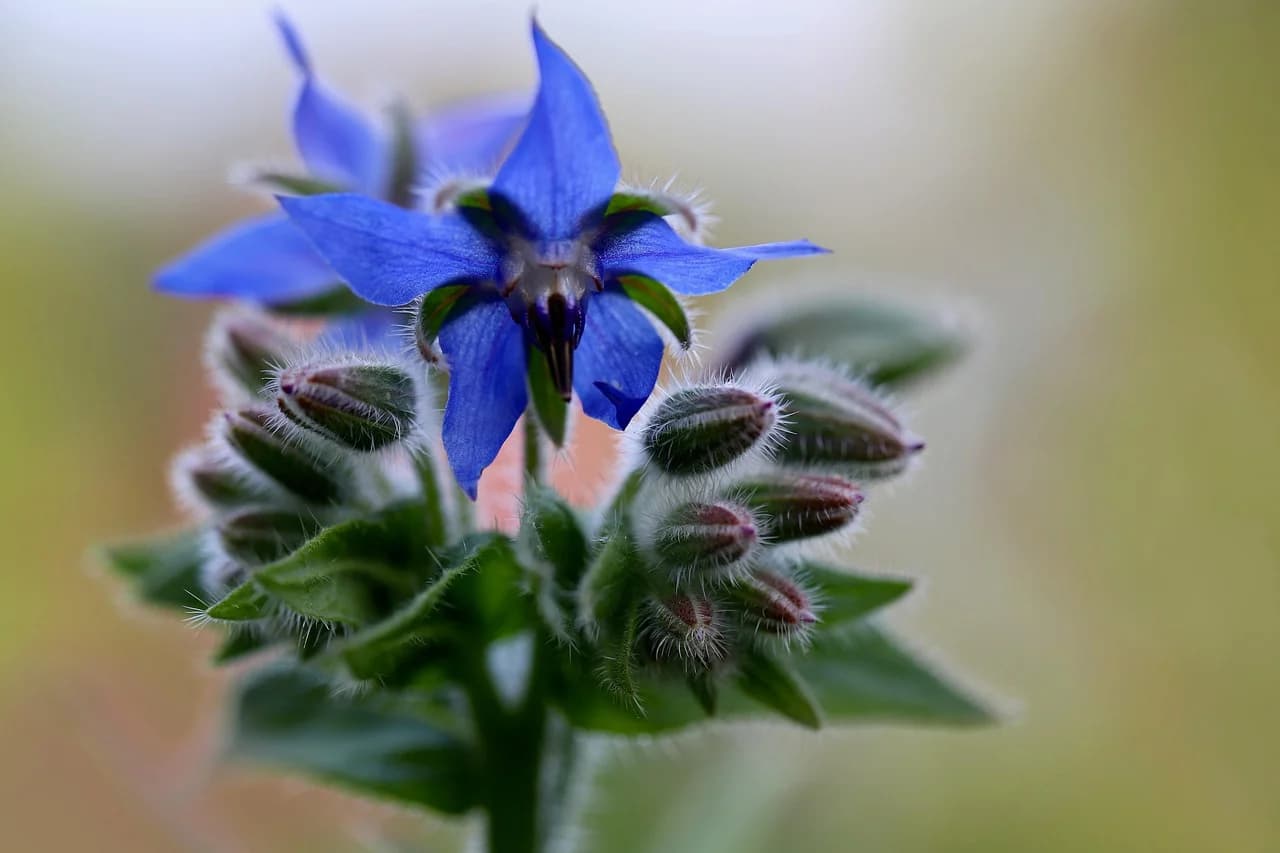
Borage is an annual herb with bright blue, star-shaped flowers and wrinkled, gray-green leaves covered in bristly hairs. It is also called starflower and is native to the Mediterranean region. The plant grows about 1 foot 7 inches to 3 feet 2 inches tall (48 to 97 cm) and about 1 foot to 1 foot 4 inches (30 to 41 cm) wide. Its stems and leaves taste and smell like cucumber, and bees and other pollinators visit its flowers.
Growing details
- Start indoors
- Not yet verified
- Sow outdoors
- At the last frost
- Water
- Low
- Containers
- Yes
- Height
- 48–97 cm1½–3 ft
- Spread
- 30–41 cm12–16 in
- Frost tolerance
- Not yet verified
- Soil pH
- Not yet verified
- Life cycle
- Annual
Sowing timeline
When to sow borage seeds
Counted from your area's average last spring frost date. Find yours from a local weather service or garden center, then count back or forward.
- Germination time
- 7–14 days
02 · How to grow
How to grow borage from seed
Sowing. Sow seeds outdoors as soon as the soil has warmed in spring, once frost is past. Cover seeds with ¼ to ½ inch (0.6 to 1.3 cm) of soil; another guide suggests about ½ inch (1 cm). Seeds usually come up in 7 to 14 days.
Spacing and succession sowing. Space plants about 12 inches (30 cm) apart. Sowing three times at four-week intervals stretches out the harvest.
Light and soil. Full sun is best, though light shade is fine; partial shade is also listed. The plant grows in any reasonably drained soil and does well in poor soil. Dry, sunny spots suit it best.
Transplanting. Borage dislikes being moved and develops a taproot, so direct sowing is recommended over transplanting.
Containers. It can be grown in containers, and the compact ‘Bianca’ variety with white flowers is noted as good for pots.
03 · Care
Caring for borage
Watering. Water well until the seeds germinate and the plants are established, then water only when the soil is dry. The plant is listed as drought tolerant.
Feeding. Feed monthly with a balanced organic fertilizer at half the recommended rate.
Pruning and staking. Cut the plant back by half in mid-summer for new growth in fall. Trimming off older flowers keeps it blooming for many weeks. Because the stems are brittle and easily damaged by wind, staking is suggested.
At a glance
How borage compares with other herbs
Worked out from the growing facts of the 30 seeds in Herbs on SeedBattle.
- Borage
- Each of the other herbs
- Their average
- Germination timeSprouts sooner than average
7–14 days
Average for herbs: 12 days, from 20 other seeds
- Sowing depthDeeper than average
6 mm–1.5 cm¼–½ in
Average for herbs: 5 mm¼ in, from 16 other seeds
- Spacing between plantsCloser than average
30 cm12 in
Average for herbs: 34 cm14 in, from 13 other seeds
- HeightAbout average
48–97 cm1½–3 ft
Average for herbs: 69 cm2½ ft, from 27 other seeds
04 · Problems
Common borage problems
Borage has no specific insect or disease problems, though powdery mildew can sometimes occur. Foliage may be damaged by slugs and leaf-mining flies, and the plant may be susceptible to powdery mildew.
Borage self-seeds readily and can spread through the garden; you can pull up the seedlings you don’t want. Expect volunteer seedlings for about two years after growing it. The stalks are prickly, so wear garden gloves when pulling plants.
05 · Harvest
Harvesting borage
Pick the blossoms as they open and use the leaves fresh, since they are seldom dried. Both the foliage and flowers can be harvested for fresh use, and the plant is rarely dried.
06 · Safety
Borage safety
Borage is listed as toxic to dogs and cats, and also to horses, with signs such as vomiting, diarrhea and skin irritation. If you think a pet has eaten it, contact a veterinarian right away.
For people, use the leaves and flowers sparingly, because the plant contains natural toxins that can damage the liver and lungs; the leaves are the part listed for this concern. Only use borage seed oil that is certified as PA-free. The bristly hairs can irritate skin, so handle the plant with care during harvest.
Borage questions
How long do borage seeds take to germinate?
Borage seeds usually germinate in 7 to 14 days.
Can I grow borage in a pot?
Yes, borage is listed as suitable for containers. The compact ‘Bianca’ variety with white flowers is noted as good for pot culture.
When should I plant borage seeds?
Sow outdoors as soon as the soil has warmed in spring, once frost is past.
Is borage safe for cats and dogs?
No. Borage is listed as toxic to both dogs and cats, with signs such as vomiting and diarrhea.
Quick answers
More borage questions
Short answers taken from the growing facts on this page.
How deep should I sow borage seeds?
Sow them 6 mm–1.5 cm¼–½ in deep.
How far apart should I plant borage?
Space the plants 30 cm12 in apart.
How much sun does borage need?
Borage grows in full sun or partial shade.
How tall does borage grow?
Borage grows 48–97 cm1½–3 ft tall.
Is borage an annual or a perennial?
Borage is an annual.
How much water does borage need?
Borage has low water needs.
Side by side
Compare borage with…
Two seeds, every growing fact lined up, so you can pick the one that suits your space.
Herbs
More seeds like borage
Other seeds in the Herbs category.
Find your next seed to grow
Browse all 223 seeds by sun, difficulty or pot size, or line borage up against another seed.