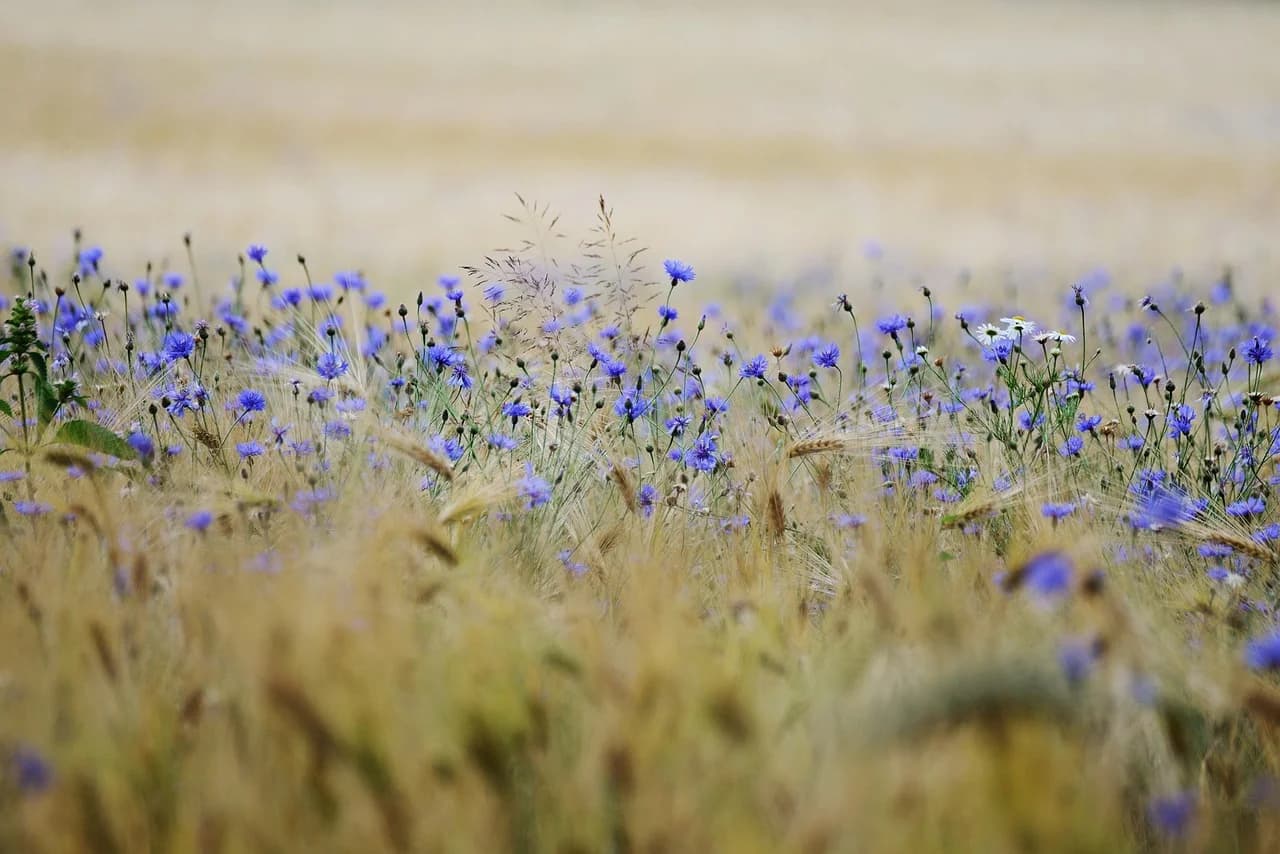
Cornflower
Centaurea cyanus
Also called bachelor's button
Cornflower is an annual with blue flowers that grows in full sun or light shade and reseeds easily. Seeds can be started indoors 6 to 8 weeks before the last frost.
Quick facts
- Germination time
- Not yet verified
- Germination temperature
- Not yet verified
- Sowing depth
- Not yet verified
- Spacing between plants
- Not yet verified
- Days to maturity
- Not yet verified
- Sun
- Full sun, partial shade
Non-toxic to cats and dogs
By SeedBattle EditorsUpdated
Spotted a mistake or missing detail? Improve this page
01 · Overview
About cornflower
Overview. Cornflower is an annual that is often seen growing wild in fields and along roads. Its flowers come in blue, pink, red, lavender, and white. Each flower head is about 1½ inches (4 cm) across. The plant comes from western Asia and Europe. Birds and butterflies use its flowers and fruit for food.
Reseeding. The plant reseeds easily and can spread on its own.
Growing details
- Start indoors
- 6–8 weeks before the last frost
- Sow outdoors
- Not yet verified
- Water
- Moderate
- Containers
- Yes
- Height
- 30–46 cm12–18 in
- Spread
- 30–61 cm1–2 ft
- Frost tolerance
- Not yet verified
- Soil pH
- Not yet verified
- Life cycle
- Annual
Sowing timeline
When to sow cornflower seeds
Counted from your area's average last spring frost date. Find yours from a local weather service or garden center, then count back or forward.
02 · How to grow
How to grow cornflower from seed
Sowing. Start seeds indoors about 6 to 8 weeks before the last spring frost. In mild winter climates, seeds can be sown directly outdoors in the fall instead.
Light and soil. Cornflower grows in full sun or light shade. Without enough shade, stems tend to flop. It tolerates poor soil and needs no fertilizer. It prefers soil that is well drained and moist.
03 · Care
Caring for cornflower
Support. Taller plants may need staking. Planting them with other plants that hold them up also helps.
Deadheading. Deadhead the flowers for more continuous bloom. If you want to limit reseeding, remove spent flowers. If you want to attract birds and butterflies, limit deadheading.
Growing in pots. The plant can be grown in a container to better control its seeds.
At a glance
How cornflower compares with other flowers
Worked out from the growing facts of the 79 seeds in Flowers on SeedBattle.
- Cornflower
- Each of the other flowers
- Their average
- HeightShorter than average
30–46 cm12–18 in
Average for flowers: 71 cm2½ ft, from 68 other seeds
04 · Problems
Common cornflower problems
Pests and diseases. The plant has no serious insect or disease problems to note. Wilt, rots, and rusts are possible, and aphids and mealybugs are worth watching for. It is noted as resistant to deer.
Late season. The plant can lose its looks late in the season, so it works well in a cutting garden.
05 · Harvest
Harvesting cornflower
Cut flowers. The flowers are attractive and long-lasting when cut. The flowers are also edible.
06 · Safety
Cornflower safety
Pets. Cornflower is listed as non-toxic to cats and dogs.
People. The flowers are edible.
Cornflower questions
When should I start cornflower seeds indoors?
Start seeds indoors about 6 to 8 weeks before the last spring frost.
Can I grow cornflowers in a pot?
Yes, a container helps control the seeds.
Does cornflower need full sun?
It grows in full sun or light shade, but stems flop with too much shade.
Is cornflower safe for cats and dogs?
It is listed as non-toxic to both cats and dogs.
How tall do cornflowers grow?
Mature plants are listed at 12 to 18 inches (30 to 46 cm) tall.
Quick answers
More cornflower questions
Short answers taken from the growing facts on this page.
Is cornflower an annual or a perennial?
Cornflower is an annual.
How much water does cornflower need?
Cornflower has moderate water needs.
Side by side
Compare cornflower with…
Two seeds, every growing fact lined up, so you can pick the one that suits your space.
Flowers
More seeds like cornflower
Other seeds in the Flowers category.
Find your next seed to grow
Browse all 223 seeds by sun, difficulty or pot size, or line cornflower up against another seed.
