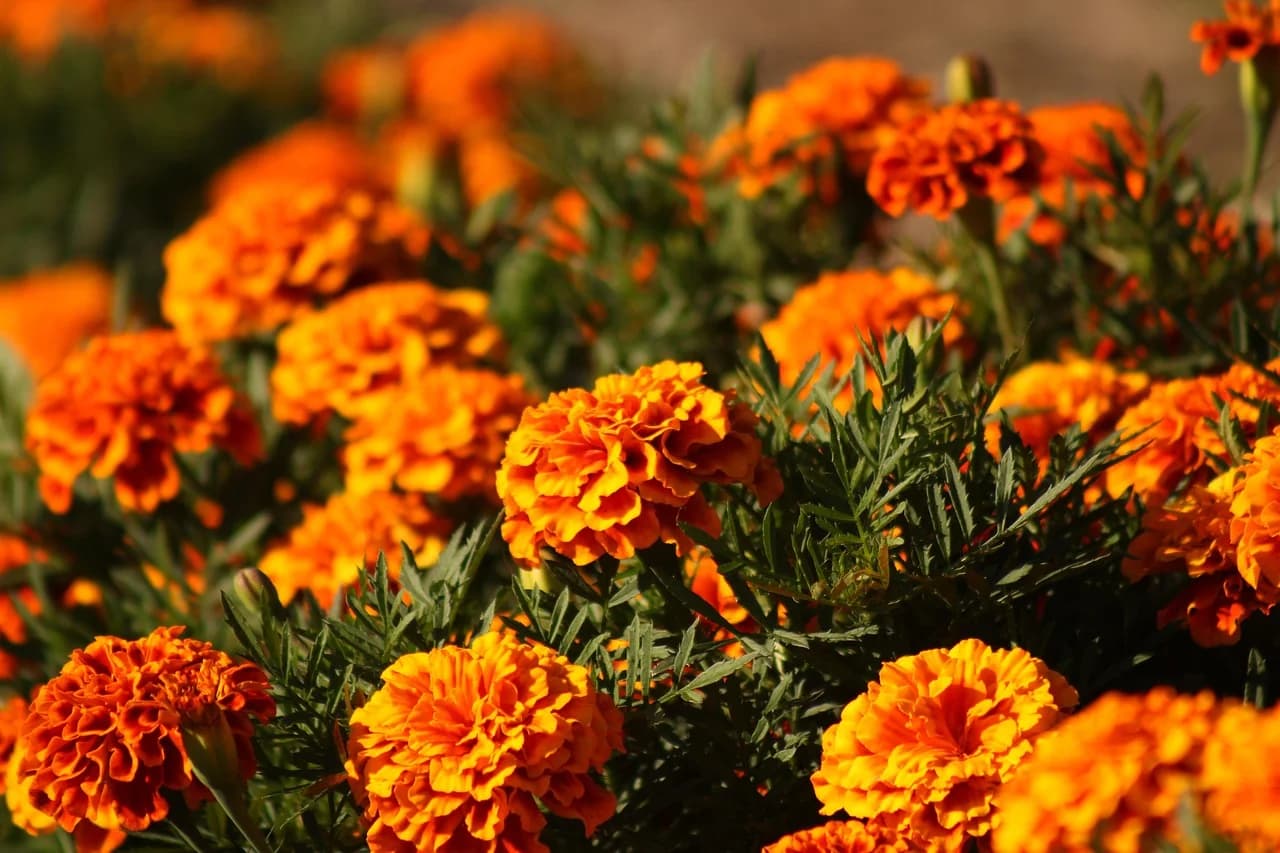
Marigold
Tagetes spp.
Cheerful, easy annuals that sprout in about a week and bloom from early summer until frost. Start them indoors or sow outside once frost has passed, in full sun.
Quick facts
- Germination time
- 4–7 days
- Germination temperature
- Not yet verified
- Sowing depth
- 6 mm¼ in
- Spacing between plants
- Not yet verified
- Days to maturity
- Not yet verified
- Sun
- Full sun
Safety for cats and dogs: not yet verified.
By SeedBattle EditorsUpdated
Spotted a mistake or missing detail? Improve this page
01 · Overview
About marigold
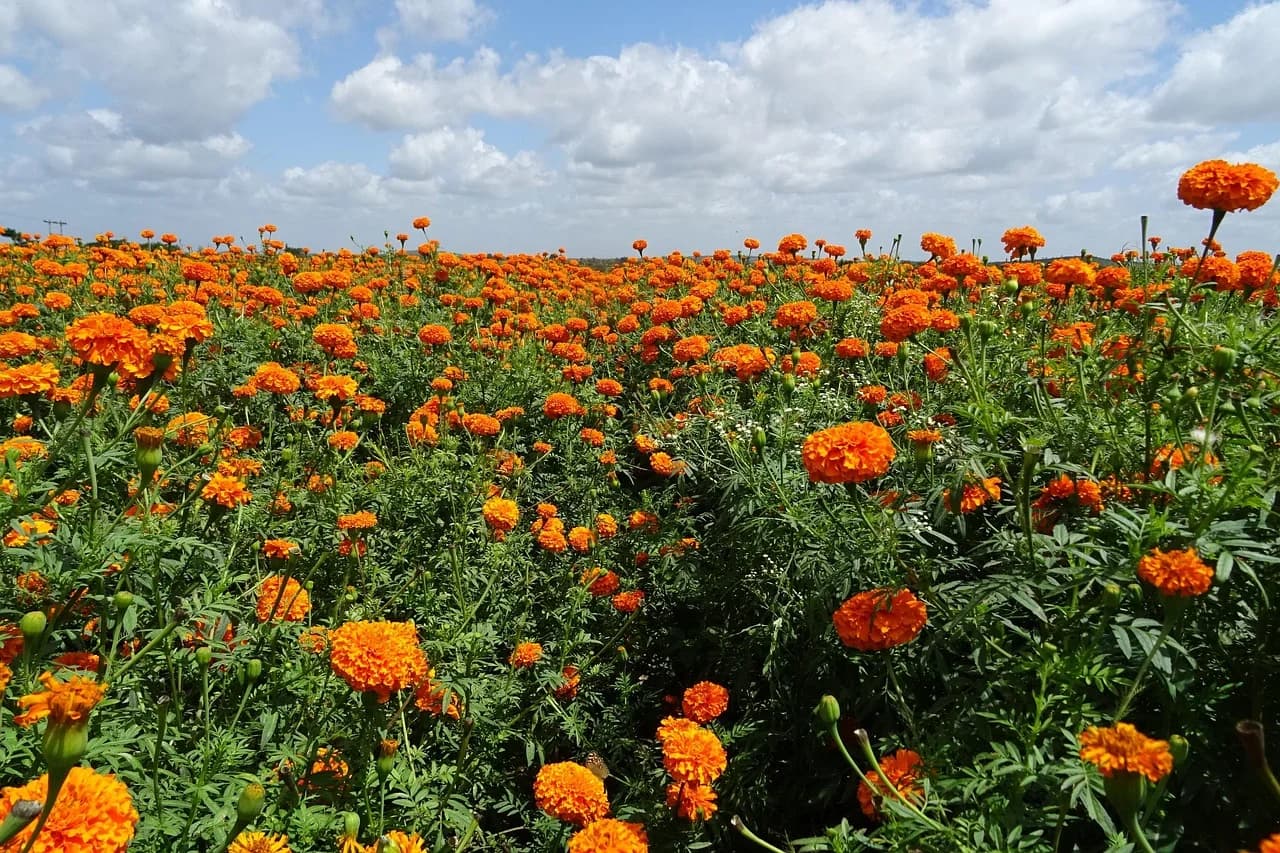
Marigolds (Tagetes species) are easy, cheerful annuals that bloom reliably all summer and have few insect or disease problems. They’re native to the Americas, from the southwestern United States to South America, and because they sprout quickly they’re an excellent choice if you’re new to growing flowers from seed.
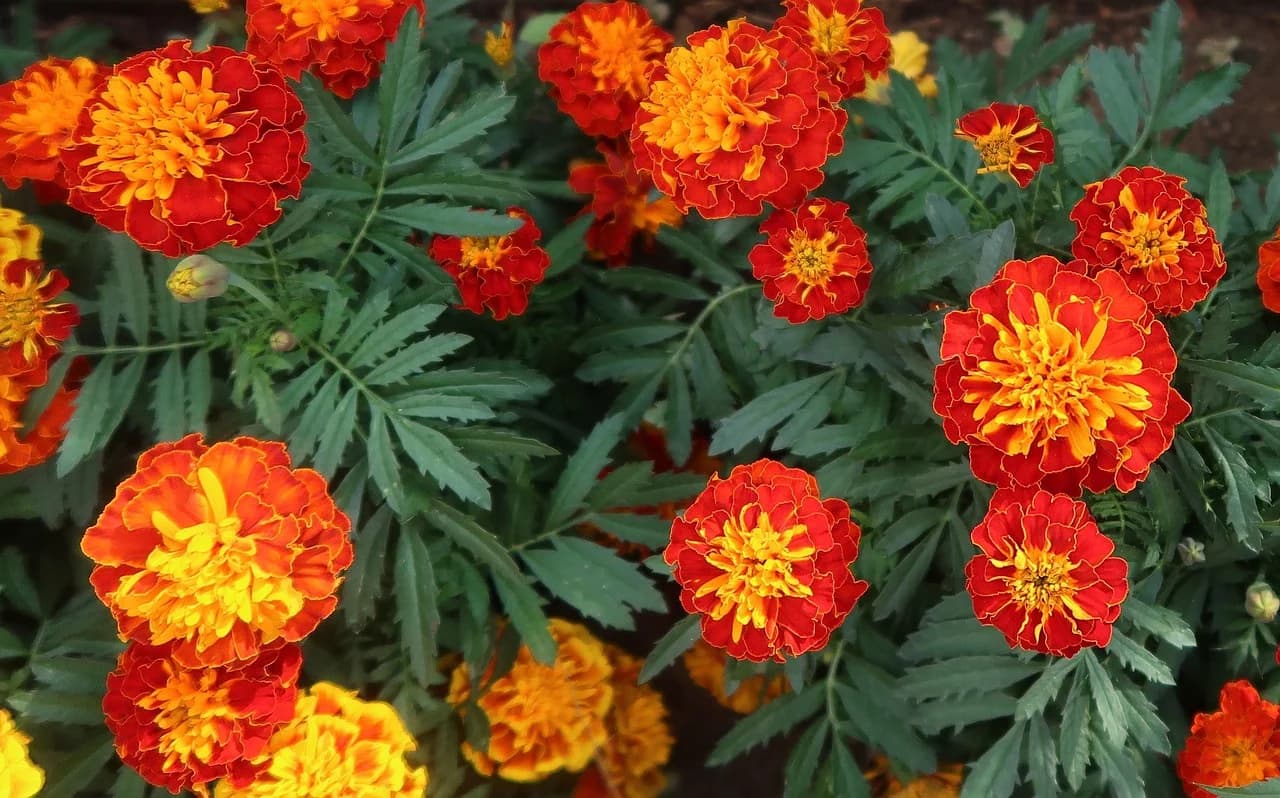
Three main types. French marigolds (T. patula) are compact plants with smaller flowers, and African marigolds (T. erecta) are larger plants with blooms up to 4 inches (10 cm) across. Signet marigolds (T. tenuifolia) are small, bushy plants with lacy, lemon-scented leaves.
Size depends on the type. French marigolds usually grow 6 to 18 inches (15–46 cm) tall, while signets rarely grow taller than 12 inches (30 cm). African marigolds are the tallest, reaching about 3 feet (91 cm) and sometimes 4 feet (122 cm). Check your seed packet for the height of your variety.
Growing details
- Start indoors
- Not yet verified
- Sow outdoors
- Not yet verified
- Water
- Not yet verified
- Containers
- Yes
- Height
- Not yet verified
- Spread
- Not yet verified
- Frost tolerance
- Tender (no frost)
- Soil pH
- Not yet verified
- Life cycle
- Annual
02 · How to grow
How to grow marigold from seed
Start seeds indoors for earlier flowers. Sow seeds indoors four to six weeks before you plan to plant them outside, or about 8 weeks ahead for African marigolds. Cover the seed lightly and keep it warm: gardening experts suggest 70–75 °F (21–24 °C), and at 75–80 °F (24–27 °C) seedlings usually appear in 4 to 7 days.
Or sow straight into the garden. Once the soil has warmed and there’s no more danger of frost, sow seeds outdoors about ¼ inch (6 mm) deep. Expect them to come up in 5 to 7 days.
Plant out after the last frost. The best time to plant marigolds outside is after the last spring frost. Space French marigolds 8 to 10 inches (20–25 cm) apart and African marigolds 12 to 16 inches (30–41 cm) apart.
Pick a sunny spot. Marigolds need full sun and grow best in loamy soil that drains well. Planted in shade or in cool, damp places, they won’t bloom well and are prone to powdery mildew.
Pots work too. Marigolds are good in containers and window boxes. Use a soilless potting mix with slow-release fertilizer, and space the plants so they aren’t crowded.
03 · Care
Caring for marigold
Watering. Water well at planting and keep the soil evenly moist for the first couple of weeks. Once established, marigolds do well with about 1 inch (2.5 cm) of water a week; if it doesn’t rain, water deeply once a week and let the soil dry a little in between. Water at the base of the plant so the leaves stay dry.
Deadheading and pinching. Remove faded flowers to keep new ones coming. Pinching young plants encourages them to branch.
Support. Tall African marigolds may need stakes so storms don’t knock them over.
Summer heat. Very hot weather can make plants stall for a while, with less growth and fewer flowers.
At a glance
How marigold compares with other flowers
Worked out from the growing facts of the 79 seeds in Flowers on SeedBattle.
- Marigold
- Each of the other flowers
- Their average
- Germination timeSprouts sooner than average
4–7 days
Average for flowers: 12 days, from 42 other seeds
- Sowing depthDeeper than average
6 mm¼ in
Average for flowers: 4 mm⅛ in, from 25 other seeds
04 · Problems
Common marigold problems
Marigolds are said to repel pests, but some insects are attracted to them: spider mites (especially in hot, dry weather), slugs, leafminers, aphids, whiteflies, thrips and caterpillars. Insecticidal soap, used as the label directs, usually solves spider mite and aphid problems.
Diseases turn up occasionally, including fungal leaf spots, stem and root rots, gray mold (botrytis) and bacterial wilt. Viruses spread by insects can cause spotted or yellowed leaves and stunted growth. Powdery mildew is more likely when conditions are too wet or humid, and African marigolds may be prone to it.
If your soil pH is below 5.5, the leaves can develop a bronze, speckled look.
05 · Harvest
Harvesting marigold
For cut flowers, pick blooms when they’re fully open but their centers are still tight. For cutting, gardening experts recommend the tall varieties.
To save seed for next year, collect it from open-pollinated varieties only. Seed from hybrids may be sterile or may grow into plants that don’t look like the parent.
06 · Safety
Marigold safety
Marigold sap can irritate skin. Gardening experts list marigolds as a low-severity poison: sap on broken skin, together with sunlight, can cause redness, burning pain and blisters. Gardening experts say African marigold foliage may aggravate skin allergies and recommends gloves.
Sources disagree about eating the flowers. Gardening experts say Tagetes flowers are generally considered inedible, and that the edible “pot marigold” is a different plant, Calendula officinalis. Gardening experts say signet marigold blooms are edible, and marigolds can be harmful if eaten in large amounts.
Marigold questions
How long do marigold seeds take to germinate?
Usually 4 to 7 days at 75–80 °F (24–27 °C). Sown outdoors in warm soil, expect about 5 to 7 days.
When should I plant marigold seeds?
Sow them outdoors once the soil has warmed and the danger of frost has passed. For earlier flowers, start them indoors four to six weeks before you plan to plant them out, or about 8 weeks ahead for African marigolds.
Can I grow marigolds in a pot?
Yes. Marigolds are popular in containers and window boxes. Use a soilless potting mix with slow-release fertilizer and don’t overcrowd the plants.
Do marigolds keep pests away?
Not reliably. Despite their reputation, marigolds attract some insects themselves. Some marigold varieties grown as a cover crop can suppress root-knot nematodes in the soil, but planting marigolds between other plants doesn’t protect those plants.
Are marigold flowers edible?
Sources disagree. Gardening experts say Tagetes flowers are generally considered inedible and that the edible “pot marigold” is Calendula, a different plant. Gardening experts say signet marigold blooms are edible, while marigolds can be harmful if eaten in large amounts.
Quick answers
More marigold questions
Short answers taken from the growing facts on this page.
How deep should I sow marigold seeds?
Sow them 6 mm¼ in deep.
How much sun does marigold need?
Marigold grows in full sun.
Can marigold survive frost?
No. Marigold is tender, so it can't take frost.
Is marigold an annual or a perennial?
Marigold is an annual.
Side by side
Compare marigold with…
Two seeds, every growing fact lined up, so you can pick the one that suits your space.
Flowers
More seeds like marigold
Other seeds in the Flowers category.
Find your next seed to grow
Browse all 223 seeds by sun, difficulty or pot size, or line marigold up against another seed.
