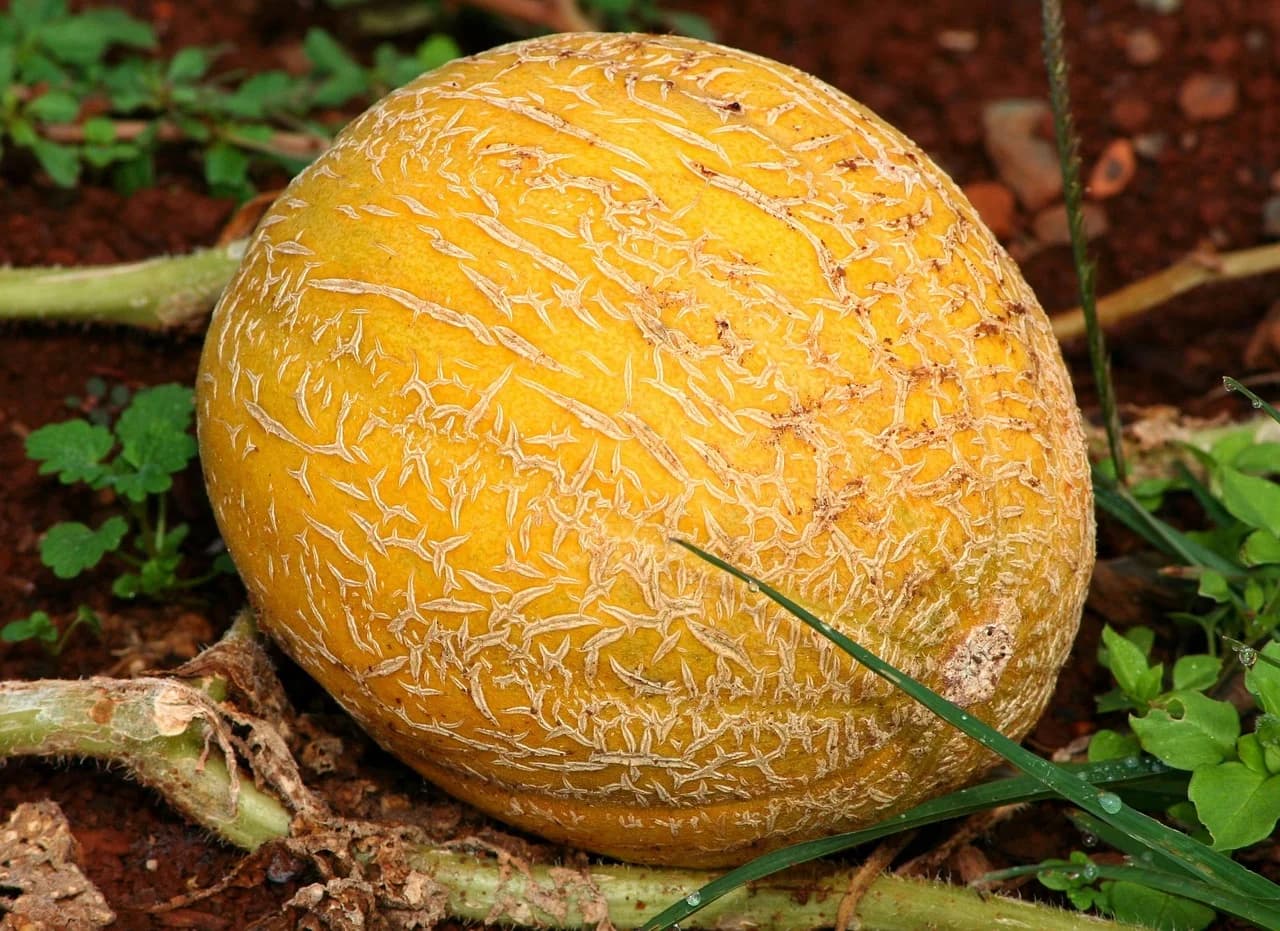
Cantaloupe
Cucumis melo var. cantalupensis
Also called muskmelon, rockmelon
Cantaloupe, also called muskmelon, is a warm-season annual vine that needs full sun, warm soil and steady moisture. Start seeds indoors or sow outdoors after the last frost.
Quick facts
- Germination time
- Not yet verified
- Germination temperature
- 27–32 °C81–90 °F
- Sowing depth
- Not yet verified
- Spacing between plants
- 46–61 cm1½–2 ft
- Days to maturity
- Not yet verified
- Sun
- Full sun
Non-toxic to cats and dogs
By SeedBattle EditorsUpdated
Spotted a mistake or missing detail? Improve this page
01 · Overview
About cantaloupe
Cantaloupe is a warm-season annual vine in the cucumber family. The name is used loosely: cantaloupe often refers to melons with smooth or ribbed rinds, while muskmelon usually means netted, musky-smelling melons, and the two terms are often used interchangeably. In the United States, cantaloupe has become the general name for netted, musk-scented melons. The vines climb when given support, or trail along the ground if you have the room.
Growing details
- Start indoors
- 4–6 weeks before the last frost
- Sow outdoors
- At the last frost
- Water
- Not yet verified
- Containers
- Yes
- Height
- Not yet verified
- Spread
- Not yet verified
- Frost tolerance
- Tender (no frost)
- Soil pH
- pH 5.5–7.0
- Life cycle
- Annual
Sowing timeline
When to sow cantaloupe seeds
Counted from your area's average last spring frost date. Find yours from a local weather service or garden center, then count back or forward.
- Germination temperature
- 27–32 °C81–90 °F
- Frost tolerance
- Tender (no frost)
02 · How to grow
How to grow cantaloupe from seed
Start seeds indoors four to six weeks before the average last frost date, or sow seed outdoors after the last frost. Plant when the soil has warmed to at least 60 to 65 °F (16 to 18 °C). Germinating seed needs warmth, so keep it at 80 to 90 °F (27 to 32 °C) until it sprouts. Seed can be sown directly in the garden, or transplants can be grown for an early start, which can be harvested as much as two weeks sooner. Sowing depth advice differs: about ½ inch (1.3 cm) deep for direct sowing, ½ to ¾ inch (1.3 to 1.9 cm) deep, or 1 inch (2.5 cm) deep. Space plants about 18 to 24 inches (46 to 61 cm) apart in rows that are 6 to 8 feet (1.8 to 2.4 m) apart. Black plastic mulch warms the soil faster in spring and helps conserve moisture and control weeds.
03 · Care
Caring for cantaloupe
Give the plants full sun, at least 6 hours of direct sun a day. In dry weather, apply 1 to 2 inches (2.5 to 5 cm) of water every 7 to 10 days, and keep the soil consistently moist from germination through harvest. If you use overhead watering, do it in the morning so leaves can dry before dark. Too much nitrogen fertilizer can produce lots of vine and little fruit, so feed carefully. Fruit set depends on bees carrying pollen to the female flowers.
At a glance
How cantaloupe compares with other seeds in Fruits & other
Worked out from the growing facts of the 35 seeds in Fruits & other on SeedBattle.
- Cantaloupe
- Each of the other seeds in Fruits & other
- Their average
- Germination temperatureWarmer than average
27–32 °C81–90 °F
Average for Fruits & other: 21 °C70 °F, from 13 other seeds
- Spacing between plantsCloser than average
46–61 cm1½–2 ft
Average for Fruits & other: 1.8 m6 ft, from 8 other seeds
04 · Problems
Common cantaloupe problems
Poorly formed or too few fruits are often caused by poor bee pollination. Blossom end rot comes from inadequate calcium in the plant, which can be linked to low soil pH or irregular watering. Manganese toxicity is linked to soil pH at or below 5.8, and shows up on older leaves near harvest, especially after heavy rain. Cucumber beetles and aphids are the most noticeable insects, mostly during the seedling and early growth stages. Powdery mildew, downy mildew, gummy stem blight and anthracnose can affect the plants. Do not plant melons or similar crops in the same spot for at least three years.
05 · Harvest
Harvesting cantaloupe
Most cantaloupe varieties need about 30 to 35 days from fruit pollination to harvest. Pick when the stem separates completely from the fruit, which is called full slip. If the stem has to be forced off, the melon is not ripe yet.
06 · Storage
Storing cantaloupe
A muskmelon can be stored in the refrigerator for up to two weeks, at an optimum temperature of 36 to 45 °F (2 to 7 °C). Place it in a plastic bag first so its aroma does not flavor other stored food.
07 · Safety
Cantaloupe safety
A pet-safety database lists cantaloupe as non-toxic to cats and dogs. Another reference warns that bitter fruit can be toxic to pets, so keep bitter fruit away from them. For people, avoid eating the seeds, because a sprouting seed produces a toxic substance in its embryo.
Cantaloupe questions
When should I plant cantaloupe seeds?
Start seeds indoors four to six weeks before the average last frost date, or sow them outdoors after the last frost. Plant once the soil is at least 60 to 65 °F (16 to 18 °C).
Can I grow cantaloupe in a pot?
Cantaloupe can be trained to a fence or trellis or grown in a large pot. No pot size is given in the reference pages.
How much sun do cantaloupes need?
Cantaloupes need full sun, meaning 6 or more hours of direct sunlight a day.
How do I know when a cantaloupe is ready to pick?
Pick it when the stem separates completely from the fruit, which is called full slip. If the stem has to be forced off, the melon is not ripe yet.
How far apart should cantaloupe plants be?
Space plants about 18 to 24 inches (46 to 61 cm) apart in the rows.
Quick answers
More cantaloupe questions
Short answers taken from the growing facts on this page.
What temperature do cantaloupe seeds need to sprout?
Cantaloupe seeds germinate at 27–32 °C81–90 °F.
Can cantaloupe survive frost?
No. Cantaloupe is tender, so it can't take frost.
Is cantaloupe an annual or a perennial?
Cantaloupe is an annual.
What soil pH does cantaloupe need?
Aim for soil at pH 5.5–7.0.
Is cantaloupe safe for cats and dogs?
Yes. It's listed as non-toxic to cats and dogs.
Side by side
Compare cantaloupe with…
Two seeds, every growing fact lined up, so you can pick the one that suits your space.
Fruits & other
More seeds like cantaloupe
Related seeds, plus others in the Fruits & other category.
Find your next seed to grow
Browse all 223 seeds by sun, difficulty or pot size, or line cantaloupe up against another seed.
