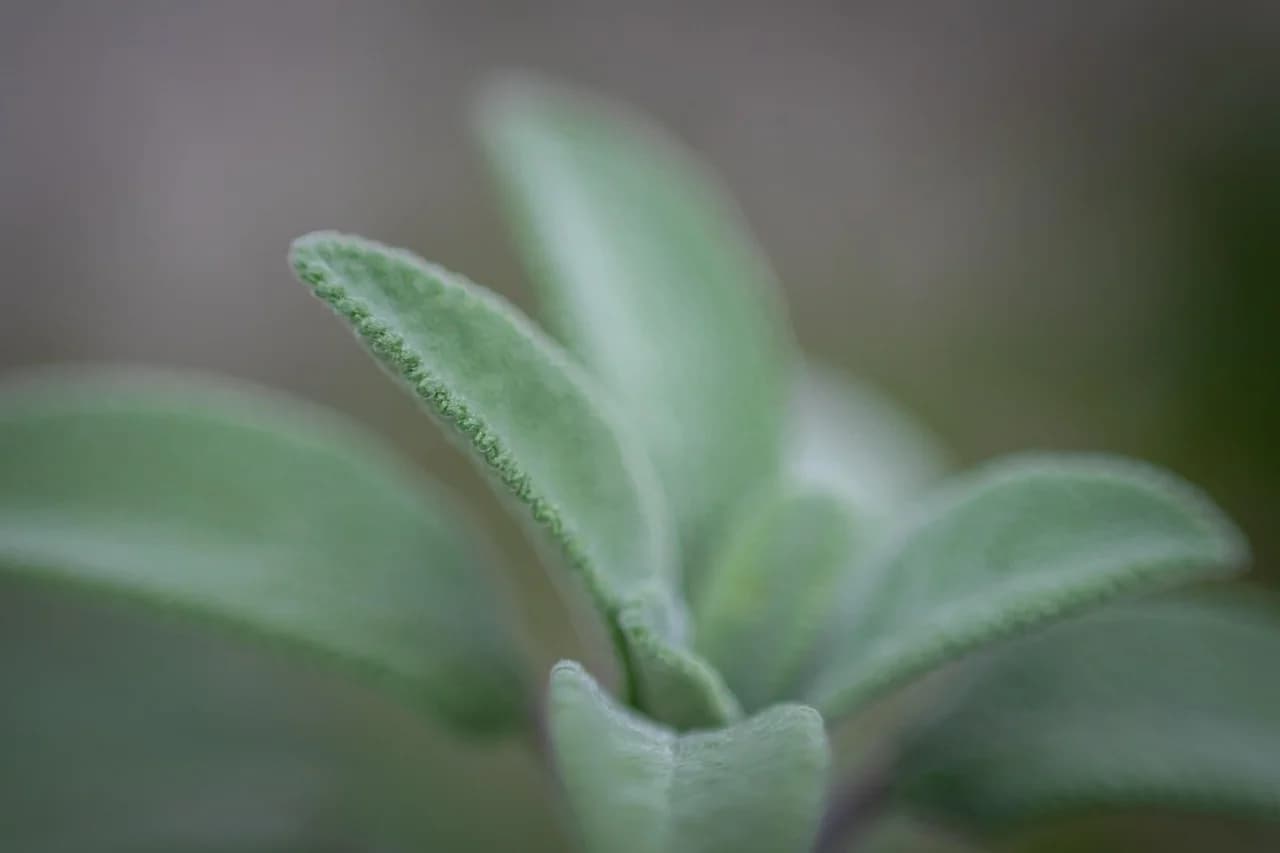
Sage
Salvia officinalis
Also called common sage, garden sage
Sage is a bushy perennial culinary herb that grows best in full sun and well-drained soil. It can be started from seed indoors or sown outdoors around the average last frost date.
Quick facts
- Germination time
- 7–21 days
- Germination temperature
- 18–21 °C64–70 °F
- Sowing depth
- 6 mm¼ in
- Spacing between plants
- 46–61 cm1½–2 ft
- Days to maturity
- Not yet verified
- Sun
- Full sun
Non-toxic to cats and dogs
By SeedBattle EditorsUpdated
Spotted a mistake or missing detail? Improve this page
01 · Overview
About sage
Sage (Salvia officinalis) is a bushy, semi-woody perennial herb in the mint family, native to the Mediterranean region. Its gray-green, slightly fuzzy leaves are popular in cooking, and its bluish-lavender flower spikes in early summer make it a useful ornamental too. Sage tends to be short-lived and is often best replaced every few years.
Growing details
- Start indoors
- 6–8 weeks before the last frost
- Sow outdoors
- At the last frost
- Water
- Low
- Containers
- Yes
- Height
- 30–61 cm1–2 ft
- Spread
- 61–91 cm2–3 ft
- Frost tolerance
- Hardy
- Soil pH
- pH 6.0–8.0
- Life cycle
- Perennial
- Hardiness zones
- Not yet verified
Sowing timeline
When to sow sage seeds
Counted from your area's average last spring frost date. Find yours from a local weather service or garden center, then count back or forward.
- Germination time
- 7–21 days
- Germination temperature
- 18–21 °C64–70 °F
- Frost tolerance
- Hardy
02 · How to grow
How to grow sage from seed
Sowing. Start seeds indoors about 6 to 8 weeks before the last frost. Sow 2 to 3 seeds ¼ inch (0.6 cm) deep in each container and thin to one plant after they sprout. You can also plant seeds directly outdoors on the average date of the last frost.
Germination. Seeds usually sprout in 7 to 21 days at 65 to 70 °F (18 to 21 °C).
Seed or cuttings. Growing from seed is slow, so cuttings or transplants are often preferred. Seeds may take several years to produce harvestable plants, and plants grown from seed may not flower the first year.
Site and spacing. Plant sage in full sun and well-drained soil. Its soil pH range is 6.0 to 8.0, which is neutral. Space plants 18 to 24 inches (46 to 61 cm) apart. Ornamental cultivars may have less good flavor, so avoid them for cooking.
03 · Care
Caring for sage
Watering. Sage tolerates drought and poor soil, and it does better when kept slightly dry once established. Wet soil is the most common cause of decline and winter loss, so good drainage matters, especially in winter.
Pruning. Prune in spring and a few times during the growing season to keep plants from getting leggy. Don’t prune into old woody stems, because they seldom sprout new growth.
Replacing plants. Culinary sage should be replaced every 3 to 4 years.
At a glance
How sage compares with other herbs
Worked out from the growing facts of the 30 seeds in Herbs on SeedBattle.
- Sage
- Each of the other herbs
- Their average
- Germination timeSlower to sprout than average
7–21 days
Average for herbs: 12 days, from 20 other seeds
- Germination temperatureAbout average
18–21 °C64–70 °F
Average for herbs: 19 °C66 °F, from 14 other seeds
- Sowing depthAbout average
6 mm¼ in
Average for herbs: 6 mm¼ in, from 16 other seeds
- Spacing between plantsWider than average
46–61 cm1½–2 ft
Average for herbs: 33 cm13 in, from 13 other seeds
- HeightShorter than average
30–61 cm1–2 ft
Average for herbs: 70 cm2½ ft, from 27 other seeds
04 · Problems
Common sage problems
Possible pests include leafhoppers, slugs, spider mites and spittlebugs, and root rot, powdery mildew and verticillium wilt can occur. Root rot is the most common problem and can quickly kill plants in wet soil. Well-drained soil and good air circulation reduce pests and foliar disease.
05 · Harvest
Harvesting sage
Pick leaves before or at blooming, and you can cut the plant back after it blooms. For larger harvests, cut stems 6 to 8 inches (15 to 20 cm) long just before the plant blooms. New plants should be harvested lightly in the first year. Don’t cut back more than half the plant at once, or it will stop producing.
06 · Storage
Storing sage
Fresh sage keeps in the refrigerator for several days. To dry it, tie stems into small bundles and dry them in a warm, dark, well-ventilated place, then store the dry leaves in airtight containers away from heat and light.
07 · Safety
Sage safety
Sage is non-toxic to cats and dogs. Don’t eat the flowers in large amounts, because they have a strong, musky flavor.
Sage questions
How long do sage seeds take to germinate?
Seeds usually sprout in 7 to 21 days when kept at 65 to 70 °F (18 to 21 °C).
Can I grow sage in a pot?
Containers are a good option, but plants will not overwinter in containers without extra protection.
When should I plant sage?
Start seeds indoors about 6 to 8 weeks before the last frost. You can also plant seeds directly outdoors on the average date of the last frost.
Is sage safe for cats and dogs?
Sage is non-toxic to cats and dogs.
Quick answers
More sage questions
Short answers taken from the growing facts on this page.
How deep should I sow sage seeds?
Sow them 6 mm¼ in deep.
How far apart should I plant sage?
Space the plants 46–61 cm1½–2 ft apart.
How much sun does sage need?
Sage grows in full sun.
What temperature do sage seeds need to sprout?
Sage seeds germinate at 18–21 °C64–70 °F.
How tall does sage grow?
Sage grows 30–61 cm1–2 ft tall.
Can sage survive frost?
Yes. Sage is hardy.
Side by side
Compare sage with…
Two seeds, every growing fact lined up, so you can pick the one that suits your space.
Herbs
More seeds like sage
Related seeds, plus others in the Herbs category.
Find your next seed to grow
Browse all 223 seeds by sun, difficulty or pot size, or line sage up against another seed.
