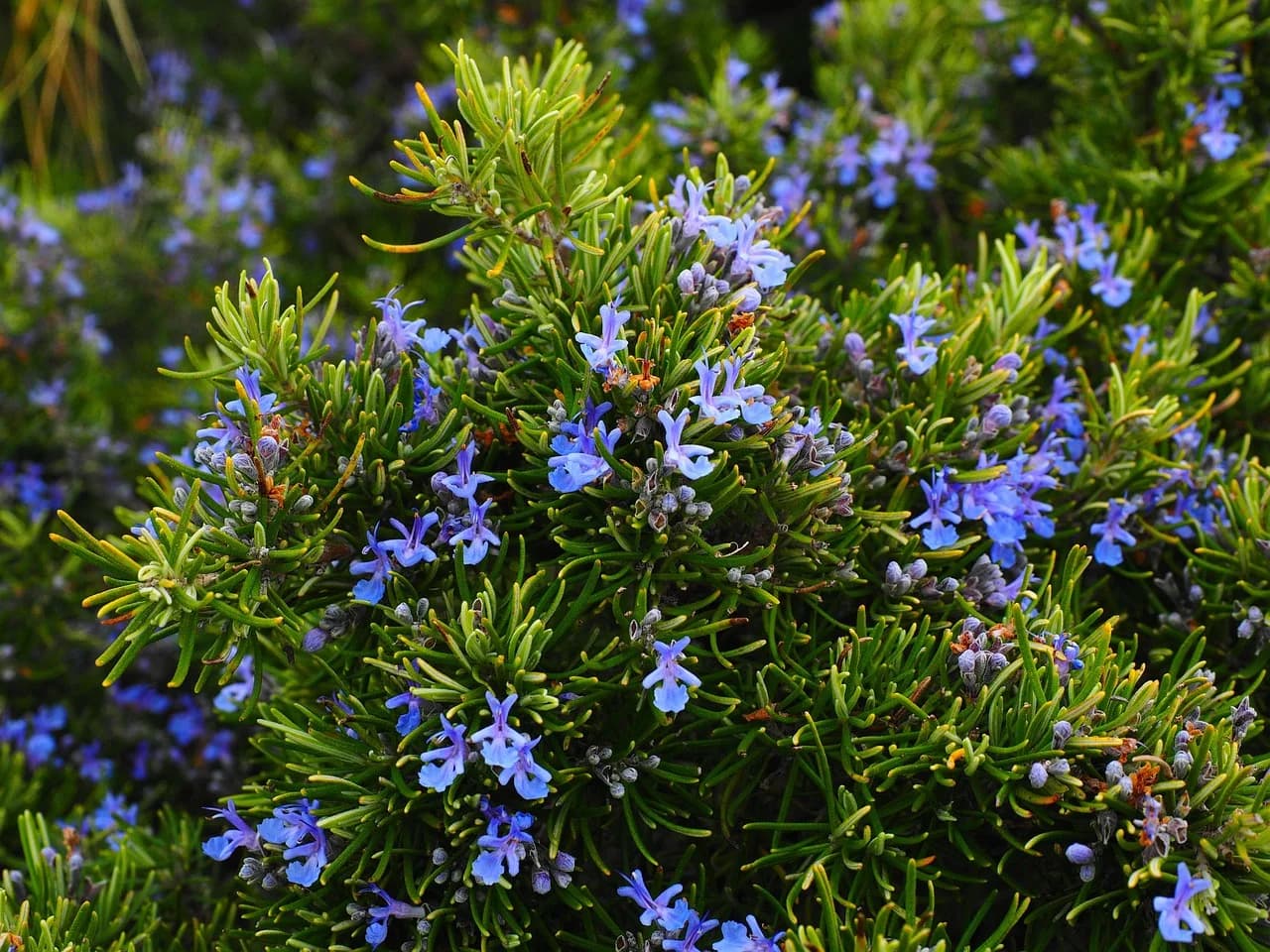
Rosemary
Salvia rosmarinus
An evergreen, sun-loving Mediterranean shrub that grows well in a pot. Rosemary seed is slow and erratic to germinate, so it's much quicker to start from a plant or a cutting.
Quick facts
- Germination time
- 14–21 days
- Germination temperature
- Not yet verified
- Sowing depth
- Not yet verified
- Spacing between plants
- Not yet verified
- Days to maturity
- Not yet verified
- Sun
- Full sun
Non-toxic to cats and dogs
By SeedBattle EditorsUpdated
Spotted a mistake or missing detail? Improve this page
01 · Overview
About rosemary
Rosemary (Salvia rosmarinus) is an aromatic evergreen shrub in the mint family, native to Africa, Europe, western Asia and the Mediterranean. Its botanical name used to be Rosmarinus officinalis, and you may still see it sold under that name.
It can grow into a shrub 4–5 feet (1.2–1.5 m) tall, but it’s winter-hardy only to USDA zone 8, so in colder places such as Wisconsin it’s usually grown in a pot. Its small blue, mauve, pink or white flowers appear in spring and are popular with bees and other pollinators.
Growing details
- Start indoors
- 10–12 weeks before the last frost
- Sow outdoors
- Not yet verified
- Water
- Not yet verified
- Containers
- Yes
- Height
- 1.2–1.5 m4–5 ft
- Spread
- 0.9–1.2 m3–4 ft
- Frost tolerance
- Not yet verified
- Soil pH
- Not yet verified
- Life cycle
- Perennial
- Hardiness zones
- USDA zones 8–10
Sowing timeline
When to sow rosemary seeds
Counted from your area's average last spring frost date. Find yours from a local weather service or garden center, then count back or forward.
- Germination time
- 14–21 days
02 · How to grow
How to grow rosemary from seed
Be honest about seed. Rosemary can be grown from seed, but germination is very irregular and slow, and it can take up to three years to get plants big enough for a good harvest. Seedlings also won’t necessarily match a named variety. It’s much quicker and easier to start with a bought plant or a cutting.
If you do sow seed. Start seeds indoors 10–12 weeks before your last frost. Press them onto the surface of the mix and cover them only very lightly, because they need light to germinate. Even in ideal conditions, germination takes 14–21 days and is often uneven. Plant seedlings outside once they’re at least 4 inches (10 cm) tall, after hardening them off.
Taking cuttings. Cuttings from an established plant are the best way to propagate rosemary. Take 4–6 inch (10–15 cm) tip cuttings from shoots without flowers in late spring or early summer, strip off the lower leaves, and root them in a medium such as perlite.
Where to plant. Rosemary needs full sun and light, free-draining soil, and it hates wet roots, especially in winter. In heavy soil, use a raised bed or a container. A pot should be at least 12 inches (30 cm) wide and deep, with plenty of drainage holes, filled with a soil-based mix with some added grit. Spring, once the soil starts to warm up, is the best time to plant.
03 · Care
Caring for rosemary
Watering. Rosemary is fairly drought tolerant. Water new plants during dry spells in their first year; once established in the ground, they shouldn’t need extra water. Potted plants need watering in dry weather, but never let the compost get waterlogged. Overwatering is the biggest cause of decline and death, so let the soil dry on top between waterings.
Pruning. Trim lightly every year after the flowers fade to keep plants compact, but don’t cut back into old wood.
Winter. In the UK, established plants survive temperatures as low as 18 °F (−8 °C), though harsh frosts and cold winds can damage them. Cover plants with fleece during very cold spells, and protect potted plants, which are especially vulnerable to cold. Where winters are colder than zone 8, keep rosemary in a pot and bring it indoors before the first fall frost. Indoors it needs a sunny window, ideally with at least 6 hours of sun a day. Some varieties, such as ‘Arp’ and ‘Madeline Hill’ (also sold as ‘Hill Hardy’), are hardier and can survive in zone 7.
At a glance
How rosemary compares with other herbs
Worked out from the growing facts of the 30 seeds in Herbs on SeedBattle.
- Rosemary
- Each of the other herbs
- Their average
- Germination timeSlower to sprout than average
14–21 days
Average for herbs: 12 days, from 20 other seeds
- HeightTaller than average
1.2–1.5 m4–5 ft
Average for herbs: 67 cm2 ft, from 27 other seeds
04 · Problems
Common rosemary problems
Rosemary is generally pest- and disease-free. Wet soil, especially in winter, can make the roots rot, so make sure drainage is always good. Poor air circulation and high humidity can cause powdery mildew, and botrytis is also common. Indoors, watch for aphids, mealybugs, whiteflies and spider mites.
In Britain, the rosemary beetle has become widespread since the mid-1990s. Rosemary is also a high-risk host for the bacterial disease Xylella fastidiosa, and gardening experts advise buying British-grown plants to reduce the risk of importing it.
05 · Harvest
Harvesting rosemary
Because it’s evergreen, rosemary can be picked all year, though the tender young shoots of late spring and summer taste best. Pick small amounts as needed and don’t remove more than 20% of the growth at a time.
06 · Storage
Storing rosemary
For drying, cut sprigs before the plant flowers. Hang them in a warm, dark, well-ventilated place; once dry, strip off the leaves and store them in an airtight jar.
07 · Safety
Rosemary safety
Pet poison experts list rosemary (under its former name, Rosmarinus officinalis) as non-toxic to cats, dogs and horses.
Rosemary questions
Can you grow rosemary from seed?
Yes, but it’s slow. Germination is irregular, and it can take up to three years to get a plant big enough for a good harvest. A bought plant or a cutting is much quicker.
How long do rosemary seeds take to germinate?
Usually 14 to 21 days, even in ideal conditions, and germination is often uneven.
Can I grow rosemary in a pot?
Yes. Rosemary grows well in containers. Use a pot at least 12 inches (30 cm) wide and deep, with plenty of drainage holes.
Can rosemary survive winter outside?
Only where winters are fairly mild. It’s winter-hardy only to USDA zone 8, so in colder areas grow it in a pot and bring it indoors before the first frost. In the UK, established plants survive down to about 18 °F (−8 °C).
Is rosemary safe for cats and dogs?
Pet poison experts list rosemary as non-toxic to cats and dogs.
Quick answers
More rosemary questions
Short answers taken from the growing facts on this page.
When should I start rosemary seeds indoors?
Start them indoors 10–12 weeks before the last frost.
How much sun does rosemary need?
Rosemary grows in full sun.
How tall does rosemary grow?
Rosemary grows 1.2–1.5 m4–5 ft tall.
Is rosemary an annual or a perennial?
Rosemary is a perennial.
Which USDA zones can rosemary grow in?
Rosemary is hardy in USDA zones 8–10.
Side by side
Compare rosemary with…
Two seeds, every growing fact lined up, so you can pick the one that suits your space.
Herbs
More seeds like rosemary
Other seeds in the Herbs category.
Find your next seed to grow
Browse all 223 seeds by sun, difficulty or pot size, or line rosemary up against another seed.
