Bee Balm
Monarda didyma
Also called bergamot, oswego tea
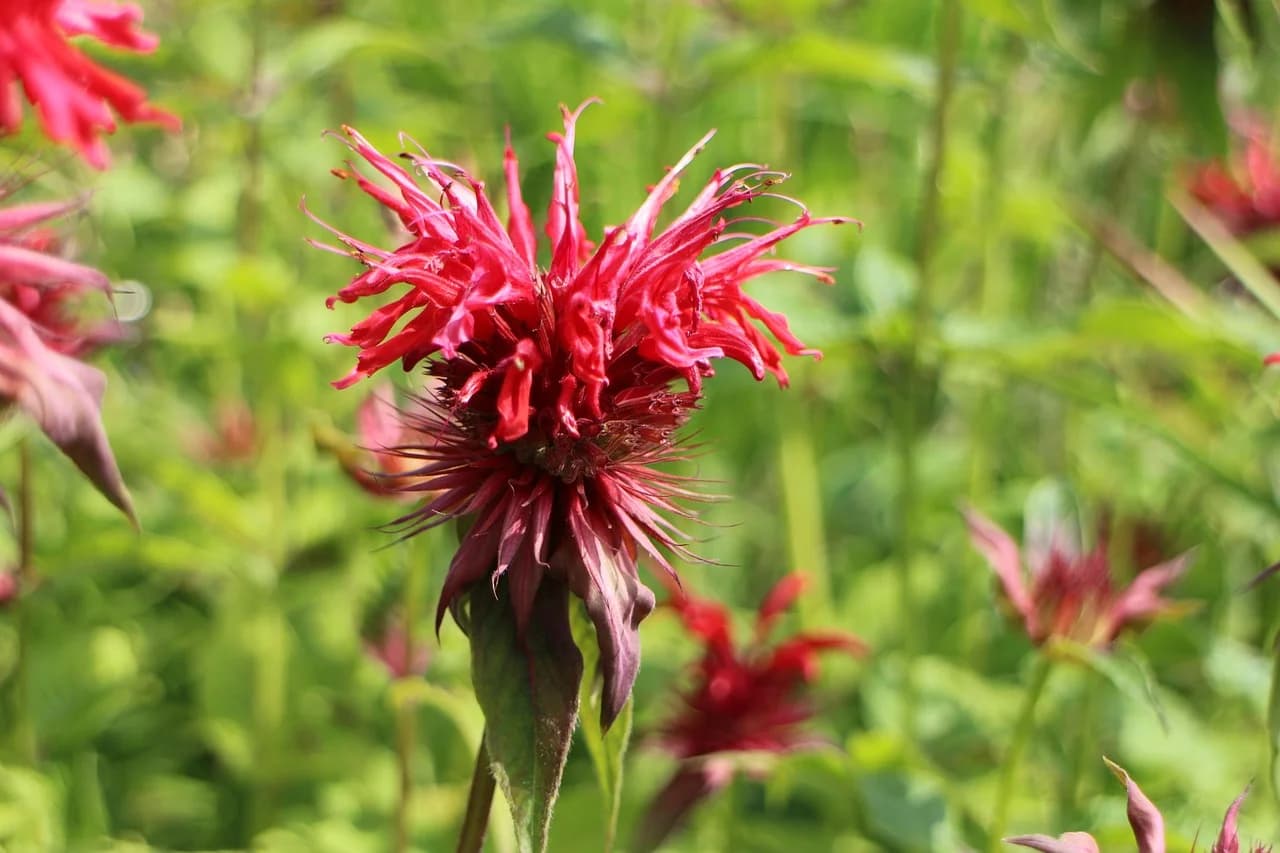
Bee balm (Monarda didyma) is a perennial herb in the mint family with scarlet tubular flowers that draw bees, butterflies and hummingbirds. It grows best in full sun or partial shade.
Quick facts
- Germination time
- Not yet verified
- Germination temperature
- Not yet verified
- Sowing depth
- Not yet verified
- Spacing between plants
- 61 cm2 ft
- Days to maturity
- Not yet verified
- Sun
- Full sun, partial shade
Safety for cats and dogs: not yet verified.
By SeedBattle EditorsUpdated
Spotted a mistake or missing detail? Improve this page
01 · Overview
About bee balm
What it is. Bee balm (Monarda didyma) is a perennial in the mint family with square stems and fragrant, minty leaves. It forms clumps and typically grows 36 to 60 inches (91 to 152 cm) tall.
Flowers and wildlife. It bears scarlet-red tubular flowers in dense clusters through summer. The flowers attract bees, butterflies and hummingbirds. The plant is resistant to damage by deer and rabbits.
Edible parts. Its flowers are edible.
Growing details
- Start indoors
- Not yet verified
- Sow outdoors
- Not yet verified
- Water
- Moderate
- Containers
- Not yet verified
- Height
- 0.9–1.5 m3–5 ft
- Spread
- 61–91 cm2–3 ft
- Frost tolerance
- Not yet verified
- Soil pH
- Not yet verified
- Life cycle
- Perennial
- Hardiness zones
- USDA zones 4–9
02 · How to grow
How to grow bee balm from seed
Sowing and planting. The usable sources here do not give a sowing depth, germination time or indoor start date for this species, so this page does not give one. Propagate by seed or division in spring. Seed is one option, but the sources describe division in more detail. Early spring is the best time to dig and divide bee balm.
Site and spacing. Plant in moderately fertile, moist but well-drained soil in full sun or light shade. Space plants 2 feet (61 cm) apart.
03 · Care
Caring for bee balm
Watering. Keep the soil evenly moist during the growing season. During dry periods, water every 7 to 10 days and soak the soil to a depth of 6 to 8 inches (15 to 20 cm). Mulch around the plants to hold moisture.
Feeding. Scatter a small amount of all-purpose fertilizer, such as 10-10-10, around each plant in early spring. Heavy feeding encourages soft, rapid growth that can make mildew worse.
Deadheading and cutting back. Remove spent flower heads to extend bloom and keep the plant tidy. One source says to cut stems down to the ground in autumn. Another says native bees nest in dead hollow stems, so cut dead stems back only to 12 to 24 inches (30 to 60 cm) and leave them standing until they break down.
Spreading. Plants spread quickly by underground stolons. The centers of clumps often die out within a few years, so dig and divide them every 2 to 3 years.
At a glance
How bee balm compares with other herbs
Worked out from the growing facts of the 30 seeds in Herbs on SeedBattle.
- Bee Balm
- Each of the other herbs
- Their average
- Spacing between plantsWider than average
61 cm2 ft
Average for herbs: 32 cm13 in, from 13 other seeds
- HeightTaller than average
0.9–1.5 m3–5 ft
Average for herbs: 67 cm2 ft, from 27 other seeds
04 · Problems
Common bee balm problems
Powdery mildew. This fungal disease is the most common problem. It shows as a grayish white powder on the upper leaf surfaces, and badly infected leaves drop early. Plants are susceptible to powdery mildew and rust, so avoid overhead watering. Overcrowded plants, heavy shade and drought stress make mildew worse. Remove and destroy infected plant debris in fall.
Mildew-resistant choices. Cultivars with good mildew resistance include Marshall’s Delight, Gardenview Scarlet, Violet Queen, Raspberry Wine and Colrain Red. Other powdery mildew resistant monardas are also listed by one guide.
Slugs. The plant may be susceptible to slugs.
Bee Balm questions
How tall does bee balm grow?
Plants typically reach 36 to 60 inches (91 to 152 cm) tall. Another guide says the native species and most older cultivars grow 2 to 4 feet (61 to 122 cm) tall.
Does bee balm come back every year?
Yes, bee balm is a perennial. Its clumps need dividing every 2 to 3 years to stay healthy.
How do I keep bee balm from getting powdery mildew?
Plant it in full sun, space plants 2 feet (61 cm) apart and divide clumps regularly. Avoid overhead watering.
Is bee balm deer resistant?
Yes, the plant is resistant to damage by deer and rabbits.
Quick answers
More bee balm questions
Short answers taken from the growing facts on this page.
How far apart should I plant bee balm?
Space the plants 61 cm2 ft apart.
How much sun does bee balm need?
Bee balm grows in full sun or partial shade.
How much water does bee balm need?
Bee balm has moderate water needs.
Which USDA zones can bee balm grow in?
Bee balm is hardy in USDA zones 4–9.
Side by side
Compare bee balm with…
Two seeds, every growing fact lined up, so you can pick the one that suits your space.
Herbs
More seeds like bee balm
Other seeds in the Herbs category.
Find your next seed to grow
Browse all 223 seeds by sun, difficulty or pot size, or line bee balm up against another seed.
