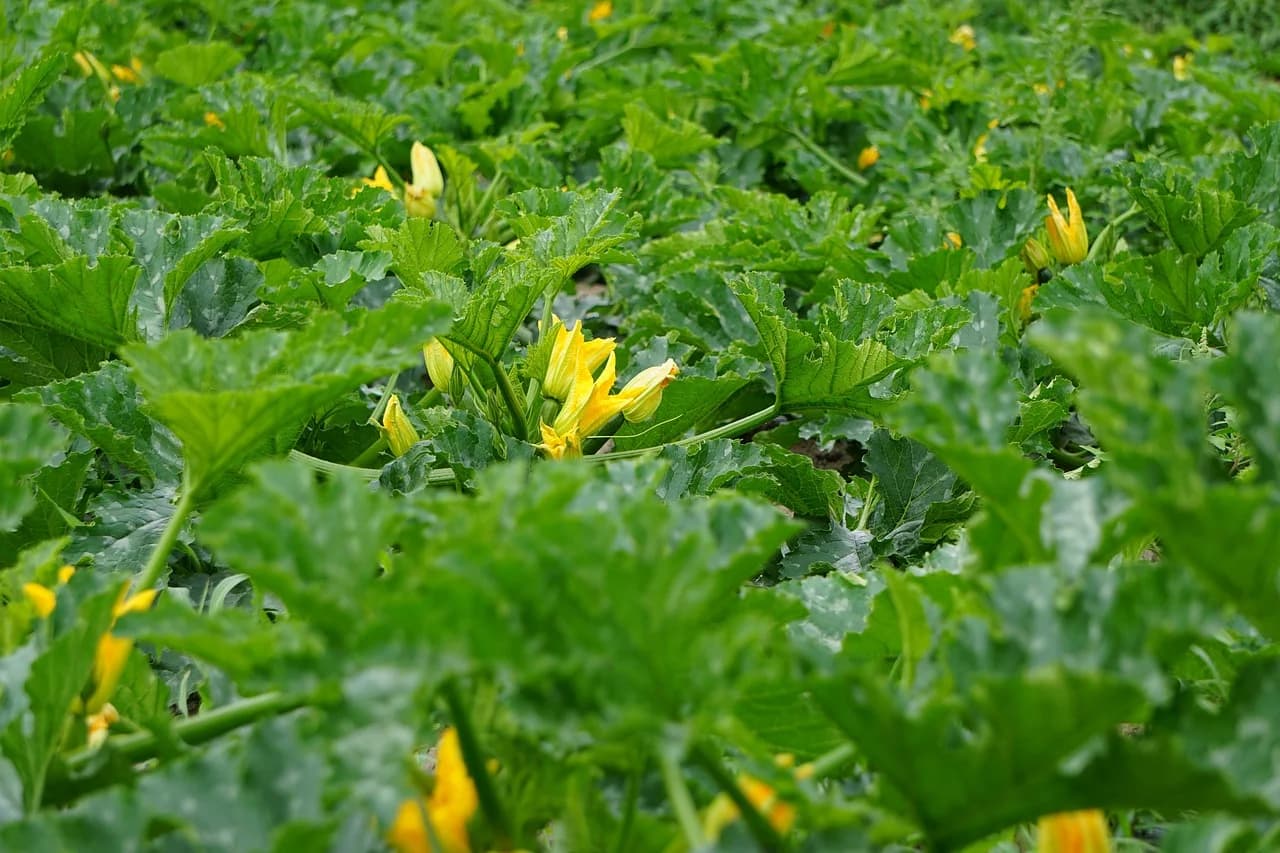
Zucchini
Cucurbita pepo
Also called courgette
A prolific, frost-tender summer squash. Sow it after the last frost in a sunny spot, keep it well watered, and pick the fruits small; one plant can give several a week.
Quick facts
- Germination time
- Not yet verified
- Germination temperature
- 18–21 °C64–70 °F
- Sowing depth
- Not yet verified
- Spacing between plants
- Not yet verified
- Days to maturity
- 50–65 days from transplanting
- Sun
- Full sun
Non-toxic to cats and dogs
By SeedBattle EditorsUpdated
Spotted a mistake or missing detail? Improve this page
01 · Overview
About zucchini
Zucchini, also called courgette, is a type of summer squash (Cucurbita pepo). Like other summer squash, it’s a warm-season crop that grows best at average temperatures between 65 and 75 °F (18–24 °C), and it’s very tender: frost damages the plants.
Summer squash plants are generally bushy rather than vining, though some zucchini varieties form large trailing plants while others stay compact. They crop heavily: in good weather, one plant can give three or four fruits a week.
Growing details
- Start indoors
- Not yet verified
- Sow outdoors
- Not yet verified
- Water
- Not yet verified
- Containers
- Yes
- Height
- Not yet verified
- Spread
- Not yet verified
- Frost tolerance
- Tender (no frost)
- Soil pH
- Not yet verified
- Life cycle
- Annual
02 · How to grow
How to grow zucchini from seed
Wait until it’s warm. Squash seeds don’t germinate well in cold soil. Don’t plant until the last chance of frost has passed and the soil is 60 °F (16 °C) at 4 inches (10 cm) below the surface. Gardening experts wait for soil of 65 °F (18 °C).
Sow outdoors or start indoors. You can plant seeds or transplants. For a head start, sow indoors in 3-inch (7.5 cm) pots about 3 weeks before planting time, and handle the young plants gently so the roots are disturbed as little as possible. Indoors, sow each seed on its side about ½ inch (13 mm) deep; the seeds need 18–21 °C (65–70 °F) to germinate.
Sowing depth outdoors. Sources differ: gardening experts sow ½ inch (13 mm) deep, gardening experts 2.5 cm (1 in) deep, and gardening experts 1 to 2 inches (2.5–5 cm) deep.
Give plants room. Zucchini plants get big. Gardening experts allow about a square meter (roughly 11 square feet) for each plant and spaces them at least 90 cm (3 ft) apart. Gardening experts thin seedlings to 12 to 15 inches (30–38 cm) apart in rows 3 feet (90 cm) apart.
Choose full sun. Grow zucchini in full sun: at least 6 hours of direct sun a day, and ideally 8 to 10.
Growing in pots. Choose a compact or bush variety and a container at least 45 cm (18 in) wide, with one plant in the middle, and keep it in a warm, sunny spot. A growing bag can hold one or two compact plants.
03 · Care
Caring for zucchini
Watering. Zucchini are thirsty plants. Keep the soil consistently moist, especially in containers and while the plants are fruiting; in hot weather, pots may need watering every day. The most important time for moisture is while fruit sets and develops. Water around the base of the plant rather than over the leaves, because wet leaves encourage powdery mildew.
Feeding. Don’t overdo nitrogen: it gives lots of leafy vine and less fruit. Plants in the ground don’t usually need feeding unless the soil is poor. In containers, feed every 10–14 days with a high-potash liquid fertilizer once the first fruits start to swell.
Mulching. A 2 to 3 inch (5–8 cm) mulch of grass clippings, pine straw or leaves stops the soil drying out quickly, which helps prevent blossom-end rot.
Pollination. Zucchini have separate male and female flowers, and bees must carry pollen from one to the other. Poor pollination means misshapen fruit or none at all. Plants usually produce only male flowers for the first week or two, which is normal.
At a glance
How zucchini compares with other seeds in Fruits & other
Worked out from the growing facts of the 35 seeds in Fruits & other on SeedBattle.
- Zucchini
- Each of the other seeds in Fruits & other
- Their average
- Days to maturityMatures sooner than average
50–65 days from transplanting
Average for Fruits & other: 82 days, from 5 other seeds
- Germination temperatureCooler than average
18–21 °C64–70 °F
Average for Fruits & other: 22 °C72 °F, from 13 other seeds
04 · Problems
Common zucchini problems
Common insect pests include spotted and striped cucumber beetles, squash bugs, squash vine borers, pickleworms and aphids. Vine borers can make a whole plant collapse, and aphids spread viruses. Powdery mildew and viruses are common diseases, along with downy mildew, bacterial wilt and phytophthora; good drainage, airflow, pest control and crop rotation help prevent them. Slugs and snails may eat young plants, flowers and young fruit.
Blossom-end rot is a dark, dry rot at the flower end of the fruit, caused by a lack of calcium in the developing fruit. In cool early-summer weather, fruits may also rot while very small because of poor pollination; this usually sorts itself out once the weather improves.
05 · Harvest
Harvesting zucchini
Gardening experts put zucchini at 50 to 65 days from transplanting to harvest. Pick the fruits young and tender, about 6 to 8 inches (15–20 cm) long, or smaller, at 10–12.5 cm (4–5 in), for the best flavor. Check plants daily once they start bearing, and don’t leave large fruits on the plant, because they hold back new ones.
The flowers are edible too. Pick male flowers (the ones without a small fruit behind them), so you don’t reduce the crop.
06 · Storage
Storing zucchini
Store zucchini in a plastic bag in the refrigerator for up to a week. In cool, humid conditions of 32–50 °F (0–10 °C), they keep for 5 to 14 days.
07 · Safety
Zucchini safety
Pet poison experts list zucchini as non-toxic to dogs and cats.
Zucchini questions
When should I plant zucchini?
After the last chance of frost has passed, once the soil is about 60 °F (16 °C) at 4 inches (10 cm) deep.
Can I grow zucchini in a pot?
Yes. Choose a compact or bush variety and a container at least 45 cm (18 in) wide, with one plant per pot, and water it regularly.
Why are my baby zucchini rotting or not forming?
Usually poor pollination. Bees have to carry pollen from male to female flowers, and fruit set is often poor in rainy weather, when bees are inactive. In cool early summer, small fruits may rot for the same reason; this usually fixes itself as the weather warms up.
How big should zucchini be when I pick them?
About 6 to 8 inches (15–20 cm) long. For the best flavor, gardening experts pick them smaller, at 10–12.5 cm (4–5 in).
What temperature do zucchini seeds need to germinate?
About 18–21 °C (65–70 °F) when sown indoors. Outdoors, wait until the soil is at least 60 °F (16 °C) at 4 inches (10 cm) deep.
Quick answers
More zucchini questions
Short answers taken from the growing facts on this page.
How much sun does zucchini need?
Zucchini grows in full sun.
Can zucchini survive frost?
No. Zucchini is tender, so it can't take frost.
Is zucchini an annual or a perennial?
Zucchini is an annual.
Is zucchini safe for cats and dogs?
Yes. It's listed as non-toxic to cats and dogs.
Side by side
Compare zucchini with…
Two seeds, every growing fact lined up, so you can pick the one that suits your space.
Fruits & other
More seeds like zucchini
Related seeds, plus others in the Fruits & other category.
Find your next seed to grow
Browse all 223 seeds by sun, difficulty or pot size, or line zucchini up against another seed.
