American Persimmon
Diospyros virginiana
Also called persimmon
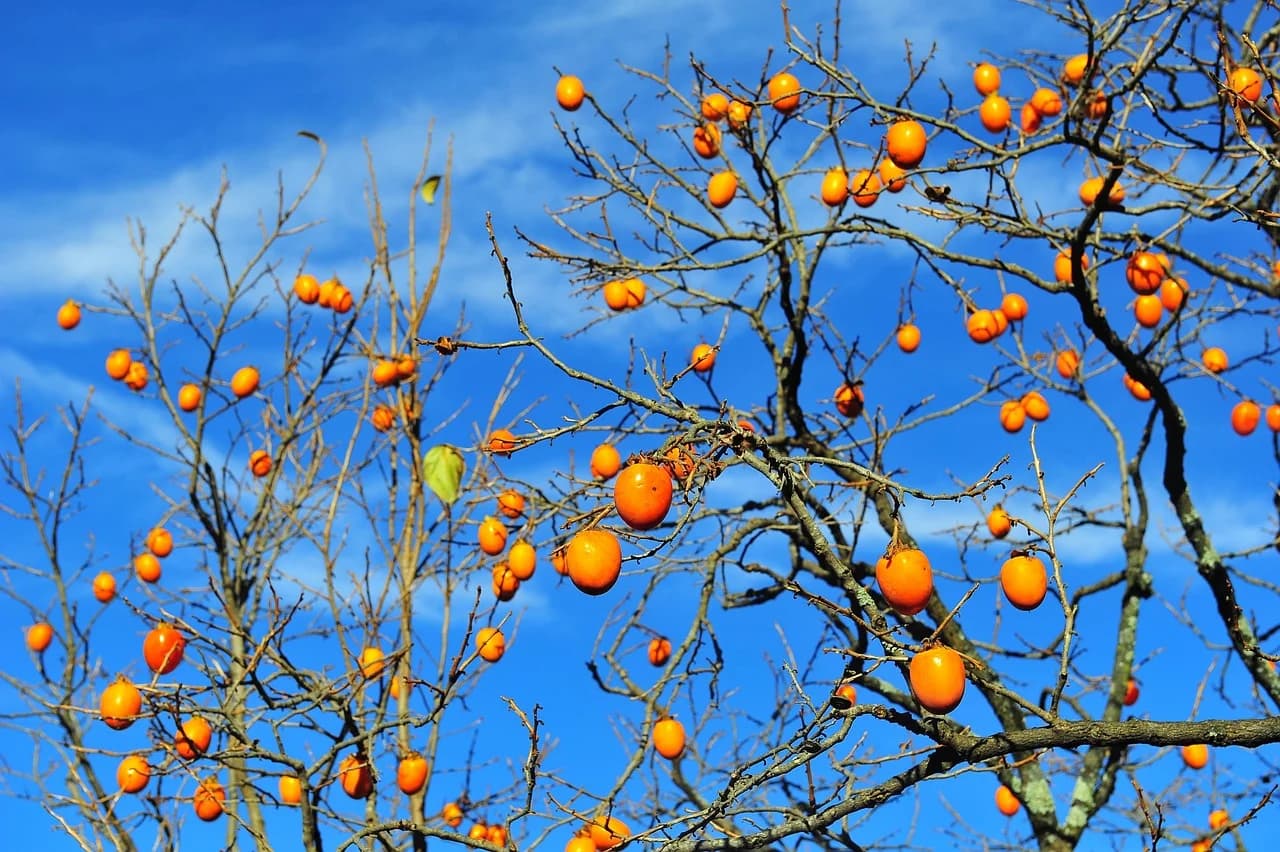
A native US tree grown for sweet fall fruit, colorful leaves and checkerboard bark. Trees grown from seed can take four to nine years to bear fruit, and you usually need both male and female trees.
Quick facts
- Germination time
- Not yet verified
- Germination temperature
- Not yet verified
- Sowing depth
- Not yet verified
- Spacing between plants
- Not yet verified
- Days to maturity
- Not yet verified
- Sun
- Full sun, partial shade
Safety for cats and dogs: not yet verified.
By SeedBattle EditorsReviewed by FahadUpdated
Spotted a mistake or missing detail? Improve this page
01 · Overview
About american persimmon
American persimmon (Diospyros virginiana) is a deciduous, woody tree native to the central and eastern United States. It is grown for its fruit, its fall color and its distinctive bark, which is thick, dark gray and divided into square blocks. In home landscapes it can grow 30 to 50 feet (9 to 15 m) tall with a spread of 20 to 30 feet (6 to 9 m), though one profile gives a wider range up to 80 feet (24 m) tall.
Growing details
- Start indoors
- Not yet verified
- Sow outdoors
- Not yet verified
- Water
- Not yet verified
- Containers
- Not suited to pots
- Height
- 9.1–15.2 m30–50 ft
- Spread
- 6.1–9.1 m20–30 ft
- Frost tolerance
- Hardy
- Soil pH
- Not yet verified
- Life cycle
- Perennial
- Hardiness zones
- USDA zones 4–9
02 · How to grow
How to grow american persimmon from seed
Seed is one of three ways to propagate this tree, along with grafting and root cutting, but no sowing date, seed depth or germination time is given in the material available here. Most persimmons are either male or female, and you need both to get fruit. Some varieties are described differently: ‘Prok’ is called self-pollinating, while another guide notes that native persimmons are rarely self-pollinating. For Iowa, ‘Yates’ and ‘Meader’ are suggested, especially in southern Iowa. Plant in full sun to partial shade in moist, well-drained, sandy soil. The deep taproot makes the tree hard to transplant, so choose the final spot with care.
03 · Care
Caring for american persimmon
Little fertilizer is needed; normal lawn fertilizer is usually enough for a tree in the landscape. Pruning should be minimal, removing dead, injured or crossing branches. Young trees benefit from pruning to build a strong branching structure that can hold heavy fruit later. Newly planted trees need regular water, but once established they need no extra watering except in drought.
At a glance
How american persimmon compares with other seeds in Fruits & other
Worked out from the growing facts of the 35 seeds in Fruits & other on SeedBattle.
- American Persimmon
- Each of the other seeds in Fruits & other
- Their average
- HeightTaller than average
9.1–15.2 m30–50 ft
Average for Fruits & other: 2.8 m9 ft, from 26 other seeds
04 · Problems
Common american persimmon problems
Leaf spot may occur, fruit drop can be messy, and mature trees send up root suckers that can become a weed problem. Pests that can affect the tree include scale, persimmon psyllid, caterpillars and persimmon borer, and diseases include fungal leaf spot, twig dieback and powdery mildew. Chemical control on large trees is usually not feasible because the spray cannot cover the foliage well.
05 · Harvest
Harvesting american persimmon
Fruit ripens in fall, and it stays astringent until it is fully ripe and soft. The fruit can stay on the tree after the leaves fall and is not harmed by freezing temperatures. Native persimmons usually ripen near or after the first frost. Trees from seed can take four to nine years to bear fruit, and grafted trees about two to four years.
06 · Storage
Storing american persimmon
Unripe persimmons can be kept at room temperature to ripen. Once ripe, store them in a plastic bag in the refrigerator for up to three days. Pulp can be frozen in freezer bags and used within one year.
07 · Safety
American Persimmon safety
Eat only fully ripe, soft fruit, because unripe native persimmons are too astringent to eat until they are completely ripe.
American Persimmon questions
How long do American persimmon trees take to produce fruit?
Trees grown from seed usually take four to nine years to bear fruit, while grafted trees may fruit in two to four years. Another profile gives three years for grafted trees and up to 10 years for full production.
Do I need two American persimmon trees to get fruit?
Most persimmons are either male or female, and you need both to get fruit. Both male and female trees are required to produce a full crop.
Can I grow an American persimmon in a pot?
The deep taproot makes the tree difficult to transplant or grow in containers.
How cold can American persimmon tolerate?
The tree is hardy to zone 4 and will tolerate winter temperatures to minus 25°F (minus 32°C). Native persimmons may survive temperatures of 20 to 25 °F (minus 29 to minus 32 °C) below zero.
Quick answers
More american persimmon questions
Short answers taken from the growing facts on this page.
How much sun does american persimmon need?
American persimmon grows in full sun or partial shade.
How tall does american persimmon grow?
American persimmon grows 9.1–15.2 m30–50 ft tall.
Is american persimmon an annual or a perennial?
American persimmon is a perennial.
Which USDA zones can american persimmon grow in?
American persimmon is hardy in USDA zones 4–9.
Side by side
Compare american persimmon with…
Two seeds, every growing fact lined up, so you can pick the one that suits your space.
Fruits & other
More seeds like american persimmon
Other seeds in the Fruits & other category.
Find your next seed to grow
Browse all 223 seeds by sun, difficulty or pot size, or line american persimmon up against another seed.