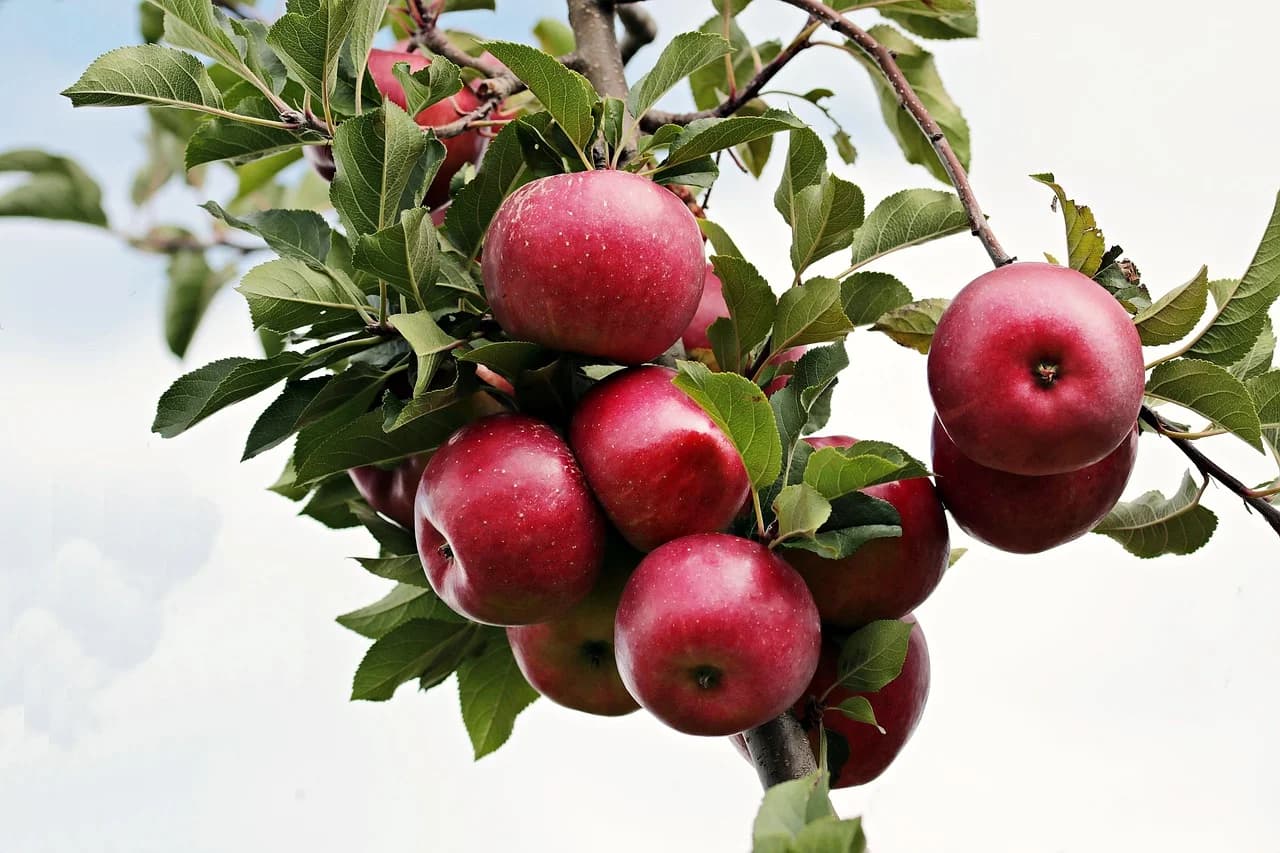
Apple Tree
Malus domestica
Also called apple
Apple trees are perennial, deciduous fruit trees that grow best in full sun. Trees grown from seed won't match the parent fruit, so most apple trees are grafted.
Quick facts
- Germination time
- Not yet verified
- Germination temperature
- Not yet verified
- Sowing depth
- Not yet verified
- Spacing between plants
- Not yet verified
- Days to maturity
- Not yet verified
- Sun
- Full sun, partial shade
Safety for cats and dogs: not yet verified.
By SeedBattle EditorsUpdated
Spotted a mistake or missing detail? Improve this page
01 · Overview
About apple tree
What it is. Apple trees (Malus domestica) are woody, deciduous trees in the rose family, native to Central Asia and Afghanistan and now grown worldwide for crisp fruit. Cultivars differ in color, flavor and best use, from fresh eating to cooking and cider.
Seed versus grafted trees. Apple seeds do not come true. A tree grown from seed will not produce fruit with the same taste, size and color as its parent, and it is usually inferior to the named variety. Nearly all apple trees sold are grafted, and grafting creates a tree genetically identical to the parent. Trees grown from seed can reach 30 feet (9 m) tall and wide, while grafted trees on dwarfing rootstocks stay much smaller.
Growing details
- Start indoors
- Not yet verified
- Sow outdoors
- Not yet verified
- Water
- Moderate
- Containers
- Not yet verified
- Height
- 4.6–9.1 m15–30 ft
- Spread
- 4.6–9.1 m15–30 ft
- Frost tolerance
- Not yet verified
- Soil pH
- pH 5.8–6.5
- Life cycle
- Perennial
- Hardiness zones
- USDA zones 4–9
02 · How to grow
How to grow apple tree from seed
When and how to sow. The approved sources here give no sowing date, seed depth or germination time for apple seed, so this page can’t give those details. What they do cover is planting young trees: plant in early spring once the soil is workable and the risk of severe freezing temperatures has passed. Because nearly all apple trees are grafted, most gardeners buy a named tree rather than starting one from seed.
Site and light. Give the tree full sun, meaning most or all of the day, and early morning sun is especially helpful for drying dew and reducing disease. Full sun to partial shade is workable, but shaded sites reduce fruit quality.
Soil. Choose well-drained soil, since apples do not tolerate wet soils. A deep sandy loam to sandy clay loam is preferred.
Pollination. Most apple varieties are self-unfruitful, so plant two or more varieties that bloom at the same time.
Spacing and rootstock. Trees on a dwarf rootstock can be spaced 8 to 12 feet (2.4 to 3.7 m) apart, semi-dwarf trees 10 to 16 feet (3 to 4.9 m) apart, and standard trees 18 to 24 feet (5.5 to 7.3 m) apart.
03 · Care
Caring for apple tree
Watering. Newly planted trees need frequent water. Start with 3 to 4 times per week and reduce to weekly as the season goes on, keeping the root zone evenly moist. Established trees do best with about 1 inch (2.5 cm) of water per week from rain or irrigation.
Feeding. Sources differ. A South Carolina guide says apple trees there generally need fertilizing each year. An Iowa guide says it is generally not necessary, since most Iowa soils supply enough nutrients, and too much fertilizer produces excess leafy growth. Bearing trees should make about 8 to 15 inches (20 to 38 cm) of new growth per year.
Weeds and staking. Keep weeds out of a 3-by-3-foot (about 0.9 by 0.9 m) area around the trunk. Many trees benefit from staking for the first two to three years, and dwarf trees often need permanent support.
Pruning and thinning. Prune while the tree is dormant, after the coldest part of winter but before spring bud swell. Thin young fruit within six weeks of full bloom, leaving the largest apple in each cluster, so the remaining apples sit about 8 to 10 inches (20 to 25 cm) apart.
At a glance
How apple tree compares with other seeds in Fruits & other
Worked out from the growing facts of the 35 seeds in Fruits & other on SeedBattle.
- Apple Tree
- Each of the other seeds in Fruits & other
- Their average
- HeightTaller than average
4.6–9.1 m15–30 ft
Average for Fruits & other: 3 m10 ft, from 26 other seeds
04 · Problems
Common apple tree problems
Apple trees are highly susceptible to insects and diseases. Common problems named include mildew, aphids, apple scab, fire blight, black spot, codling moths and apple maggots. Another guide also lists cedar apple rust, black rot, bitter rot and mites. Most trees will need some type of spray to manage insects and diseases. For fire blight, make a pruning cut at least 8 to 12 inches (20 to 30 cm) below the lowest visible sign of infection.
05 · Harvest
Harvesting apple tree
Pick apples when they are firm, crisp, juicy, well colored and have the characteristic flavor of their variety. The seeds turn brown. Mature fruit separates easily: gently grasp it in your palm and twist upward. Pick with the stems attached, since fruit picked without stems will not keep as long. Harvest dates depend on the variety.
06 · Storage
Storing apple tree
Store apples in cool conditions to extend their shelf life. Use clean wooden or cardboard boxes that are ventilated. Don’t wash apples before storing them, since the extra moisture hastens decay. Do not store bruised apples or fruit with insect or disease damage.
07 · Safety
Apple Tree safety
Apple fruit can be eaten raw and cooked in many dishes, and this page gives no warning for people. Pesticides used on apple trees should be kept in their original containers with labels intact, behind locked doors and out of reach of children and pets. Toxicity to cats and dogs is not covered on this page.
Apple Tree questions
Can I grow an apple tree from seed?
You can plant apple seeds, but the tree will not produce apples with the same taste, size and color as the parent, and it is usually inferior to the named variety.
How big do apple trees get?
Trees grown from seed can reach 15 to 30 feet (4.6 to 9.1 m) tall and wide, while trees grafted onto dwarfing rootstocks stay much smaller.
Do I need two apple trees to get fruit?
Most apple varieties need pollen from another variety, so plant two or more varieties that bloom at the same time.
When should I plant an apple tree?
Plant in early spring once the soil is workable and the risk of severe freezing temperatures has passed.
Quick answers
More apple tree questions
Short answers taken from the growing facts on this page.
How much sun does apple tree need?
Apple tree grows in full sun or partial shade.
How tall does apple tree grow?
Apple tree grows 4.6–9.1 m15–30 ft tall.
Is apple tree an annual or a perennial?
Apple tree is a perennial.
What soil pH does apple tree need?
Aim for soil at pH 5.8–6.5.
How much water does apple tree need?
Apple tree has moderate water needs.
Which USDA zones can apple tree grow in?
Apple tree is hardy in USDA zones 4–9.
Side by side
Compare apple tree with…
Two seeds, every growing fact lined up, so you can pick the one that suits your space.
Fruits & other
More seeds like apple tree
Other seeds in the Fruits & other category.
Find your next seed to grow
Browse all 223 seeds by sun, difficulty or pot size, or line apple tree up against another seed.
