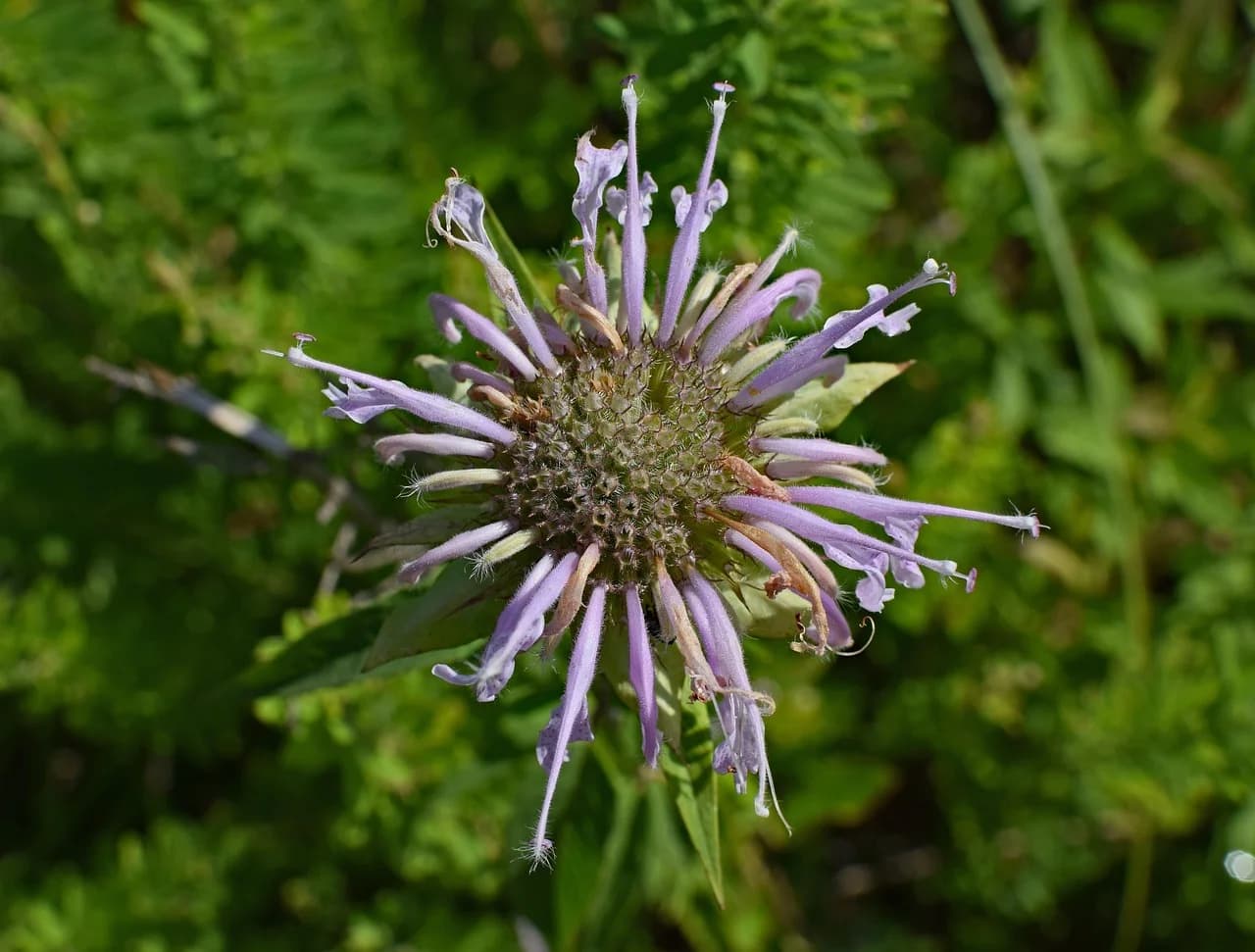
Wild Bergamot
Monarda fistulosa
Also called horsemint
Wild bergamot is a clump-forming native perennial in the mint family that grows 2 to 4 feet (61 to 122 cm) tall and blooms in pale purple or pink in summer. Seeds usually sprout in 7 to 14 days when kept warm.
Quick facts
- Germination time
- 7–14 days
- Germination temperature
- 16–21 °C61–70 °F
- Sowing depth
- Not yet verified
- Spacing between plants
- Not yet verified
- Days to maturity
- Not yet verified
- Sun
- Full sun, partial shade
Safety for cats and dogs: not yet verified.
By SeedBattle EditorsUpdated
Spotted a mistake or missing detail? Improve this page
01 · Overview
About wild bergamot
Wild bergamot is a clump-forming herbaceous perennial in the mint family, widespread across North America. It typically grows 2 to 4 feet (61 to 122 cm) tall. Its pale purple or dusky pink flowers form in whorls from mid-summer to early autumn. Bloom periods are listed as June into September or as July to August. The flowers draw bees, butterflies, and hummingbirds, and the plant is listed as deer and rabbit resistant.
The aromatic, grayish-green leaves may be used in teas.
Growing details
- Start indoors
- Not yet verified
- Sow outdoors
- Not yet verified
- Water
- Moderate
- Containers
- Not yet verified
- Height
- 0.6–1.2 m2–4 ft
- Spread
- 61–91 cm2–3 ft
- Frost tolerance
- Not yet verified
- Soil pH
- Not yet verified
- Life cycle
- Perennial
- Hardiness zones
- USDA zones 3–9
02 · How to grow
How to grow wild bergamot from seed
Sowing. Sow the seeds in flats, barely covering them. Transplant seedlings into individual containers once they have their first true leaves, then move them outside in spring or summer, 6 to 8 weeks after starting the seeds. You can also direct sow outdoors from early spring until 8 weeks before the first fall frost. Seeds usually sprout in 7 to 14 days when kept at 60 to 70 °F (16 to 21 °C).
Site and soil. Plant it in full sun or partial shade. Grow it in fertile, humus-rich, moist but well-drained soil. One page says it tolerates poor, dry soil, while another says it performs best in moderately moist soil.
Dividing and propagation. Seed is the recommended propagation method. Clumps can be lifted and divided every three years, in early spring before new growth begins. Basal softwood cuttings are another option.
03 · Care
Caring for wild bergamot
Watering. Do not let the soil dry out in summer. The plant tolerates occasional drought, but water-stressed plants are more prone to mildew.
Deadheading and cutting back. Deadheading regularly should encourage more flowers. Native bees nest in the hollow dead stems, so cut dead stems back only to 12 to 24 inches (30 to 61 cm) and let them stand until they break down on their own. Another option is to cut stems to the ground in autumn, or leave seed heads standing for winter structure.
Pests. Slugs may be a problem, especially in spring. The plant is resistant to damage by deer and rabbits.
At a glance
How wild bergamot compares with other herbs
Worked out from the growing facts of the 30 seeds in Herbs on SeedBattle.
- Wild Bergamot
- Each of the other herbs
- Their average
- Germination timeSprouts sooner than average
7–14 days
Average for herbs: 12 days, from 20 other seeds
- Germination temperatureAbout average
16–21 °C61–70 °F
Average for herbs: 19 °C66 °F, from 14 other seeds
- HeightTaller than average
0.6–1.2 m2–4 ft
Average for herbs: 68 cm2 ft, from 27 other seeds
04 · Problems
Common wild bergamot problems
Powdery mildew. Powdery mildew may be a problem in hot, dry weather. Powdery mildew can affect beebalms in crowded, poorly ventilated plantings, but this species shows resistance. Prune stems to improve airflow, and expect severe cases may need fungicidal sprays. Drought-stressed plants become more susceptible to disease.
Rust. Rust can also be a problem.
05 · Harvest
Harvesting wild bergamot
The aromatic leaves may be used in teas. The flowers are listed as a good cut flower.
Wild Bergamot questions
How long do wild bergamot seeds take to germinate?
Seeds usually sprout in 7 to 14 days when kept at 60 to 70 °F (16 to 21 °C).
When should I sow wild bergamot seeds?
You can direct sow from early spring until 8 weeks before the first fall frost. You can also sow in flats and transplant outside in spring or summer, 6 to 8 weeks after starting the seeds.
How tall and wide does wild bergamot grow?
It typically grows 2 to 4 feet (61 to 122 cm) tall and 2 to 3 feet (61 to 91 cm) wide.
Is wild bergamot prone to powdery mildew?
This species shows resistance to powdery mildew. Another page says it may be susceptible in hot, dry weather.
Quick answers
More wild bergamot questions
Short answers taken from the growing facts on this page.
How much sun does wild bergamot need?
Wild bergamot grows in full sun or partial shade.
What temperature do wild bergamot seeds need to sprout?
Wild bergamot seeds germinate at 16–21 °C61–70 °F.
Is wild bergamot an annual or a perennial?
Wild bergamot is a perennial.
How much water does wild bergamot need?
Wild bergamot has moderate water needs.
Which USDA zones can wild bergamot grow in?
Wild bergamot is hardy in USDA zones 3–9.
Side by side
Compare wild bergamot with…
Two seeds, every growing fact lined up, so you can pick the one that suits your space.
Herbs
More seeds like wild bergamot
Other seeds in the Herbs category.
Find your next seed to grow
Browse all 223 seeds by sun, difficulty or pot size, or line wild bergamot up against another seed.
