Sorghum
Sorghum bicolor
Also called milo, broomcorn
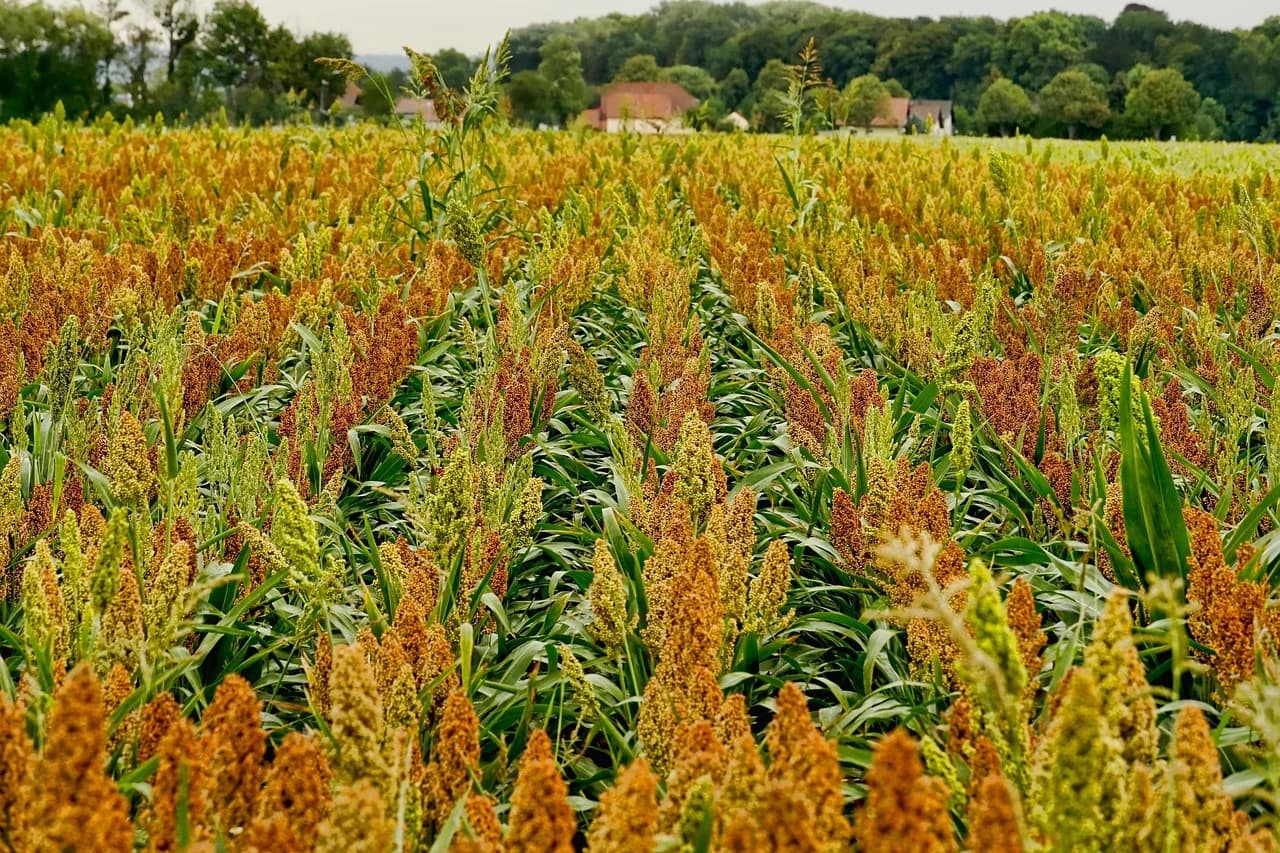
Sorghum is a tall warm-season grass grown from seed for edible grain, feed and brooms. It likes full sun and dry-tolerant soil, but birds, insects and weeds can be a problem.
Quick facts
- Germination time
- Not yet verified
- Germination temperature
- 16–18 °C61–64 °F
- Sowing depth
- 2.5–5 cm1–2 in
- Spacing between plants
- Not yet verified
- Days to maturity
- Not yet verified
- Sun
- Full sun
Safety for cats and dogs: not yet verified.
By SeedBattle EditorsUpdated
Spotted a mistake or missing detail? Improve this page
01 · Overview
About sorghum
Overview. Sorghum is a warm-season grass native to Africa. It is typically an annual, though some varieties are perennial. Its starchy grain can be cooked like rice or ground into flour or meal, and its stalks can be used for building material or brooms.
Growing details
- Start indoors
- Not yet verified
- Sow outdoors
- Not yet verified
- Water
- Not yet verified
- Containers
- Not yet verified
- Height
- 61–91 cm2–3 ft
- Spread
- 61–91 cm2–3 ft
- Frost tolerance
- Tender (no frost)
- Soil pH
- pH 6.0–6.5
- Life cycle
- Not yet verified
02 · How to grow
How to grow sorghum from seed
Sowing. Sow sorghum seed outdoors once the soil has warmed to about 60 to 65 °F (16 to 18 °C). Plant the seeds 1 to 2 inches (2.5 to 5 cm) deep. Sorghum is propagated by seed and needs a warm, sheltered spot in full sun.
Soil and water. Sorghum grows quickly in moist but well-drained soil, and it tolerates dry conditions. It grows on a wide range of soils, but yields are best when the soil pH is about 6 to 6.5.
03 · Care
Caring for sorghum
Weeding. Early weed control matters, because sorghum grows slowly as a seedling and is vulnerable to weeds. Cultivating before planting removes most weeds and gives the young plants a head start.
Maintenance. The plant is listed as needing high maintenance.
At a glance
How sorghum compares with other seeds in Fruits & other
Worked out from the growing facts of the 35 seeds in Fruits & other on SeedBattle.
- Sorghum
- Each of the other seeds in Fruits & other
- Their average
- Germination temperatureCooler than average
16–18 °C61–64 °F
Average for Fruits & other: 22 °C72 °F, from 13 other seeds
- Sowing depthDeeper than average
2.5–5 cm1–2 in
Average for Fruits & other: 2 cm¾ in, from 11 other seeds
- HeightShorter than average
61–91 cm2–3 ft
Average for Fruits & other: 3.2 m10½ ft, from 26 other seeds
04 · Problems
Common sorghum problems
Birds. Birds, especially blackbirds and sparrows, can be a major problem as the grain fills, when the kernels are high in sugar. Birds and rodents are drawn to the seed heads.
Insects and disease. Aphids, American bollworm and borers are common insects on this plant, and fungal, bacterial and nematode diseases are common. Some sources describe it as generally pest-free and disease-free.
Spreading. It grows rapidly and can be aggressive, outcompeting other plants.
05 · Harvest
Harvesting sorghum
Harvest. The edible seeds ripen from September to October. Growers commonly harvest the grain when its moisture is about 13% to 15%.
06 · Storage
Storing sorghum
Storage. Store the grain at 11% to 13% moisture to limit losses and keep its quality.
07 · Safety
Sorghum safety
Immature plants. Don’t eat the leaves or stems of immature sorghum plants, because they are poisonous to people and animals. The toxicity can increase after frost, drought or trampling.
Sorghum questions
How deep should I plant sorghum seeds?
Plant sorghum seeds 1 to 2 inches (2.5 to 5 cm) deep.
When should I plant sorghum?
Wait until the soil is warm, at about 60 to 65 °F (16 to 18 °C), before planting.
Is sorghum an annual or a perennial?
It is typically an annual, though some varieties are classified as perennials.
Is sorghum poisonous?
Immature leaves and stems are poisonous to people and animals, so don’t eat them; the mature grain is cooked and eaten.
Quick answers
More sorghum questions
Short answers taken from the growing facts on this page.
How much sun does sorghum need?
Sorghum grows in full sun.
What temperature do sorghum seeds need to sprout?
Sorghum seeds germinate at 16–18 °C61–64 °F.
How tall does sorghum grow?
Sorghum grows 61–91 cm2–3 ft tall.
Can sorghum survive frost?
No. Sorghum is tender, so it can't take frost.
What soil pH does sorghum need?
Aim for soil at pH 6.0–6.5.
Side by side
Compare sorghum with…
Two seeds, every growing fact lined up, so you can pick the one that suits your space.
Fruits & other
More seeds like sorghum
Other seeds in the Fruits & other category.
Find your next seed to grow
Browse all 223 seeds by sun, difficulty or pot size, or line sorghum up against another seed.