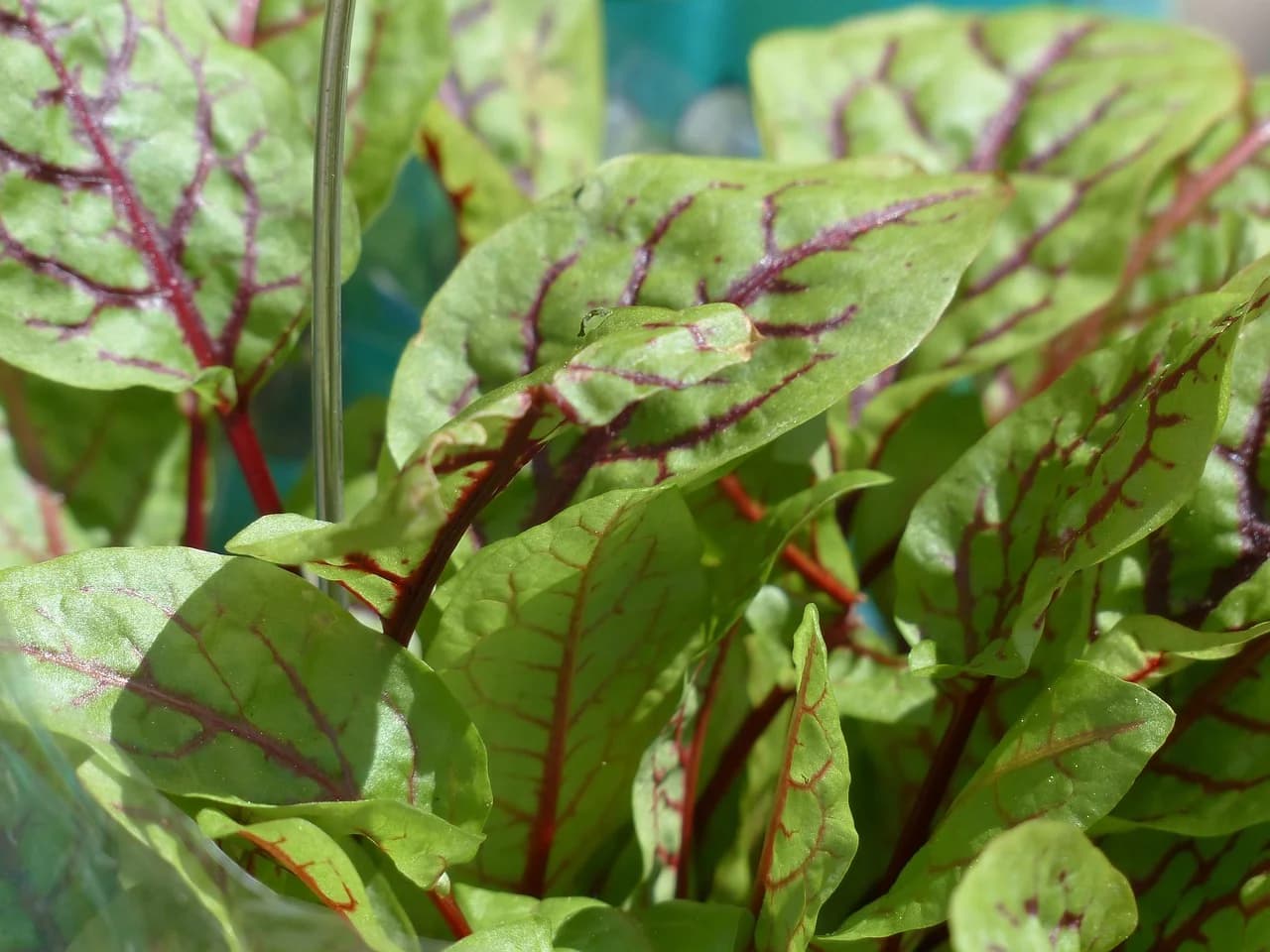
Red-Veined Sorrel
Rumex sanguineus
Also called bloody dock
Red-veined sorrel (Rumex sanguineus) is a low-maintenance perennial with deep red-veined leaves. Its young leaves are tart and edible, and it does best in full sun or partial shade.
Quick facts
- Germination time
- Not yet verified
- Germination temperature
- Not yet verified
- Sowing depth
- Not yet verified
- Spacing between plants
- Not yet verified
- Days to maturity
- Not yet verified
- Sun
- Full sun, partial shade
Safety for cats and dogs: not yet verified.
By SeedBattle EditorsUpdated
Spotted a mistake or missing detail? Improve this page
01 · Overview
About red-veined sorrel
About this plant. Red-veined sorrel (Rumex sanguineus), also called bloody dock, is a perennial with a rosette of oblong leaves marked with dark red veins. It is native to Europe and parts of northern Iran and is grown mainly for its ornamental foliage, though its young leaves can be eaten.
The plant forms a tight rosette about a foot tall from a deep taproot. Its leaves are lance-shaped and show a network of red to purple veins.
Growing details
- Start indoors
- Not yet verified
- Sow outdoors
- Not yet verified
- Water
- Not yet verified
- Containers
- Yes
- Height
- Not yet verified
- Spread
- 30–46 cm12–18 in
- Frost tolerance
- Hardy
- Soil pH
- Not yet verified
- Life cycle
- Perennial
- Hardiness zones
- USDA zones 5–8
02 · How to grow
How to grow red-veined sorrel from seed
Sowing. Sow seeds directly in the ground in spring; another page advises planting seeds in spring. Choose a spot in full sun or partial shade, in well-drained soil. The plant does best in moist, well-drained soil.
Division. You can also propagate it by division in early spring; division is listed as a recommended method.
03 · Care
Caring for red-veined sorrel
Trimming. Cut back the flower stalks after flowering to avoid self-seeding. Trimming can encourage bushier leaf growth and prevent heavy self-seeding.
Upkeep. The plant needs little care. Remove the old foliage in spring before new leaves emerge, and fertilize once a year in spring. It is considered low maintenance.
04 · Problems
Common red-veined sorrel problems
Pests and disease. Slugs and aphids may bother it. One page also lists rust and powdery mildew, while another says it is generally disease-free.
Self-seeding. Without trimming, it can self-seed heavily.
Skin irritation. The foliage may irritate the skin of sensitive people.
05 · Harvest
Harvesting red-veined sorrel
Leaves. Young leaves are edible raw or cooked and have a tart flavor. Tender young leaves taste somewhat like spinach or chard with a hint of lemony tartness.
Older leaves. Older leaves become tough and bitter, so harvest the young leaves.
06 · Safety
Red-Veined Sorrel safety
Eating. Don’t eat large amounts of this plant. It contains oxalic acid, and overeating may cause mild stomach upset.
Handling. Wear gloves when handling the plant. Sensitive people may get skin irritation from the foliage.
Pets. The plant is harmful to pets only if they eat large amounts.
Red-Veined Sorrel questions
How do I start red-veined sorrel from seed?
Sow the seeds directly in the ground in spring, in full sun or partial shade.
Can I grow red-veined sorrel in a pot?
Yes. One page suggests adding it to a mixed container or a container water garden, and another lists container as a landscape location.
Is red-veined sorrel edible?
Yes, the young leaves can be eaten raw or cooked. The older leaves are bitter and tough.
Is red-veined sorrel hardy outdoors?
It is hardy in USDA zones 5a to 8b, especially when protected by snow cover.
Quick answers
More red-veined sorrel questions
Short answers taken from the growing facts on this page.
How much sun does red-veined sorrel need?
Red-veined sorrel grows in full sun or partial shade.
Can red-veined sorrel survive frost?
Yes. Red-veined sorrel is hardy.
Is red-veined sorrel an annual or a perennial?
Red-veined sorrel is a perennial.
Which USDA zones can red-veined sorrel grow in?
Red-veined sorrel is hardy in USDA zones 5–8.
Side by side
Compare red-veined sorrel with…
Two seeds, every growing fact lined up, so you can pick the one that suits your space.
Herbs
More seeds like red-veined sorrel
Other seeds in the Herbs category.
Find your next seed to grow
Browse all 223 seeds by sun, difficulty or pot size, or line red-veined sorrel up against another seed.
