Peanut
Arachis hypogaea
Also called groundnut
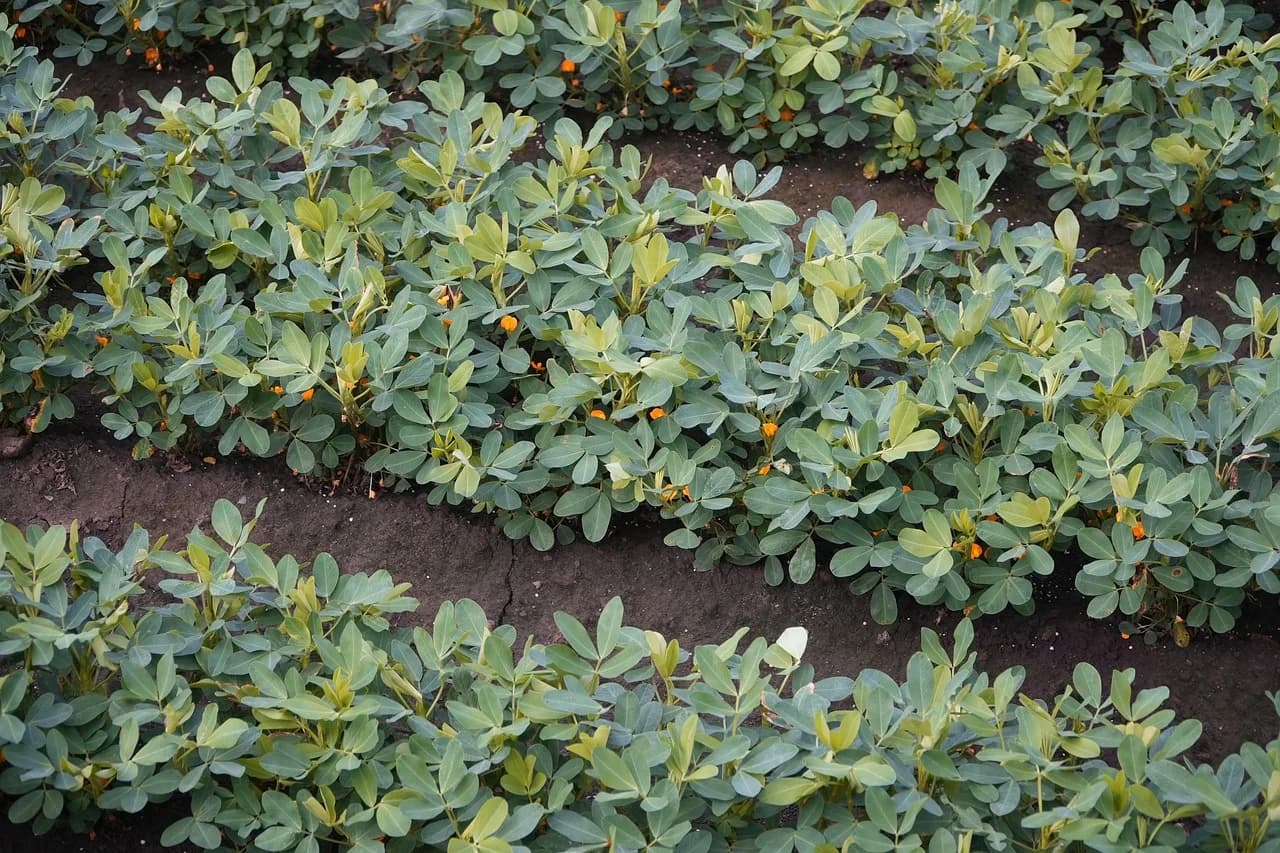
Peanuts are warm-season annuals grown from seed for their underground pods. They need full sun and a long, warm season, often 120 days or more to ripen.
Quick facts
- Germination time
- 10–15 days
- Germination temperature
- 20–35 °C68–95 °F
- Sowing depth
- 5–8 cm2–3¼ in
- Spacing between plants
- 15–23 cm6–9 in
- Days to maturity
- 120–150 days from sowing
- Sun
- Full sun
Safety for cats and dogs: not yet verified.
By SeedBattle EditorsUpdated
Spotted a mistake or missing detail? Improve this page
01 · Overview
About peanut
Peanuts are warm-season annuals grown mainly for their edible seeds. The plant flowers above ground, but the pods form underground after a peg grows into the soil. Pods typically ripen 120 to 150 days after planting, so the plant needs a long, warm season. Plants are not frost-hardy.
Growing details
- Start indoors
- 6–8 weeks before the last frost
- Sow outdoors
- At the last frost
- Water
- Not yet verified
- Containers
- Yes
- Height
- 23–46 cm9–18 in
- Spread
- 23–46 cm9–18 in
- Frost tolerance
- Tender (no frost)
- Soil pH
- pH 5.8–6.2
- Life cycle
- Annual
Sowing timeline
When to sow peanut seeds
Counted from your area's average last spring frost date. Find yours from a local weather service or garden center, then count back or forward.
- Germination temperature
- 20–35 °C68–95 °F
- Frost tolerance
- Tender (no frost)
02 · How to grow
How to grow peanut from seed
Start seeds indoors 6 to 8 weeks before the last frost, or sow directly outdoors once the soil has warmed to 60 to 70 °F (16 to 21 °C). Sow outdoors after the danger of frost is past. Some pages say peanuts are grown from seed rather than transplants, so indoor starts are an awkward case. Plant seeds 2 to 3 inches (5 to 8 cm) deep in light, sandy soil, or 1½ to 2 inches (4 to 5 cm) deep in clay. Germination is best between 68 and 95 °F (20 to 35 °C), and seeds usually come up in 10 to 15 days. Space plants 6 to 9 inches (15 to 23 cm) apart in the row, with rows about 3 feet (91 cm) apart. Peanuts can be planted in the shell or with the shell removed, but keep the red seed coat intact if you remove it. In the UK, growing outdoors is generally not suited to producing peanuts because they need a long growing season; growing under glass in full sun in light, free-draining compost is suggested.
03 · Care
Caring for peanut
Keep the soil moist after planting so the seeds come up evenly. Water matters most from 60 to 110 days after planting, when the pegs enter the soil and pods begin to develop. Avoid wetting the leaves when you water, and stop watering 10 days to two weeks before harvest. Peanuts prefer a soil pH between 5.8 and 6.2, so test your soil first. Mound soil up around the plants when they reach about a foot tall, and spread 2 to 3 inches of mulch to control weeds.
At a glance
How peanut compares with other seeds in Fruits & other
Worked out from the growing facts of the 35 seeds in Fruits & other on SeedBattle.
- Peanut
- Each of the other seeds in Fruits & other
- Their average
- Germination timeSlower to sprout than average
10–15 days
Average for Fruits & other: 10 days, from 4 other seeds
- Germination temperatureWarmer than average
20–35 °C68–95 °F
Average for Fruits & other: 21 °C71 °F, from 13 other seeds
- Sowing depthDeeper than average
5–8 cm2–3¼ in
Average for Fruits & other: 1.5 cm⅝ in, from 11 other seeds
- Spacing between plantsCloser than average
15–23 cm6–9 in
Average for Fruits & other: 1.9 m6 ft, from 8 other seeds
- HeightShorter than average
23–46 cm9–18 in
Average for Fruits & other: 3.3 m10½ ft, from 26 other seeds
04 · Problems
Common peanut problems
Diseases listed include leaf spots, southern stem rot, Sclerotinia blight, Cylindrocladium black rot and spotted wilt. Leaf spot causes brown to black spots on the leaves, and keeping leaves dry when you water helps reduce it. Mice and other ground animals may feed on developing seeds underground, and squirrels, mice and chipmunks are named as pests in one article.
05 · Harvest
Harvesting peanut
Pods typically ripen 120 to 150 days after planting, and one factsheet gives 130 to 150 days for roasting types. Dig the plants in fall when the leaves turn yellow or after the first frost. Check a few pods first; ready pods have colored seed coats and mostly darkened insides.
06 · Storage
Storing peanut
Let the dug plants dry in the sun for about a week, then remove the pods and cure them in a cool, dry place. Discard unhealthy-looking nuts and store the dried peanuts at 35 to 40 °F (2 to 4 °C) and 50 to 60 percent humidity. Roasted nuts keep about 3 to 4 weeks at room temperature, or 6 to 12 months refrigerated.
07 · Safety
Peanut safety
Peanut seeds contain proteins that can cause serious allergic reactions in some people, so people with peanut allergies should avoid exposure to the seeds. One profile lists the seeds as not edible for people and pets and advises wearing gloves when handling them; other pages describe the seeds as the edible part, so the pages disagree on whether the seeds can be eaten.
Peanut questions
How long do peanut seeds take to germinate?
Seeds usually come up in 10 to 15 days when the soil is kept moist.
When should I plant peanuts?
Sow outdoors after the danger of frost is past, once the soil has warmed to 60 to 70 °F (16 to 21 °C).
Can I grow peanuts in a pot?
One profile lists peanut among patio and container plants, but it gives no pot size.
How long do peanuts take to mature?
Pods typically ripen 120 to 150 days after planting.
Do peanuts need full sun?
Peanuts are listed as needing full sun, meaning 6 or more hours of direct sunlight a day.
Quick answers
More peanut questions
Short answers taken from the growing facts on this page.
How deep should I sow peanut seeds?
Sow them 5–8 cm2–3¼ in deep.
How far apart should I plant peanut?
Space the plants 15–23 cm6–9 in apart.
What temperature do peanut seeds need to sprout?
Peanut seeds germinate at 20–35 °C68–95 °F.
How tall does peanut grow?
Peanut grows 23–46 cm9–18 in tall.
Can peanut survive frost?
No. Peanut is tender, so it can't take frost.
Is peanut an annual or a perennial?
Peanut is an annual.
Side by side
Compare peanut with…
Two seeds, every growing fact lined up, so you can pick the one that suits your space.
Fruits & other
More seeds like peanut
Other seeds in the Fruits & other category.
Find your next seed to grow
Browse all 223 seeds by sun, difficulty or pot size, or line peanut up against another seed.