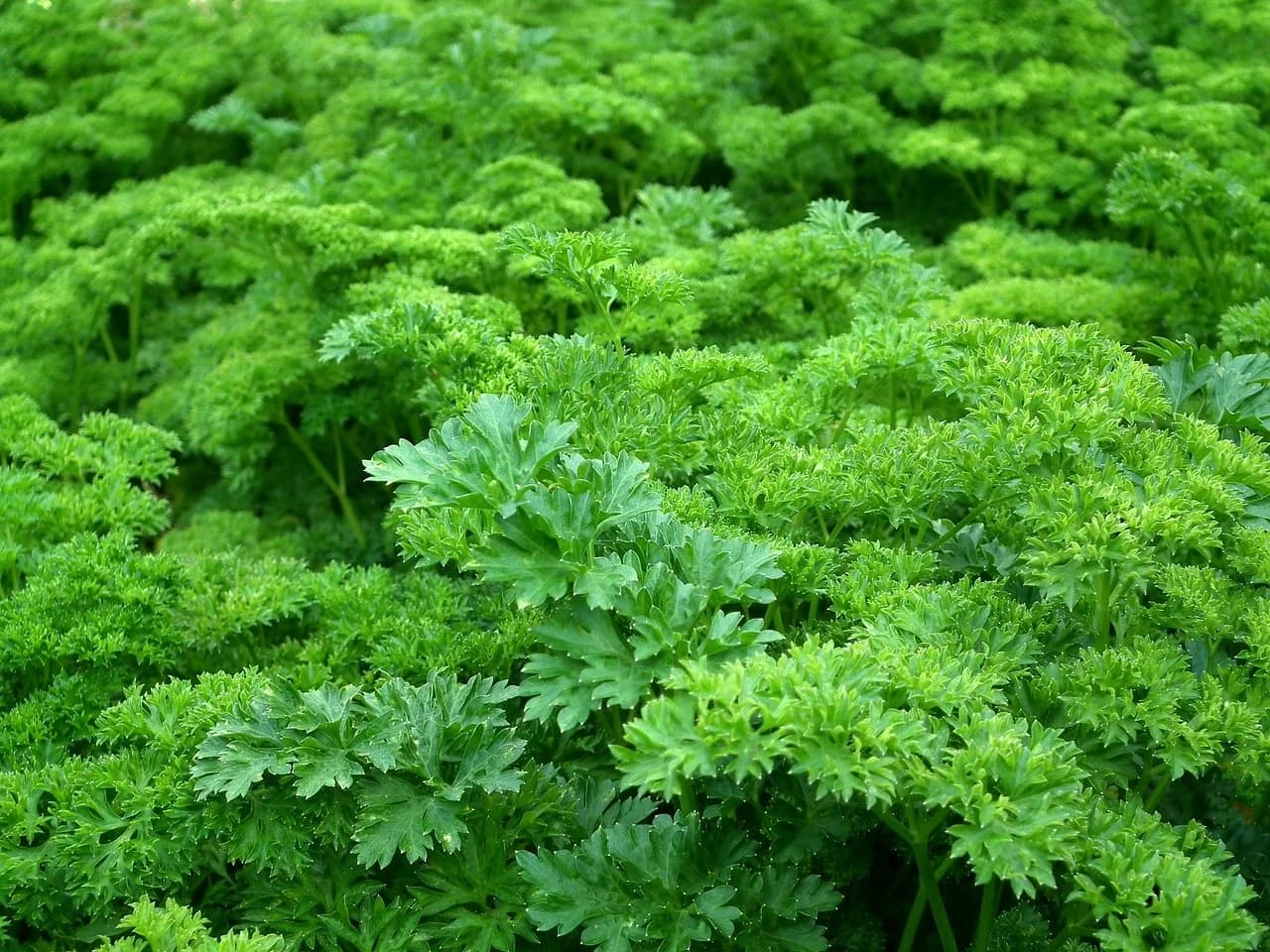
Parsley
Petroselinum crispum
A hardy biennial grown as an annual for its fresh leaves. Parsley is slow to germinate, but it's easy to grow in the ground or a pot, in sun or partial shade.
Quick facts
- Germination time
- Not yet verified
- Germination temperature
- 18–21 °C64–70 °F
- Sowing depth
- 6 mm–1.5 cm¼–½ in
- Spacing between plants
- 20–30 cm8–12 in
- Days to maturity
- Not yet verified
- Sun
- Full sun, partial shade
Toxic to cats and dogs Read the safety notes
By SeedBattle EditorsUpdated
Spotted a mistake or missing detail? Improve this page
01 · Overview
About parsley
Parsley (Petroselinum crispum) is a hardy biennial in the carrot family, native to the Mediterranean, that’s usually grown as an annual. In year one it produces leafy growth; in year two it sends up flowers and makes seed.
There are two main types: flat-leaved (Italian) parsley, which tends to have a stronger flavor, and curly-leaved parsley, which is more decorative and a little milder. Parsley is also a host plant for swallowtail butterfly caterpillars.
Growing details
- Start indoors
- 6–8 weeks before the last frost
- Sow outdoors
- At the last frost
- Water
- Moderate
- Containers
- Yes
- Height
- 20–91 cm8 in–3 ft
- Spread
- 20–30 cm8–12 in
- Frost tolerance
- Hardy
- Soil pH
- Not yet verified
- Life cycle
- Biennial
Sowing timeline
When to sow parsley seeds
Counted from your area's average last spring frost date. Find yours from a local weather service or garden center, then count back or forward.
- Germination temperature
- 18–21 °C64–70 °F
- Frost tolerance
- Hardy
02 · How to grow
How to grow parsley from seed
Be patient with the seed. Parsley is easy to grow from seed but can be slow to germinate. At 65–70 °F (18–21 °C), seeds take 14 to 30 days; outdoors it often takes a month or more, so don’t give up on them too soon.
Sow outdoors or start indoors. Sowing straight into the spot where parsley will grow avoids disturbing its roots. You can sow outdoors from your last spring frost date, with more sowings later in spring and in midsummer. For an earlier crop, start seeds indoors about 6–8 weeks before the last frost. Sow about ¼–½ inch (6–13 mm) deep and don’t let the soil dry out.
Spacing and transplanting. Set plants 8–12 inches (20–30 cm) apart, and disturb the taproot as little as possible when you transplant.
Sun, soil and pots. Parsley grows well in full sun or partial shade and likes rich, consistently moist, well-drained soil. For a pot, choose one at least 10 inches (25 cm) wide and deep. Parsley does best where summers are cool and can wilt in hot, humid climates.
03 · Care
Caring for parsley
Watering. Parsley needs moist but not waterlogged soil. Water young plants and during hot, dry spells, and check pots often, because their compost dries out quickly in warm weather.
Feeding. Advice varies. Gardening experts say parsley in the ground shouldn’t need feeding, though potted plants may benefit from a balanced liquid feed every few weeks. Gardening experts suggest fertilizing outdoor parsley twice during the growing season.
Tidying. Snip off lower leaves that turn yellow to keep plants looking good and encourage new growth.
The second year. Leaves lose flavor once parsley flowers in its second year, so it’s usually treated as an annual and replaced after the first year.
At a glance
How parsley compares with other herbs
Worked out from the growing facts of the 30 seeds in Herbs on SeedBattle.
- Parsley
- Each of the other herbs
- Their average
- Germination temperatureAbout average
18–21 °C64–70 °F
Average for herbs: 19 °C66 °F, from 14 other seeds
- Sowing depthDeeper than average
6 mm–1.5 cm¼–½ in
Average for herbs: 5 mm¼ in, from 16 other seeds
- Spacing between plantsCloser than average
20–30 cm8–12 in
Average for herbs: 35 cm14 in, from 13 other seeds
- HeightShorter than average
20–91 cm8 in–3 ft
Average for herbs: 70 cm2½ ft, from 27 other seeds
04 · Problems
Common parsley problems
Parsley is closely related to carrots and celery and can be affected by the same diseases and insects. Watch for aphids, carrot fly, celery leaf mining fly, and slugs and snails; growing parsley in pots can make it harder for slugs to reach.
Other problems include Septoria leaf spot and stem rot, plus pests such as carrot weevil, flea beetles, leafhoppers and tarnished plant bugs.
05 · Harvest
Harvesting parsley
Pick leaves from late spring through fall; regular picking encourages more leaves. Take a few leafy stems from the outside of the plant, snipping them near the base. Gardening experts suggest harvesting once plants are about 8 inches (20 cm) tall.
Outdoors, parsley dies down over winter. To keep it producing, bring plants indoors or into a greenhouse or cold frame, or cover them with cloches.
06 · Storage
Storing parsley
Parsley is best used fresh. To freeze it, chop the leaves into an ice-cube tray, top up with water and freeze. To dry it, hang bunches in a warm, dark, well-ventilated place for a few weeks, then crush the leaves and store them in an airtight jar. Dried parsley has less flavor than fresh.
07 · Safety
Parsley safety
Pet poison experts list parsley as toxic to cats, dogs and horses. Its furanocoumarins can cause photosensitization (sunburn-like skin reactions), though large amounts are needed to cause this effect. Parsley’s fruit and seeds are poisonous to birds.
Parsley questions
How long does parsley take to germinate?
It’s slow: 14 to 30 days at 65–70 °F (18–21 °C), and outdoor sowings often take a month or more.
Can I grow parsley in a pot?
Yes. Parsley grows well in containers. Use a pot at least 10 inches (25 cm) wide and deep, and keep the compost evenly moist.
When should I plant parsley seeds?
Start seeds indoors about 6–8 weeks before your last spring frost, or sow outdoors from the last frost date. You can make more sowings later in spring and in midsummer.
Does parsley come back every year?
Not really. Parsley is a biennial: it makes leaves in year one, then flowers and seeds in year two, when the leaves stop tasting good. That’s why it’s usually grown as an annual. It may reseed itself after the second year.
Is parsley safe for cats and dogs?
Pet poison experts list parsley as toxic to cats and dogs. It can cause sunburn-like skin reactions, though large amounts are needed.
Quick answers
More parsley questions
Short answers taken from the growing facts on this page.
How deep should I sow parsley seeds?
Sow them 6 mm–1.5 cm¼–½ in deep.
How far apart should I plant parsley?
Space the plants 20–30 cm8–12 in apart.
How much sun does parsley need?
Parsley grows in full sun or partial shade.
What temperature do parsley seeds need to sprout?
Parsley seeds germinate at 18–21 °C64–70 °F.
How tall does parsley grow?
Parsley grows 20–91 cm8 in–3 ft tall.
Can parsley survive frost?
Yes. Parsley is hardy.
Side by side
Compare parsley with…
Two seeds, every growing fact lined up, so you can pick the one that suits your space.
Herbs
More seeds like parsley
Related seeds, plus others in the Herbs category.
Find your next seed to grow
Browse all 223 seeds by sun, difficulty or pot size, or line parsley up against another seed.
