Luffa
Luffa aegyptiaca
Also called loofah, sponge gourd
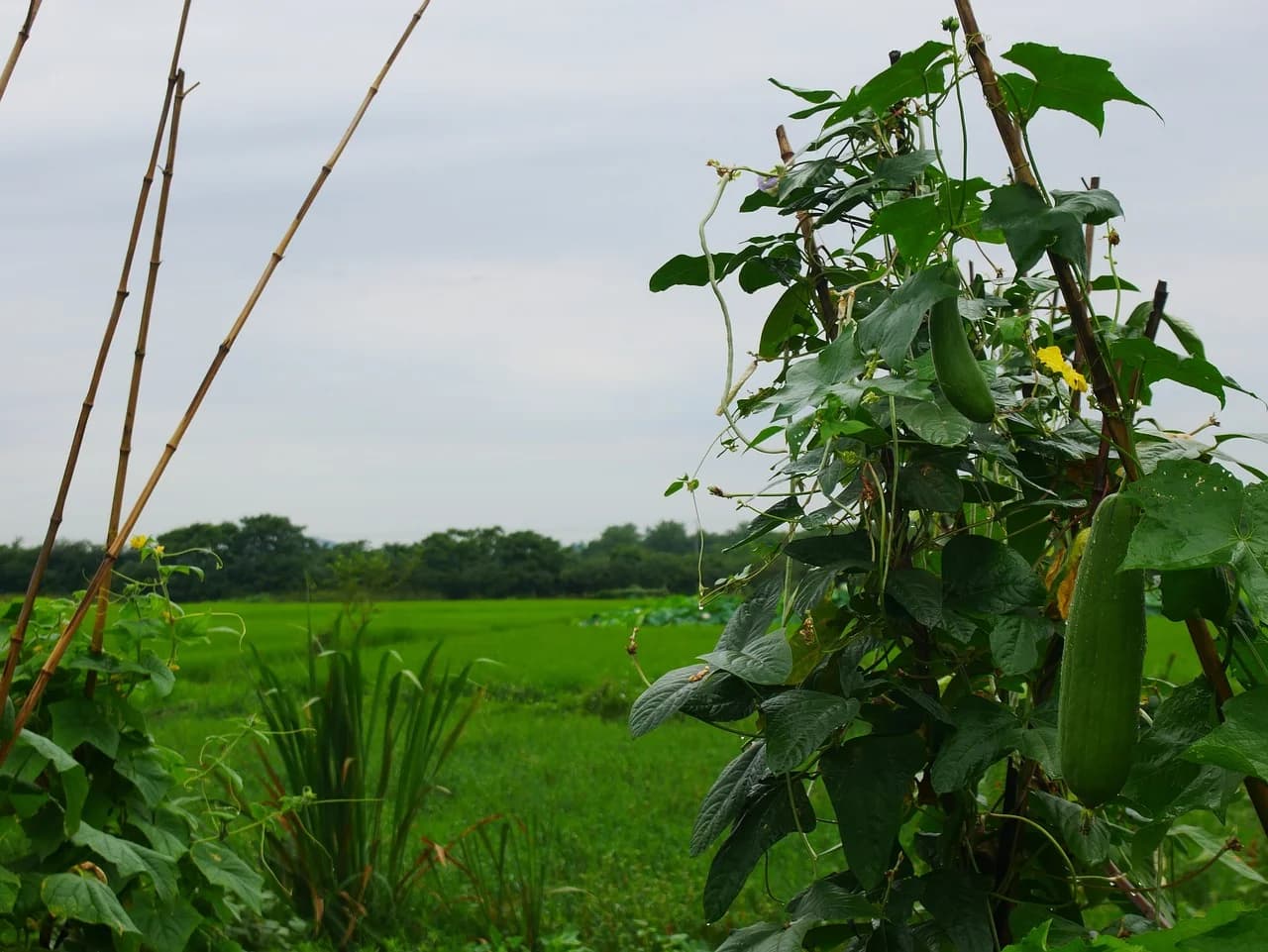
Luffa (Luffa aegyptiaca) is an annual climbing vine that needs full sun, a sturdy trellis and a long warm season. Its young fruits can be eaten, and mature fruits make bath sponges.
Quick facts
- Germination time
- Not yet verified
- Germination temperature
- 21–24 °C70–75 °F
- Sowing depth
- Not yet verified
- Spacing between plants
- Not yet verified
- Days to maturity
- Not yet verified
- Sun
- Full sun
Safety for cats and dogs: not yet verified.
By SeedBattle EditorsUpdated
Spotted a mistake or missing detail? Improve this page
01 · Overview
About luffa
Luffa (Luffa aegyptiaca), also called loofah or sponge gourd, is an annual climbing vine in the cucumber family. It climbs by tendrils and bears bright yellow flowers in summer. The vines can run 30 to 50 feet (9 to 15 m) long. Young green fruits can be eaten like squash or cucumber, while mature fruits turn fibrous and are used as bath sponges.
Growing details
- Start indoors
- 6–8 weeks before the last frost
- Sow outdoors
- At the last frost
- Water
- Moderate
- Containers
- Yes
- Height
- Not yet verified
- Spread
- 0.5–1 m1½–3½ ft
- Frost tolerance
- Tender (no frost)
- Soil pH
- Not yet verified
- Life cycle
- Annual
Sowing timeline
When to sow luffa seeds
Counted from your area's average last spring frost date. Find yours from a local weather service or garden center, then count back or forward.
- Germination temperature
- 21–24 °C70–75 °F
- Frost tolerance
- Tender (no frost)
02 · How to grow
How to grow luffa from seed
Sow seeds outdoors directly after the threat of frost has passed, but only where the frost-free season lasts at least four months. In cooler areas, soak the seeds in water for 24 hours, then start them indoors 6 to 8 weeks before the last frost date. Use biodegradable pots to reduce transplant shock. Start seeds in warm soil in late spring. Sow at 70 to 75 °F (21 to 24 °C) in early spring.
Sun and support. Plant in full sun, with at least 6 hours of direct sun a day, and give the vines a sturdy trellis to climb. The trellis also keeps the fruit off the ground so it doesn’t rot.
Outdoors and in pots. Outside, plant out in early summer against a sunny fence with climbing support. Luffa needs a long growing season for the fruit to mature. Under glass, it can be grown in large pots with support for the tendrils.
03 · Care
Caring for luffa
Water and soil. Keep the soil evenly moist and well-drained, with rich loam. The plant tolerates nutritionally poor soil. Under glass, provide high humidity and shade from hot summer sun.
Pruning. No pruning is needed.
At a glance
How luffa compares with other seeds in Fruits & other
Worked out from the growing facts of the 35 seeds in Fruits & other on SeedBattle.
- Luffa
- Each of the other seeds in Fruits & other
- Their average
- Germination temperatureAbout average
21–24 °C70–75 °F
Average for Fruits & other: 22 °C71 °F, from 13 other seeds
04 · Problems
Common luffa problems
Powdery mildew, downy mildew and various leaf spot diseases are possible. Cucumber beetles, squash bugs, thrips, aphids and spider mites can be problems. One profile describes the plant as generally pest-free but possibly susceptible to powdery mildew.
05 · Harvest
Harvesting luffa
Pick young fruits while they are under 7 inches (18 cm) long, and eat them like squash or cucumber. Fruit can grow about 1 to 1½ inches (2.5 to 3.8 cm) a day, so check the vines often. Sponge fruit is ready when the skin feels loose and brittle. For sponges, harvest after the first fall frost, when the gourds are tan, light and dry and the seeds rattle inside.
06 · Storage
Storing luffa
After harvest, peel off the skin, shake the seeds loose and save some for next year. Soak the sponge in a mix of 10 parts water to 1 part bleach for about an hour, then let it dry.
07 · Safety
Luffa safety
Eat only young fruit, and don’t eat any fruit that tastes bitter. Wear gloves and other protective equipment when handling the plant.
Luffa questions
When should I plant luffa seeds?
Where the frost-free season lasts at least four months, sow directly outdoors after the threat of frost. In cooler areas, start seeds indoors 6 to 8 weeks before the last frost date.
Can I grow luffa in a pot?
Yes, luffa can be grown in large pots under glass or on a patio, with support for the climbing tendrils.
How much sun does luffa need?
Luffa needs at least 6 hours of full sun a day.
When do I harvest luffa for sponges?
Harvest after the first fall frost, when the gourds are tan, light and dry and the seeds rattle inside.
Can I eat luffa?
Young fruits under 7 inches (18 cm) long can be eaten like squash or cucumber. Don’t eat any fruit that tastes bitter.
Quick answers
More luffa questions
Short answers taken from the growing facts on this page.
What temperature do luffa seeds need to sprout?
Luffa seeds germinate at 21–24 °C70–75 °F.
Can luffa survive frost?
No. Luffa is tender, so it can't take frost.
Is luffa an annual or a perennial?
Luffa is an annual.
How much water does luffa need?
Luffa has moderate water needs.
Side by side
Compare luffa with…
Two seeds, every growing fact lined up, so you can pick the one that suits your space.
Fruits & other
More seeds like luffa
Other seeds in the Fruits & other category.
Find your next seed to grow
Browse all 223 seeds by sun, difficulty or pot size, or line luffa up against another seed.