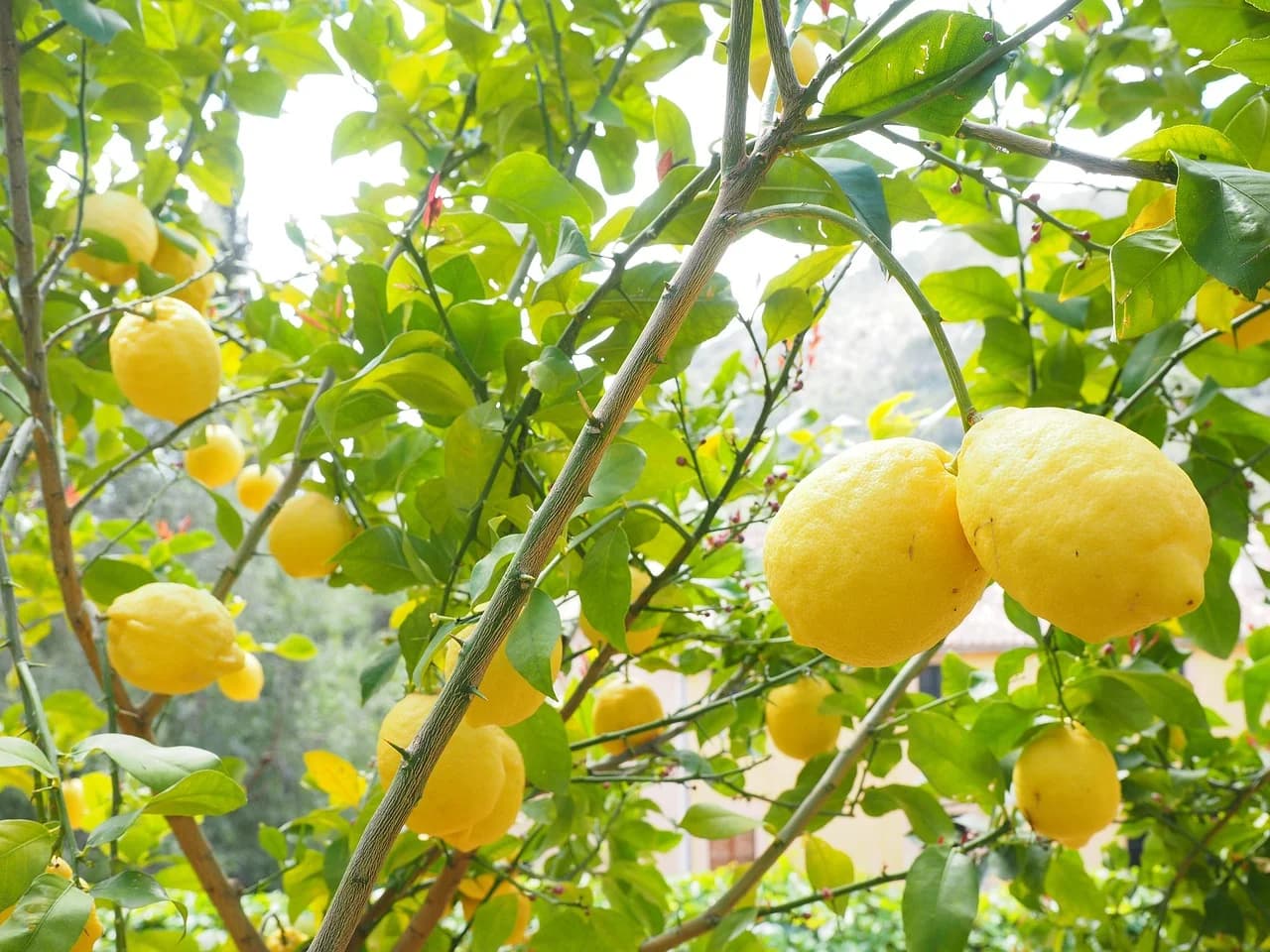
Lemon Tree
Citrus × limon
Also called lemon
A lemon tree is a shrub or small tree that needs full sun, a pot it can move indoors in cold weather, and patience before fruiting. It is listed as toxic to cats and dogs.
Quick facts
- Germination time
- Not yet verified
- Germination temperature
- Not yet verified
- Sowing depth
- Not yet verified
- Spacing between plants
- Not yet verified
- Days to maturity
- Not yet verified
- Sun
- Full sun
Toxic to cats and dogs Read the safety notes
By SeedBattle EditorsUpdated
Spotted a mistake or missing detail? Improve this page
01 · Overview
About lemon tree
A lemon tree is a shrub or small tree that can grow up to about 13 feet (4 m) tall and spread about 3 to 5 feet (1 to 1.5 m) wide. It has glossy dark green leaves, fragrant white flowers in spring, and yellow fruit. Many cultivars exist, and Meyer lemon is one of the varieties often grown in containers.
Growing details
- Start indoors
- Not yet verified
- Sow outdoors
- Not yet verified
- Water
- Moderate
- Containers
- Yes
- Height
- 2.5–4 m8–13 ft
- Spread
- 1–1.5 m3½–5 ft
- Frost tolerance
- Not yet verified
- Soil pH
- Not yet verified
- Life cycle
- Not yet verified
02 · How to grow
How to grow lemon tree from seed
Sowing from seed. The sources here do not give seed sowing dates, sowing depth or germination times for lemon, so this page cannot tell you when to sow seeds. The Pennsylvania example started from a grafted tree bought online, and dwarf citrus is described as grafted onto cold-hardy rootstock. Young citrus plants may not bear fruit for a few years, and the sources do not say how long a seed-grown lemon takes.
Light and placement. Give the tree at least 6 hours of direct sun, or 8 to 12 hours if you can. Outdoors, place it in full sun in spring after the danger of frost has passed, and move it back indoors in fall before the first frost. Move it out or in gradually, since sudden temperature changes can cause fruit drop.
Pot. Lemons can be grown in a container, and one guide advises a large pot with a well-draining potting mix.
03 · Care
Caring for lemon tree
Watering. Keep the soil consistently moist but not waterlogged, and let the top of the soil dry out between waterings. Use a pot with a drainage hole, and empty any water from the saucer.
Feeding. Feed during the growing season from spring to late summer with a fertilizer that has a nitrogen ratio of 2-1-1 or 3-1-1, and stop by early fall. Repot into fresh potting mix once every three years.
Winter and humidity. Citrus damaged below 32 °F (0 °C) needs winter protection. Meyer lemons are cold-hardy to 22 °F (−6 °C), so they need to spend winter indoors, where a humidifier or misting helps.
Hand-pollinating indoors. The tree is self-pollinating, but indoors you will need to brush blossoms with a small dry paintbrush to set fruit.
Pruning. Prune to keep the desired height and shape, and remove broken or dead branches at any time. Some varieties, such as Meyer lemon, produce thorns that can be pruned off at any time without harm.
At a glance
How lemon tree compares with other seeds in Fruits & other
Worked out from the growing facts of the 35 seeds in Fruits & other on SeedBattle.
- Lemon Tree
- Each of the other seeds in Fruits & other
- Their average
- HeightAbout average
2.5–4 m8–13 ft
Average for Fruits & other: 3.1 m10½ ft, from 26 other seeds
04 · Problems
Common lemon tree problems
Lemon trees are prone to scale insects, mites, mealybugs, whiteflies and aphids. Yellow leaves with green veins can mean the soil is not acidic enough or lacks iron. Leaves dropping after a move can mean a change in temperature, light or humidity. Flower drop suggests the soil is too dry, while leaf drop suggests overwatering. If the tree has no flowers or fruit, it may be too young, short of light, or not hand-pollinated.
05 · Harvest
Harvesting lemon tree
Meyer lemons ripen mainly from fall to winter, but may produce fruit throughout the year. One guide says it takes six to nine months for a lemon to fully ripen. Citrus naturally drops some immature fruit, and up to 75% of fruit may fall off, which is normal.
06 · Safety
Lemon Tree safety
Toxic to dogs and to cats. Vomiting, diarrhea, depression and possible skin irritation are listed as signs of trouble in pets. The fruit is listed as edible, but the skins and plant material can cause problems for pets.
Lemon Tree questions
Can I grow a lemon tree in a pot?
Yes. Lemons can be grown as a container plant, and the tree needs to be moved indoors for winter.
How much sun does a lemon tree need?
Give it at least 6 hours of direct sunlight, or 8 to 12 hours if possible.
How long before a lemon tree bears fruit?
A young citrus plant may not bear fruit until after a few years of growth. The sources here do not give a figure for seed-grown lemons.
Are lemon trees toxic to cats and dogs?
Yes, lemon is listed as toxic to both cats and dogs.
How long does a lemon take to ripen?
One guide says it takes six to nine months for a lemon to fully ripen.
Quick answers
More lemon tree questions
Short answers taken from the growing facts on this page.
How tall does lemon tree grow?
Lemon tree grows 2.5–4 m8–13 ft tall.
How much water does lemon tree need?
Lemon tree has moderate water needs.
Side by side
Compare lemon tree with…
Two seeds, every growing fact lined up, so you can pick the one that suits your space.
Fruits & other
More seeds like lemon tree
Other seeds in the Fruits & other category.
Find your next seed to grow
Browse all 223 seeds by sun, difficulty or pot size, or line lemon tree up against another seed.
