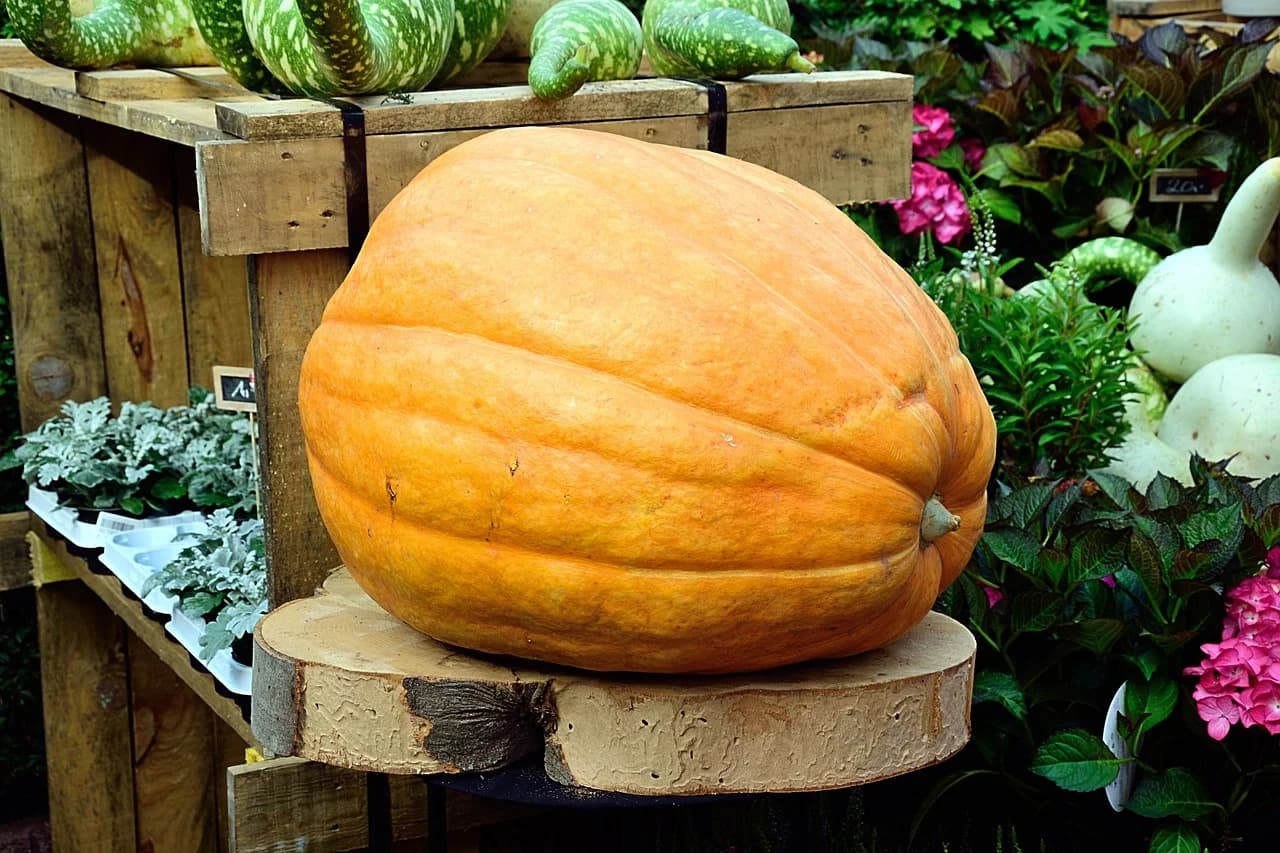
Giant Pumpkin
Cucurbita maxima
Also called atlantic giant pumpkin
Giant pumpkin (Cucurbita maxima) is a warm-season annual vine grown from seed in full sun, and its fruit can grow very large with careful care.
Quick facts
- Germination time
- 7–10 days
- Germination temperature
- 24–35 °C75–95 °F
- Sowing depth
- Not yet verified
- Spacing between plants
- Not yet verified
- Days to maturity
- Not yet verified
- Sun
- Full sun
Safety for cats and dogs: not yet verified.
By SeedBattle EditorsUpdated
Spotted a mistake or missing detail? Improve this page
01 · Overview
About giant pumpkin
Overview. Giant pumpkin is Cucurbita maxima, a warm-season annual vine in the cucumber family. The vine trails along the ground or climbs with tendrils, and it is an aggressive grower that is easily started from seed. For very large fruit, choose a cultivar bred for size, such as ‘Dill’s Atlantic Giant’, ‘Prizewinner’, ‘Big Max’ or ‘Big Moon’. Some of these are pumpkin-like squash rather than true pumpkins, and they are generally not used for cooking. Big Max and Big Moon can produce fruit over 200 pounds (90 kg), and giant pumpkins have been recorded at more than 1,000 pounds (450 kg).
Varieties. Results depend on the cultivar, so pick one known for size before you buy seed.
Growing details
- Start indoors
- 2–3 weeks before the last frost
- Sow outdoors
- At the last frost
- Water
- Moderate
- Containers
- Not yet verified
- Height
- 10–50 cm4–20 in
- Spread
- 2.5–4 m8–13 ft
- Frost tolerance
- Tender (no frost)
- Soil pH
- pH 6.0–8.0
- Life cycle
- Annual
Sowing timeline
When to sow giant pumpkin seeds
Counted from your area's average last spring frost date. Find yours from a local weather service or garden center, then count back or forward.
- Germination time
- 7–10 days
- Germination temperature
- 24–35 °C75–95 °F
- Frost tolerance
- Tender (no frost)
02 · How to grow
How to grow giant pumpkin from seed
Sowing. Sow outdoors after all danger of frost has passed and the soil has warmed. Seeds are expected to sprout in 7 to 10 days, and the seed supplier gives a germination temperature of 75 to 95 °F (24 to 35 °C). Mound up soil in the middle of the planting spot and plant 3 to 5 seeds about ½ inch deep. Some extension guidance gives a depth of 1 to 2 inches (2.5 to 5 cm) instead, so the depth is not settled. When the plants have their second set of leaves, keep the strongest one and cut the others at soil level instead of pulling them.
Starting indoors. Seeds can be started indoors two to three weeks before the last expected frost. Harden the seedlings off outdoors for about a week before planting them out.
Site and spacing. Choose full sun, with at least 6 hours of direct sunlight a day, in rich, fertile, well-drained soil. Give them plenty of room: 20 to 25 feet (6.1 to 7.6 m) between plants is not unusual for world-champion pumpkins. Home guides space rows about 8 to 12 feet (2.4 to 3.7 m) apart.
03 · Care
Caring for giant pumpkin
Watering. Pumpkin plants need about 1 inch (2.5 cm) of water per week, ideally in the morning so the leaves dry during the day. Another guide advises 1 to 2 inches (2.5 to 5 cm) per week, applied deeply and infrequently. Mulch around the plants to hold moisture and keep weeds down.
Feeding. Feed with a complete fertilizer every week, and avoid high-nitrogen types, which may hold back flowers or fruit. Too much fertilizer can cause excess vine growth and split fruit.
Choosing fruit. When the young fruits are 6 to 8 inches (15 to 20 cm) across, keep the largest and fastest-growing one and remove the rest. Pinch back the vine ends to send energy into that fruit. Another guide suggests keeping two or three fruits on separate runners instead. Place cardboard under the fruit to help prevent soil rot.
At a glance
How giant pumpkin compares with other vegetables
Worked out from the growing facts of the 79 seeds in Vegetables on SeedBattle.
- Giant Pumpkin
- Each of the other vegetables
- Their average
- Germination timeSprouts sooner than average
7–10 days
Average for vegetables: 10 days, from 39 other seeds
- Germination temperatureWarmer than average
24–35 °C75–95 °F
Average for vegetables: 22 °C72 °F, from 38 other seeds
- HeightShorter than average
10–50 cm4–20 in
Average for vegetables: 94 cm3 ft, from 57 other seeds
04 · Problems
Common giant pumpkin problems
Pests. Slugs, aphids and beetles are common pests. Cucumber beetles, squash bugs and squash vine borers also attack these plants. Squash bugs suck sap from leaves, and cucumber beetles can spread bacterial disease.
Diseases. Plants may be susceptible to slugs and snails, grey moulds and powdery mildew. Powdery mildew starts as white fungal patches on older leaves, and as the foliage dies it can expose fruit to sun and cause early ripening.
05 · Harvest
Harvesting giant pumpkin
Harvest. Pumpkins are usually picked in late September or October, before heavy frosts. Cut them with a sharp knife or pruners and leave 3 to 4 inches (7.6 to 10 cm) of stem on each fruit. Fruit is generally ready about 45 to 55 days after flowering, when the vine begins to die back and the rind is hard enough that a fingernail won’t scratch it.
Frost. A light frost won’t harm the skin or flesh of the fruit but will kill the vines, and temperatures under 28 °F (-2 °C) could injure fruit.
06 · Storage
Storing giant pumpkin
Storage. Store fruit in a dry area that stays between 50 and 55 °F (10 to 13 °C). Keep the fruit where it won’t freeze.
07 · Safety
Giant Pumpkin safety
Handling. Wear gloves and other protective gear when handling the plant.
Bitter fruit. If a crop tastes bitter, don’t eat it or feed it to pets.
Pets. One page lists the plant as non-toxic for cats and dogs, but the bitter-fruit caution above still applies.
Giant Pumpkin questions
How long do giant pumpkin seeds take to germinate?
Seeds are expected to sprout in 7 to 10 days. The seed supplier gives a germination temperature of 75 to 95 °F (24 to 35 °C).
When should I plant giant pumpkin seeds?
Sow outdoors after all danger of frost has passed and the soil has warmed. You can also start seeds indoors two to three weeks before the last expected frost.
How much space does a giant pumpkin need?
Twenty to twenty-five feet (6.1 to 7.6 m) between plants is not unusual for world-champion pumpkins. Home guides space rows about 8 to 12 feet (2.4 to 3.7 m) apart.
Can I eat giant pumpkins?
Giant cultivars are generally not used for cooking, and some are pumpkin-like squash rather than true pumpkins.
Quick answers
More giant pumpkin questions
Short answers taken from the growing facts on this page.
How much sun does giant pumpkin need?
Giant pumpkin grows in full sun.
What temperature do giant pumpkin seeds need to sprout?
Giant pumpkin seeds germinate at 24–35 °C75–95 °F.
How tall does giant pumpkin grow?
Giant pumpkin grows 10–50 cm4–20 in tall.
Can giant pumpkin survive frost?
No. Giant pumpkin is tender, so it can't take frost.
Is giant pumpkin an annual or a perennial?
Giant pumpkin is an annual.
What soil pH does giant pumpkin need?
Aim for soil at pH 6.0–8.0.
Side by side
Compare giant pumpkin with…
Two seeds, every growing fact lined up, so you can pick the one that suits your space.
Vegetables
More seeds like giant pumpkin
Related seeds, plus others in the Vegetables category.
Find your next seed to grow
Browse all 223 seeds by sun, difficulty or pot size, or line giant pumpkin up against another seed.
