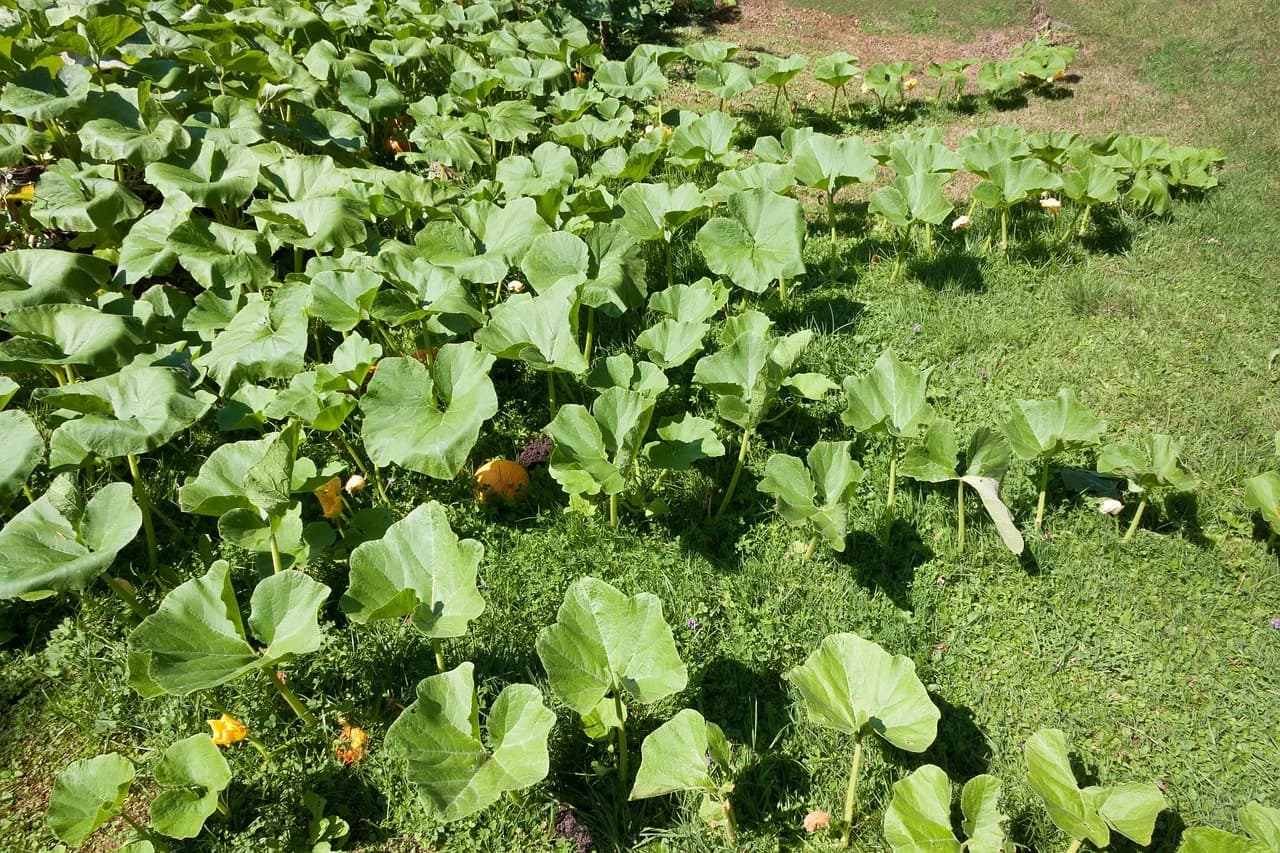
Pumpkin
Cucurbita spp.
Pumpkins are warm-season annual vines grown for their fall fruit. They are sown from seed once frost has passed, and they need full sun and well-drained, moderately moist soil.
Quick facts
- Germination time
- 7–10 days
- Germination temperature
- Not yet verified
- Sowing depth
- Not yet verified
- Spacing between plants
- Not yet verified
- Days to maturity
- Not yet verified
- Sun
- Full sun
Non-toxic to cats and dogs
By SeedBattle EditorsUpdated
Spotted a mistake or missing detail? Improve this page
01 · Overview
About pumpkin
Pumpkins are warm-season annual vines that trail along the ground or climb with tendrils. Plants sold as pumpkins belong to several Cucurbita species, and the fruit comes in many colors, shapes and sizes, mostly orange when ripe. Some types are grown for carving and some for pies, and certain giant cultivars can exceed 200 pounds (about 90 kg).
Growing details
- Start indoors
- 2–3 weeks before the last frost
- Sow outdoors
- At the last frost
- Water
- Moderate
- Containers
- Not yet verified
- Height
- Not yet verified
- Spread
- Not yet verified
- Frost tolerance
- Tender (no frost)
- Soil pH
- pH 6.0–8.0
- Life cycle
- Annual
Sowing timeline
When to sow pumpkin seeds
Counted from your area's average last spring frost date. Find yours from a local weather service or garden center, then count back or forward.
- Germination time
- 7–10 days
- Frost tolerance
- Tender (no frost)
02 · How to grow
How to grow pumpkin from seed
Sowing. Sow seeds outdoors after the danger of frost has passed. Seeds are easily sown from seed especially when soils are warm. Some growers start seeds indoors two to three weeks before the last expected frost, then harden seedlings off for a week before planting. Sow two or three seeds per hill or pot and thin to one plant once the first true leaves appear.
Depth and spacing. Advice on sowing depth differs. One extension guide says about ½ inch (1.3 cm) deep, while another says 1 to 2 inches (2.5 to 5 cm) deep in mounds. Spacing also varies: rows 8 to 12 feet (2.4 to 3.7 m) apart with one plant per spot, or transplants 2 to 3 feet (61 to 91 cm) apart in rows 4 to 6 feet (1.2 to 1.8 m) apart.
Sun and transplants. Pumpkins need at least 6 hours of direct sun a day. You can also transplant in late spring, early summer or after the last frost. Start transplants indoors in 3-inch containers about 3 weeks before planting time. Black plastic mulch warms the soil and can speed maturity.
03 · Care
Caring for pumpkin
Watering. Water deeply and regularly at the base of each plant, especially in hot, dry weather and once fruit starts to form. Plants need about 1 inch (2.5 cm) of water per week. USU advises 1 to 2 inches (2.5 to 5 cm) per week and drip irrigation where possible.
Feeding and weeds. Pumpkins have a high need for nutrients, so fertilize before planting and side-dress when fruits first develop. Avoid high-nitrogen fertilizers, which may inhibit flower initiation or fruit growth. Use mulch around plants and remove young weeds by hand or with a hoe.
At a glance
How pumpkin compares with other vegetables
Worked out from the growing facts of the 79 seeds in Vegetables on SeedBattle.
- Pumpkin
- Each of the other vegetables
- Their average
- Germination timeSprouts sooner than average
7–10 days
Average for vegetables: 10 days, from 39 other seeds
04 · Problems
Common pumpkin problems
Common pests include aphids, squash bugs, cucumber beetles and slugs. UMD also lists squash vine borers, squash beetles, downy mildew and powdery mildew. Powdery mildew starts as white patches on older leaves, and virus-infected plants look mottled and curled; control aphids and destroy badly infected plants.
Pollination. Male flowers appear one to two weeks before female flowers, and bees must carry pollen to the female flowers. Poor fruit set is common in rainy weather when bees are inactive. Avoid pesticides during bloom to protect pollinators.
05 · Harvest
Harvesting pumpkin
Pumpkins are usually harvested in late September or October, before heavy frosts. Cut them with a sharp knife or pruners, leaving 3 to 4 inches (7.6 to 10 cm) of stem on each fruit, and avoid bruising. A mature pumpkin has a hard rind that resists scratching from a fingernail.
Light frost kills the vines but does not damage the skin or flesh; temperatures under 28 °F (−2 °C) could injure fruit. Sources give different timelines: USU says 45 to 55 days after flowering, while UMD says most pumpkins need more than 100 days to ripen.
06 · Storage
Storing pumpkin
Store pumpkins in a dry area between 50 and 55 °F (10 to 13 °C). Keep them where they will not freeze. Pumpkins store well only when the rind is hard and firm.
07 · Safety
Pumpkin safety
Gardening experts listing describes this plant as non-toxic for cats and dogs. Do not read that pet rating as applying to people. No toxicity rating for people is given for this plant in these pages.
Pumpkin questions
How long do pumpkin seeds take to germinate?
Expect pumpkin seedlings in about 7 to 10 days after sowing.
When should I plant pumpkins?
Sow seeds directly in the garden after the danger of frost has passed. If you start indoors, begin two to three weeks before the last expected frost.
Do pumpkins need full sun?
Yes, pumpkins need at least 6 hours of direct sun a day. UMD says they prefer 8 to 10 hours a day.
Are pumpkins safe for cats and dogs?
Gardening experts list pumpkin as non-toxic for cats and dogs. That rating does not tell you about people, and no people rating is given here.
Why are my pumpkin plants not setting fruit?
Poor fruit set is common during rainy weather when bees are less active. Avoid pesticides during bloom so pollinators can work.
Quick answers
More pumpkin questions
Short answers taken from the growing facts on this page.
Can pumpkin survive frost?
No. Pumpkin is tender, so it can't take frost.
Is pumpkin an annual or a perennial?
Pumpkin is an annual.
What soil pH does pumpkin need?
Aim for soil at pH 6.0–8.0.
How much water does pumpkin need?
Pumpkin has moderate water needs.
Side by side
Compare pumpkin with…
Two seeds, every growing fact lined up, so you can pick the one that suits your space.
Vegetables
More seeds like pumpkin
Related seeds, plus others in the Vegetables category.
Find your next seed to grow
Browse all 223 seeds by sun, difficulty or pot size, or line pumpkin up against another seed.
