Flax
Linum usitatissimum
Also called linseed
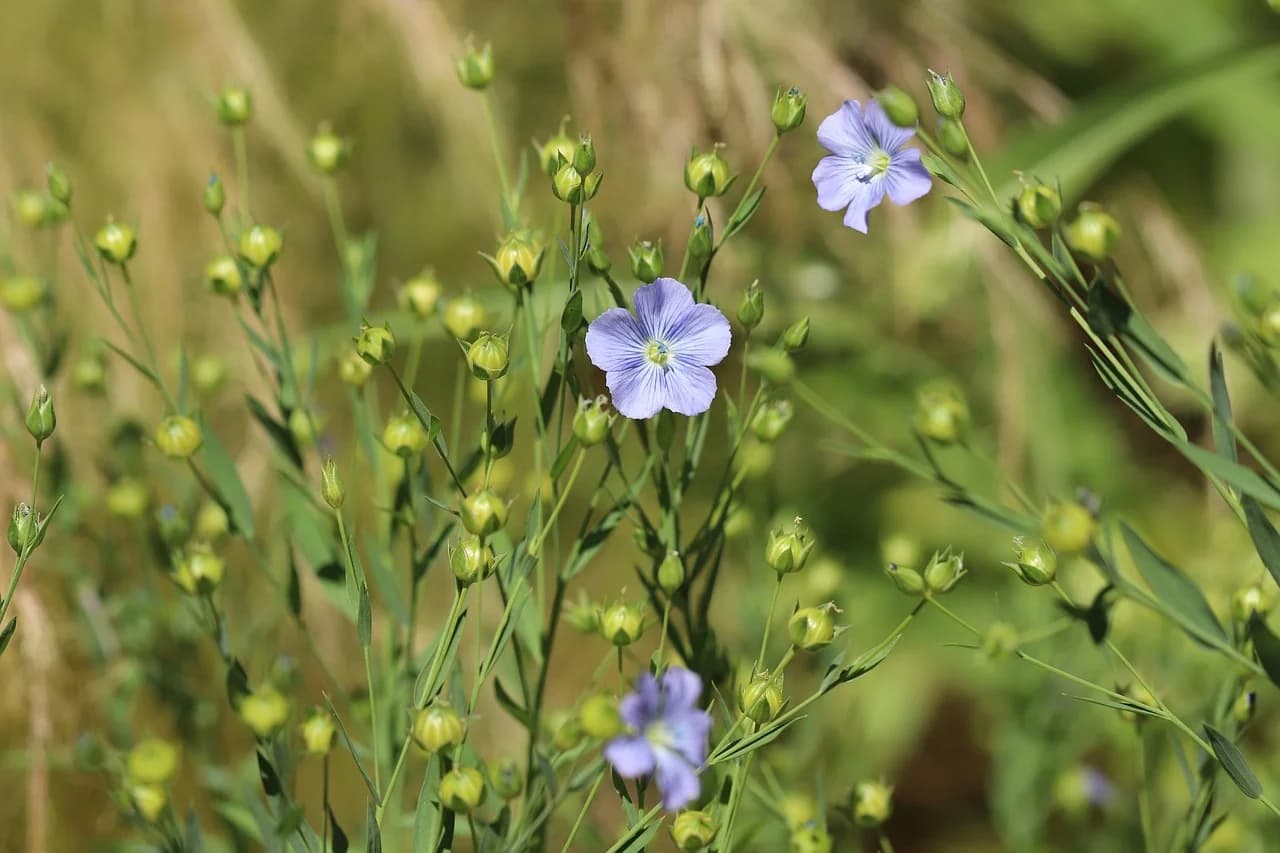
Flax, also called linseed, is an annual with pale blue flowers that grows best in full sun. It is not cold tolerant, so sow in spring after the danger of hard frosts has passed.
Quick facts
- Germination time
- Not yet verified
- Germination temperature
- Not yet verified
- Sowing depth
- 1.5–4 cm½–1½ in
- Spacing between plants
- Not yet verified
- Days to maturity
- Not yet verified
- Sun
- Full sun
Safety for cats and dogs: not yet verified.
By SeedBattle EditorsReviewed by FahadUpdated
Spotted a mistake or missing detail? Improve this page
01 · Overview
About flax
Flax (Linum usitatissimum), also called linseed, is a short-lived annual with pale blue flowers on slender stems. Its stems are used to make linen and its seeds are pressed into linseed oil. Flax seed is also eaten in food products and used as animal feed.
Growing details
- Start indoors
- Not yet verified
- Sow outdoors
- At the last frost
- Water
- Not yet verified
- Containers
- Not yet verified
- Height
- Not yet verified
- Spread
- Not yet verified
- Frost tolerance
- Not yet verified
- Soil pH
- Not yet verified
- Life cycle
- Annual
- Hardiness zones
- USDA zones 4–8
Sowing timeline
When to sow flax seeds
Counted from your area's average last spring frost date. Find yours from a local weather service or garden center, then count back or forward.
02 · How to grow
How to grow flax from seed
When and how to sow. Sow flax seed outdoors in spring, after the danger of hard frosts has passed. Plant it about ½ to 1½ inches (1.3 to 3.8 cm) deep. Choose a spot in full sun, since flax does best in full sun and cannot grow in shade. Keep fertilizer away from the seed, because seedlings are sensitive to too much nitrogen. Flax prefers moist, well-drained soil that ranges from mildly acid to mildly alkaline.
03 · Care
Caring for flax
Water and soil. Flax tolerates drought and dry or rocky soil, but clay soil can make its roots grow shallowly.
Pruning. Where flax is grown as a perennial, cutting the stems back by half after flowering keeps plants from becoming leggy.
At a glance
How flax compares with other seeds in Fruits & other
Worked out from the growing facts of the 35 seeds in Fruits & other on SeedBattle.
- Flax
- Each of the other seeds in Fruits & other
- Their average
- Sowing depthDeeper than average
1.5–4 cm½–1½ in
Average for Fruits & other: 2 cm¾ in, from 11 other seeds
04 · Problems
Common flax problems
Pests and weeds. Cutworms and grasshoppers can be occasional pests. Flax competes poorly with weeds compared with cereal crops, and broadleaf weed control options are limited. In field trials, no pathogens or insect pests were observed.
05 · Harvest
Harvesting flax
The brown to copper seed capsules appear in fall. Each capsule holds 10 flattened seeds.
06 · Safety
Flax safety
For people. A general plant database rates flax as medium severity for people, and says it is toxic only when large quantities are eaten. The database lists seeds, leaves and stems among the affected parts. Linseed oil may cause skin irritation on contact.
Flax questions
When should I plant flax?
Plant flax in spring, after the danger of hard frosts has passed.
How deep should I plant flax seeds?
Plant them about ½ to 1½ inches (1.3 to 3.8 cm) deep.
Does flax need full sun?
Flax does best in full sun and cannot grow in the shade.
Is flax an annual or a perennial?
Flax is an annual crop. In its native habitat it can be grown as a perennial, but it is more typically grown as an annual.
Quick answers
More flax questions
Short answers taken from the growing facts on this page.
Which USDA zones can flax grow in?
Flax is hardy in USDA zones 4–8.
Side by side
Compare flax with…
Two seeds, every growing fact lined up, so you can pick the one that suits your space.
Fruits & other
More seeds like flax
Related seeds, plus others in the Fruits & other category.
Find your next seed to grow
Browse all 223 seeds by sun, difficulty or pot size, or line flax up against another seed.
