Feverfew
Tanacetum parthenium
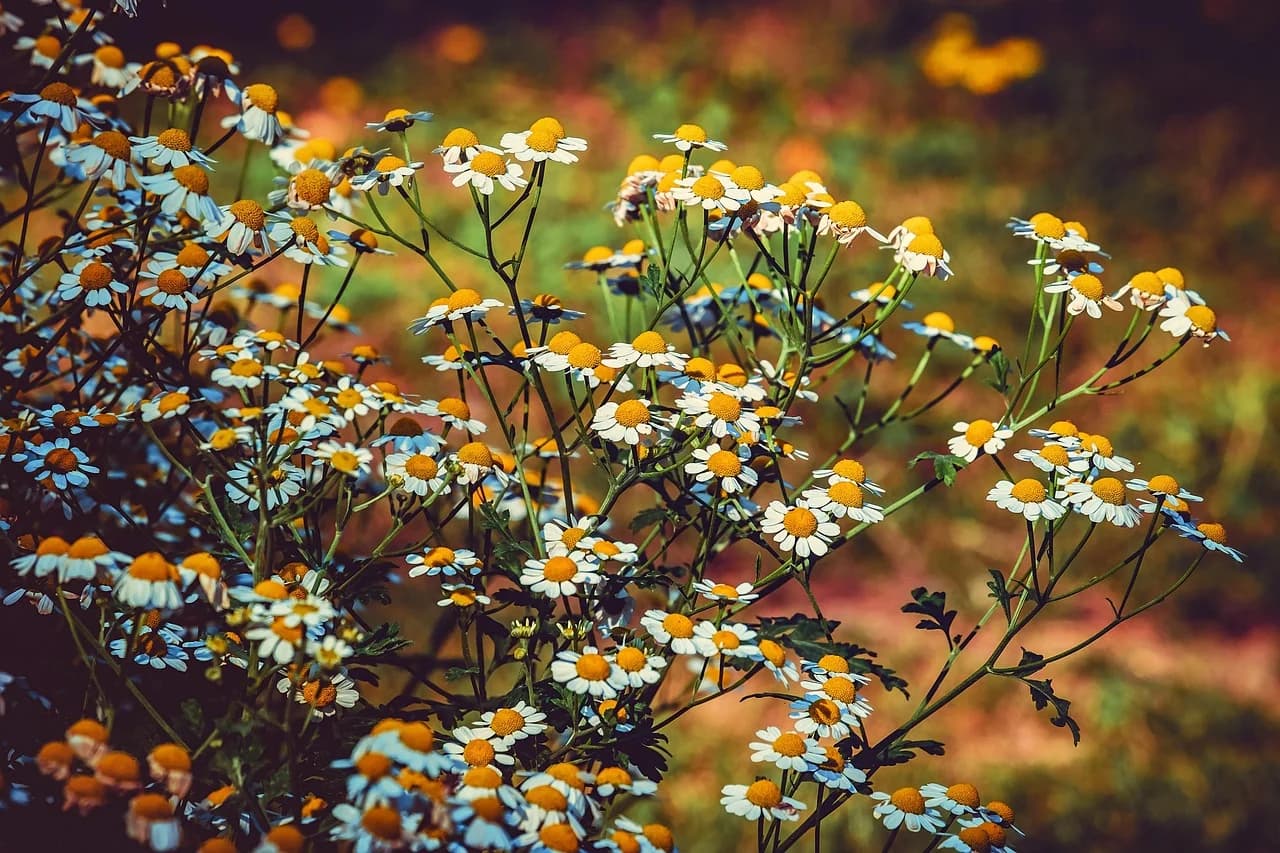
Feverfew is a mounding perennial herb with white daisy-like flowers that bloom from June to September. It grows in full sun to partial shade and can be sown outdoors in spring.
Quick facts
- Germination time
- Not yet verified
- Germination temperature
- Not yet verified
- Sowing depth
- Not yet verified
- Spacing between plants
- Not yet verified
- Days to maturity
- Not yet verified
- Sun
- Full sun, partial shade
Safety for cats and dogs: not yet verified.
By SeedBattle EditorsUpdated
Spotted a mistake or missing detail? Improve this page
01 · Overview
About feverfew
Feverfew is a mounding, aromatic perennial with clusters of white florets and a central yellow disc. It is native to southeastern Europe, Central Asia, and the West Himalayas. It blooms from June to September and grows about 1 to 3 feet tall (30 to 91 cm) and 1 to 2 feet wide (30 to 61 cm).
The plant is hardy and is listed for USDA zones 5 to 8.
Growing details
- Start indoors
- Not yet verified
- Sow outdoors
- Not yet verified
- Water
- Low
- Containers
- Yes
- Height
- 30–91 cm1–3 ft
- Spread
- 30–61 cm1–2 ft
- Frost tolerance
- Not yet verified
- Soil pH
- Not yet verified
- Life cycle
- Perennial
- Hardiness zones
- USDA zones 5–8
02 · How to grow
How to grow feverfew from seed
Sow seed outdoors in spring, in the place where the plants are to grow. Feverfew prefers full sun to partial shade and well-drained, moist soils. It will not tolerate heavy, wet soils.
Division is also listed as a recommended way to propagate it, and basal cuttings can be taken.
03 · Care
Caring for feverfew
Feverfew is drought tolerant. Cut back after flowering, and deadhead spent blooms right away to control self-seeding. The plant is self-seeding and may become aggressive in good conditions.
At a glance
How feverfew compares with other herbs
Worked out from the growing facts of the 30 seeds in Herbs on SeedBattle.
- Feverfew
- Each of the other herbs
- Their average
- HeightShorter than average
30–91 cm1–3 ft
Average for herbs: 70 cm2½ ft, from 27 other seeds
04 · Problems
Common feverfew problems
There are no serious diseases or pest problems reported. Watch for spider mites. The plant may be susceptible to aphids, leaf and bud eelworms, and leaf-mining flies, and it is generally disease-free.
05 · Harvest
Harvesting feverfew
The leaves are edible and can be used to make tea.
06 · Safety
Feverfew safety
Contact may irritate the skin, so wear gloves when handling the plant. Contact dermatitis is listed as a problem, and airborne dermatitis has occasionally been reported. Feverfew is listed as a problem for cats, dogs, and horses, but no toxicity level is given for these animals, so none is rated here.
Feverfew questions
When should I sow feverfew seeds?
Sow feverfew seed outdoors in spring, in the place where the plants are to grow.
Does feverfew come back every year?
Feverfew is a perennial. It is also described as short-lived.
Can I grow feverfew in a pot?
Yes, the plant is suggested for a patio or as a container plant.
Is feverfew safe around pets?
It is listed as a problem for cats, dogs, and horses, but no toxicity level is given for them.
Quick answers
More feverfew questions
Short answers taken from the growing facts on this page.
How much sun does feverfew need?
Feverfew grows in full sun or partial shade.
How tall does feverfew grow?
Feverfew grows 30–91 cm1–3 ft tall.
How much water does feverfew need?
Feverfew has low water needs.
Which USDA zones can feverfew grow in?
Feverfew is hardy in USDA zones 5–8.
Side by side
Compare feverfew with…
Two seeds, every growing fact lined up, so you can pick the one that suits your space.
Herbs
More seeds like feverfew
Other seeds in the Herbs category.
Find your next seed to grow
Browse all 223 seeds by sun, difficulty or pot size, or line feverfew up against another seed.
