Fennel
Foeniculum vulgare
Also called herb fennel, sweet fennel
Herb fennel is a feathery, anise-flavored plant grown from seed in full sun. It is usually grown as an annual, and its leaves, stems and seeds are used in cooking.
Quick facts
- Germination time
- 7–10 days
- Germination temperature
- Not yet verified
- Sowing depth
- 6 mm¼ in
- Spacing between plants
- Not yet verified
- Days to maturity
- Not yet verified
- Sun
- Full sun
Non-toxic to cats and dogs
By SeedBattle EditorsUpdated
Spotted a mistake or missing detail? Improve this page
01 · Overview
About fennel
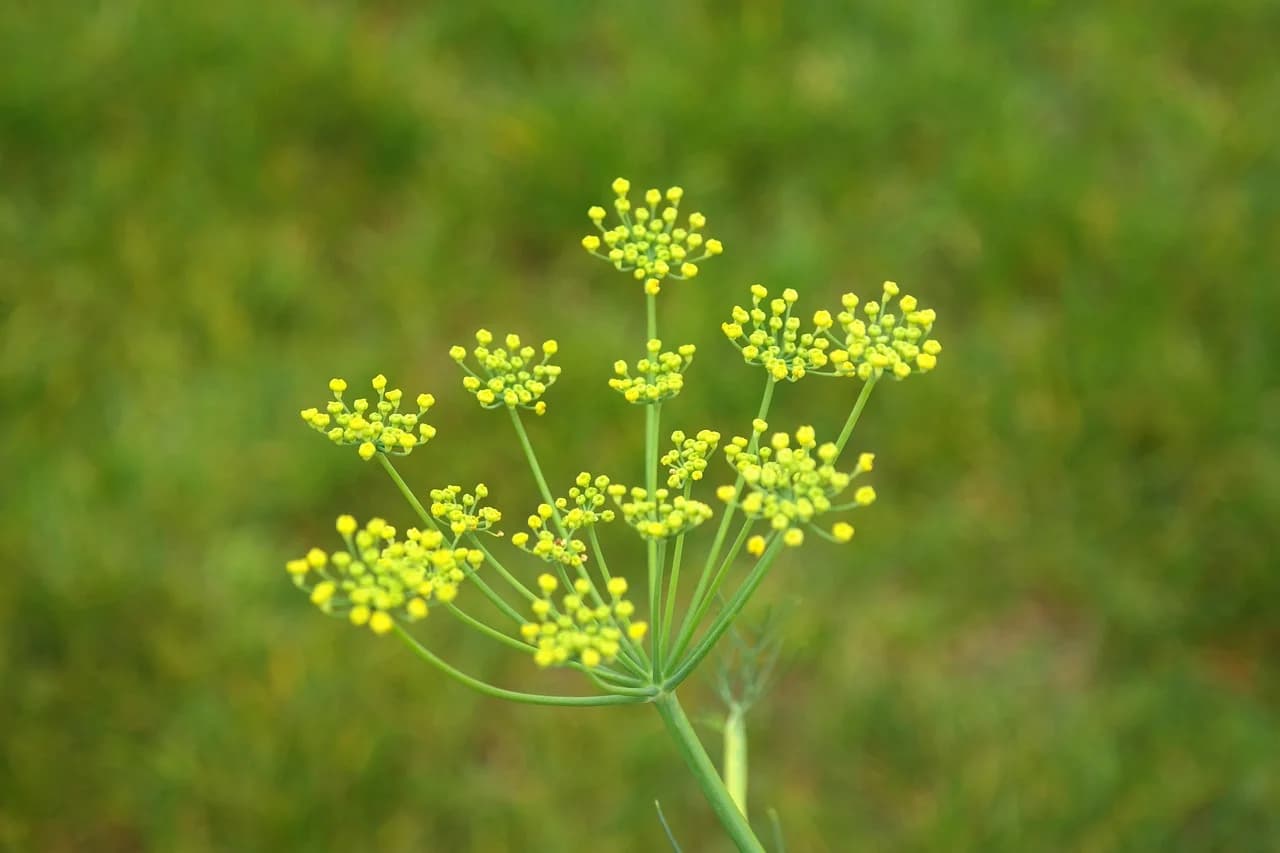
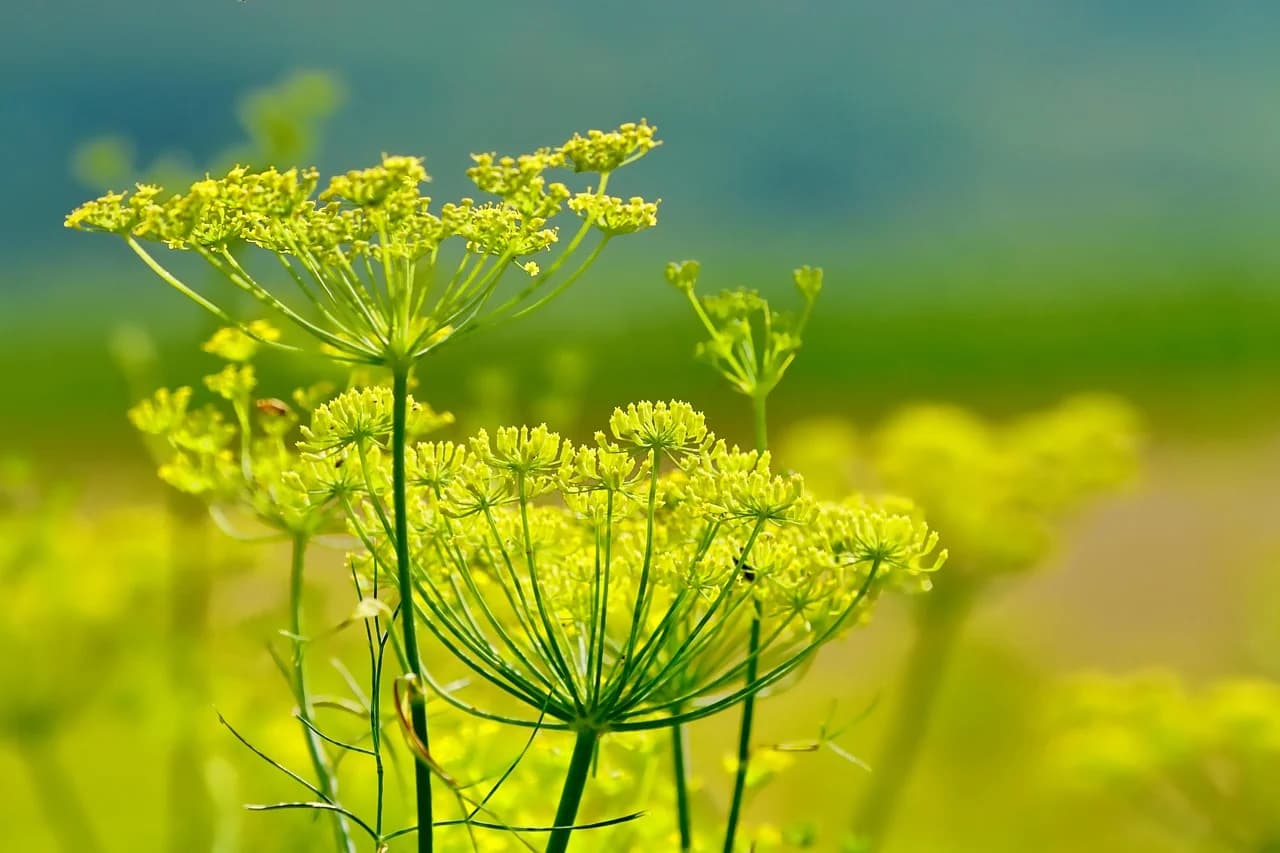
Herb fennel (Foeniculum vulgare) has feathery, yellow-green foliage with a sweet, mildly anise or licorice flavor. It is grown for its leaves and seeds and reaches 3 to 5 feet (91 to 152 cm) tall.
Sources differ on how long the plant lives. One describes it as a perennial that is normally grown as an annual, another as a short-lived perennial often grown as an annual in cooler climates, and a third as technically a biennial that often flowers only in its second year.
The flowers are tiny and yellow, and they attract bees, butterflies and other beneficial insects. Florence fennel, which is grown for its enlarged leaf bases, is a different form covered separately.
Growing details
- Start indoors
- Not yet verified
- Sow outdoors
- At the last frost
- Water
- Low
- Containers
- Yes
- Height
- 0.9–1.5 m3–5 ft
- Spread
- 46–99 cm1½–3 ft
- Frost tolerance
- Not yet verified
- Soil pH
- Not yet verified
- Life cycle
- Not yet verified
- Hardiness zones
- USDA zones 4–9
Sowing timeline
When to sow fennel seeds
Counted from your area's average last spring frost date. Find yours from a local weather service or garden center, then count back or forward.
- Germination time
- 7–10 days
02 · How to grow
How to grow fennel from seed
Sowing. Direct sow herb fennel seed in the garden after the danger of frost has passed. Sow about ¼ inch (0.6 cm) deep after the last spring frost. Seeds usually germinate in 7 to 10 days, though another source says 1 to 2 weeks.
Transplanting. Starting indoors is treated differently by different sources. One says plants can be started indoors 4 to 6 weeks before the last spring frost and transplanted before they become rootbound. Another says starting plants indoors is generally not recommended because of the taproot, and a third says it does not transplant well.
Spacing. Sources give different thinning distances. One says to thin to 4 to 6 inches (10 to 15 cm) apart, while another says 10 to 12 inches (25 to 30 cm) apart.
Site. Choose a spot in full sun, meaning at least 6 hours of direct sunlight a day. It does best in moist, well-drained soil with plenty of organic matter, and it tolerates clay and sandy soils.
03 · Care
Caring for fennel
Watering. Keep the soil consistently moist while plants are establishing and during long dry spells. Once established, the plant is drought tolerant. Roughly 1 inch (2.5 cm) of water per week from rain or irrigation is recommended.
Mulch and feeding. Mulch with shredded bark, compost or untreated grass clippings to conserve moisture and suppress weeds. Avoid heavy fertilizing, since lush growth often has less flavor.
Support. In windy areas, plants grown in fertile soil may need staking.
Self-seeding. The plant readily reseeds. In mild climates it can become invasive, while in cooler climates it rarely escapes cultivation. To prevent spreading, remove spent flowers and stems before seed forms.
At a glance
How fennel compares with other herbs
Worked out from the growing facts of the 30 seeds in Herbs on SeedBattle.
- Fennel
- Each of the other herbs
- Their average
- Germination timeSprouts sooner than average
7–10 days
Average for herbs: 12 days, from 20 other seeds
- Sowing depthAbout average
6 mm¼ in
Average for herbs: 6 mm¼ in, from 16 other seeds
- HeightTaller than average
0.9–1.5 m3–5 ft
Average for herbs: 67 cm2 ft, from 27 other seeds
04 · Problems
Common fennel problems
Aphids may infest stems and flower heads, especially as plants begin to bloom; a strong spray of water can wash them off. Slugs can also be a problem.
Stem and root rot can occur in poorly drained soil. Powdery mildew may develop when air circulation is poor or the plants are overwatered.
Black swallowtail caterpillars often feed on the foliage. They can eat a lot of leaves but rarely cause lasting damage.
05 · Harvest
Harvesting fennel
Harvest the feathery leaves as needed once plants are established. The stems of tender flower stalks just before they bloom are considered the best for eating.
For seed, let the flower heads turn light brown, then cut them and place them in a paper bag to finish drying. The seeds separate from the heads as they dry.
06 · Storage
Storing fennel
Fresh foliage can be refrigerated for short-term storage, and for longer storage it can be frozen or dried. One source says the leaves do not keep their flavor well when dried, while another says properly dried herbs keep their quality for many months.
Store dried seeds in a moisture-proof container.
07 · Safety
Fennel safety
Pets: fennel is listed as non-toxic to cats and dogs. Eating small amounts mixed into food is considered low risk, but concentrated oil should be avoided.
People: the plant sap can cause skin irritation in sensitive people, especially when skin is exposed to sunlight.
Fennel questions
How long do fennel seeds take to germinate?
Seeds usually germinate in 7 to 10 days. Another source says they typically sprout in 1 to 2 weeks.
When should I plant fennel seeds?
Sow seeds outdoors after the last spring frost, about ¼ inch (0.6 cm) deep. Direct sow after the danger of frost has passed.
Can I grow fennel in a pot?
Fennel can be grown in large containers, but it usually does better in the ground because of its deep taproot.
Is fennel safe for cats and dogs?
Fennel is listed as non-toxic to both cats and dogs.
Will fennel spread in my garden?
It readily reseeds, and in mild climates it may become invasive. Removing spent flowers before seed forms helps prevent unwanted spread.
Quick answers
More fennel questions
Short answers taken from the growing facts on this page.
How deep should I sow fennel seeds?
Sow them 6 mm¼ in deep.
How much sun does fennel need?
Fennel grows in full sun.
How tall does fennel grow?
Fennel grows 0.9–1.5 m3–5 ft tall.
How much water does fennel need?
Fennel has low water needs.
Which USDA zones can fennel grow in?
Fennel is hardy in USDA zones 4–9.
Side by side
Compare fennel with…
Two seeds, every growing fact lined up, so you can pick the one that suits your space.
Herbs
More seeds like fennel
Related seeds, plus others in the Herbs category.
Find your next seed to grow
Browse all 223 seeds by sun, difficulty or pot size, or line fennel up against another seed.
