Elecampane
Inula helenium
Also called horse-heal
Elecampane is a hardy perennial with large yellow daisy-like flowers that grows in full sun or partial shade. It can spread aggressively, so give it room and plan its spot with care.
Quick facts
- Germination time
- Not yet verified
- Germination temperature
- 10 °C50 °F
- Sowing depth
- Not yet verified
- Spacing between plants
- Not yet verified
- Days to maturity
- Not yet verified
- Sun
- Full sun, partial shade
Safety for cats and dogs: not yet verified.
By SeedBattle EditorsUpdated
Spotted a mistake or missing detail? Improve this page
01 · Overview
About elecampane
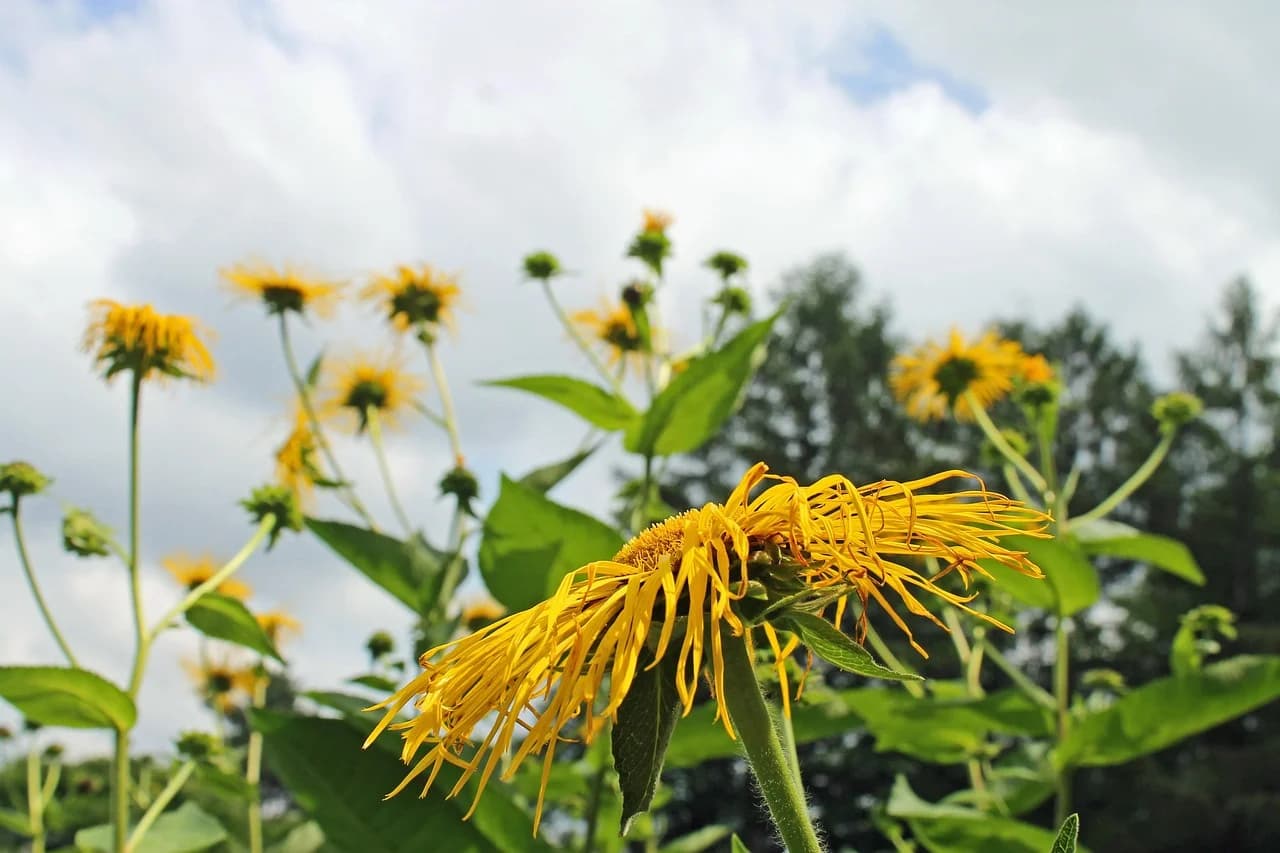
Elecampane (Inula helenium), also called horse heal, is a perennial in the daisy family. It is native to Eurasia. In its first year it forms large leaves, and in early to mid-summer of its second year its flowering stems grow up to 6 feet (183 cm) tall. The yellow, daisy-like flower heads are 2 to 4 inches (5 to 10 cm) across, with narrow petals and a domed center.
Growing details
- Start indoors
- Not yet verified
- Sow outdoors
- Not yet verified
- Water
- Moderate
- Containers
- Not yet verified
- Height
- 0.6–1.8 m2–6 ft
- Spread
- 61–91 cm2–3 ft
- Frost tolerance
- Not yet verified
- Soil pH
- Not yet verified
- Life cycle
- Perennial
- Hardiness zones
- USDA zones 3–7
02 · How to grow
How to grow elecampane from seed
Sowing. Sow seed in spring; it germinates at about 50 °F (10 °C). Plants need a chilling period before they will flower.
Other methods. Division is also a listed method: divide clumps in autumn or spring, or take basal softwood cuttings in spring.
Site. Choose full sun or partial shade, with deep, moist, well-drained soil such as clay or loam. The plant takes 2 to 5 years to reach maturity.
03 · Care
Caring for elecampane
Watering. Keep the soil moist but well-drained.
Support and pruning. Plants may need support in windy spots. Trim back faded foliage in autumn or early spring. The plant is listed as high maintenance.
At a glance
How elecampane compares with other herbs
Worked out from the growing facts of the 30 seeds in Herbs on SeedBattle.
- Elecampane
- Each of the other herbs
- Their average
- Germination temperatureCooler than average
10 °C50 °F
Average for herbs: 19 °C67 °F, from 14 other seeds
- HeightTaller than average
0.6–1.8 m2–6 ft
Average for herbs: 67 cm2 ft, from 27 other seeds
04 · Problems
Common elecampane problems
Elecampane is described as weedy and aggressive, and it can spread rapidly in spring. It is nearly impossible to remove every root piece once it is established. Preemergent herbicides may help. The plant is generally pest-free and disease-free.
05 · Safety
Elecampane safety
Wear gloves when handling elecampane, because contact with the plant can cause contact dermatitis.
Elecampane questions
How do I start elecampane from seed?
Sow the seed in spring. It germinates at about 50 °F (10 °C).
How tall and wide does elecampane get?
Plants can reach 2 to 6 feet (61 to 183 cm) tall and spread 2 to 3 feet (61 to 91 cm) wide.
Is elecampane invasive?
It is described as weedy and aggressive, and it can become invasive.
Is elecampane a perennial?
Yes, it is a perennial that needs a chilling period before it flowers.
Quick answers
More elecampane questions
Short answers taken from the growing facts on this page.
How much sun does elecampane need?
Elecampane grows in full sun or partial shade.
What temperature do elecampane seeds need to sprout?
Elecampane seeds germinate at 10 °C50 °F.
How much water does elecampane need?
Elecampane has moderate water needs.
Which USDA zones can elecampane grow in?
Elecampane is hardy in USDA zones 3–7.
Side by side
Compare elecampane with…
Two seeds, every growing fact lined up, so you can pick the one that suits your space.
Herbs
More seeds like elecampane
Other seeds in the Herbs category.
Find your next seed to grow
Browse all 223 seeds by sun, difficulty or pot size, or line elecampane up against another seed.