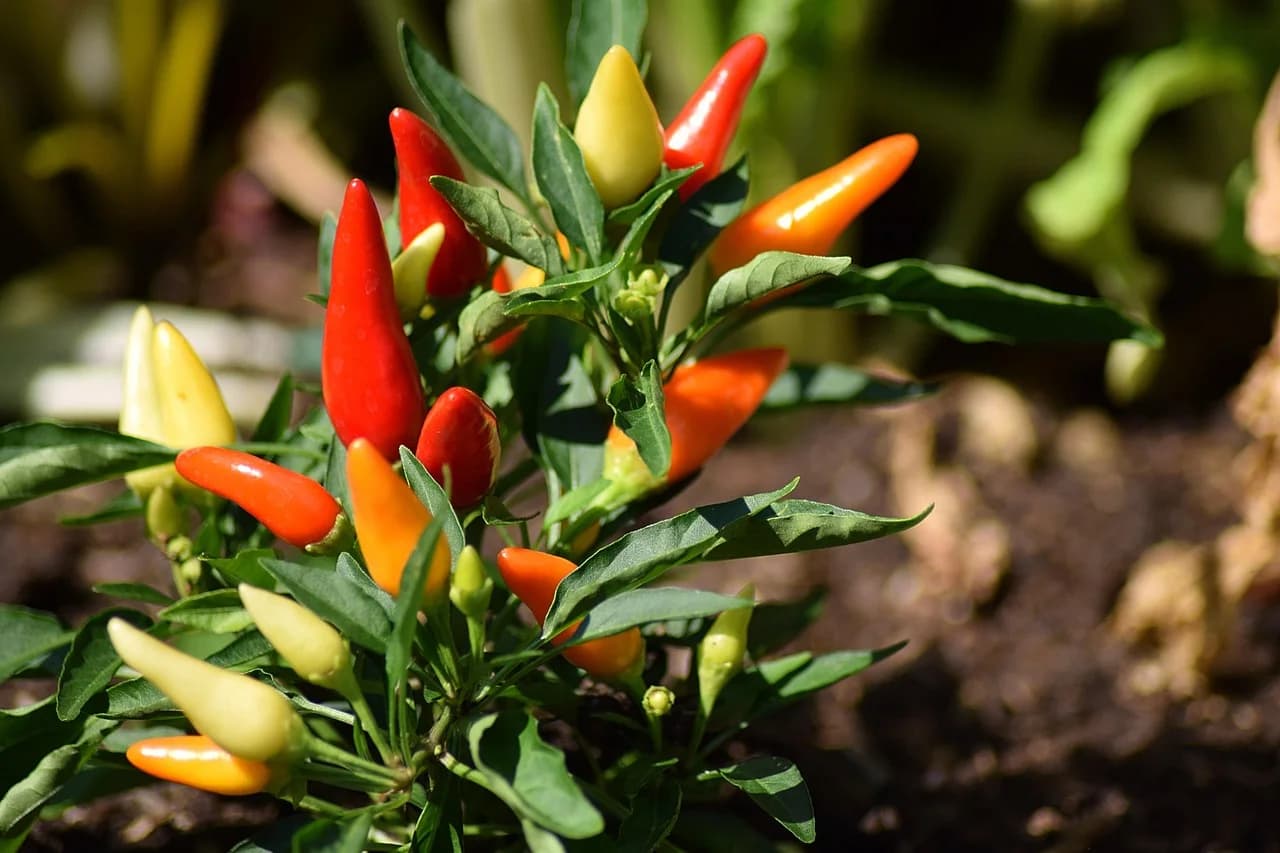
Chili Pepper
Capsicum spp.
Also called chilli, hot pepper
Hot peppers for sunny spots and pots. Start seeds early indoors in warmth, plant out once nights stay warm, and pick the pods green or ripe depending on the heat you want.
Quick facts
- Germination time
- Not yet verified
- Germination temperature
- Not yet verified
- Sowing depth
- 6 mm¼ in
- Spacing between plants
- Not yet verified
- Days to maturity
- 70–85 days from transplanting
- Sun
- Full sun
Safety for cats and dogs: not yet verified.
By SeedBattle EditorsUpdated
Spotted a mistake or missing detail? Improve this page
01 · Overview
About chili pepper
Chili peppers are peppers grown for their heat. They belong to the genus Capsicum, which also includes sweet bell peppers; pepper fruits fall into mild types and hot, pungent types such as New Mexican, jalapeño and serrano. Their heat comes from capsaicinoids made in the pale tissue (the placenta) at the center of the pod, not from the seeds, and stress from water, temperature, disease or insects can change how hot they get. Heat is measured in Scoville Heat Units (SHU), from mild types such as ‘Anaheim’ at 500–2,500 SHU and ‘Jalapeño’ at 2,500–8,000 SHU to more than a million SHU for the hottest varieties.
Chilies are tender plants that need heat, humidity and plenty of sun, and they like much the same conditions as tomatoes. Plants range from about 8 inches (20 cm) tall for compact windowsill types to 2 feet (60 cm) or more. There are hundreds of varieties, and both plant size and heat depend on the variety you choose.
Growing details
- Start indoors
- 6–8 weeks before the last frost
- Sow outdoors
- Not yet verified
- Water
- Not yet verified
- Containers
- Yes
- Height
- Not yet verified
- Spread
- Not yet verified
- Frost tolerance
- Tender (no frost)
- Soil pH
- Not yet verified
- Life cycle
- Not yet verified
Sowing timeline
When to sow chili pepper seeds
Counted from your area's average last spring frost date. Find yours from a local weather service or garden center, then count back or forward.
- Days to maturity
- 70–85 days from transplanting
- Frost tolerance
- Tender (no frost)
02 · How to grow
How to grow chili pepper from seed
Start early indoors. Chilies need a long growing season, so sow indoors from late winter to mid-spring, about 6 to 8 weeks before your last frost date. Sow seeds about ¼ inch (6 mm) deep. They need warmth to germinate: gardening experts suggest around 70 °F (21 °C) in a heated propagator or on a warm windowsill, and gardening experts aim for 80–90 °F (27–32 °C) soil, noting that pepper seeds germinate very slowly in cooler soil. Once seedlings appear, keep them at 60–64 °F (16–18 °C) in bright light, and move each into its own small pot when it’s about 1 inch (2–3 cm) tall.
Plant out when nights are warm. Chilies are very easily damaged by frost, so wait until after the last frost and until the soil has warmed. Gardening experts wait until nights are reliably at least 54 °F (12 °C), usually late May or early June in the UK, and hardens plants off for two to three weeks first.
Give them heat and sun. Choose your warmest, sunniest spot, such as a sunny patio or a south-facing wall. In cool climates, chilies crop best in a greenhouse, polytunnel or sunny conservatory. Gardening experts space plants 15–18 inches (38–45 cm) apart, or 1 foot (30 cm) for dwarf varieties; gardening experts space garden plants 8–14 inches (20–36 cm) apart.
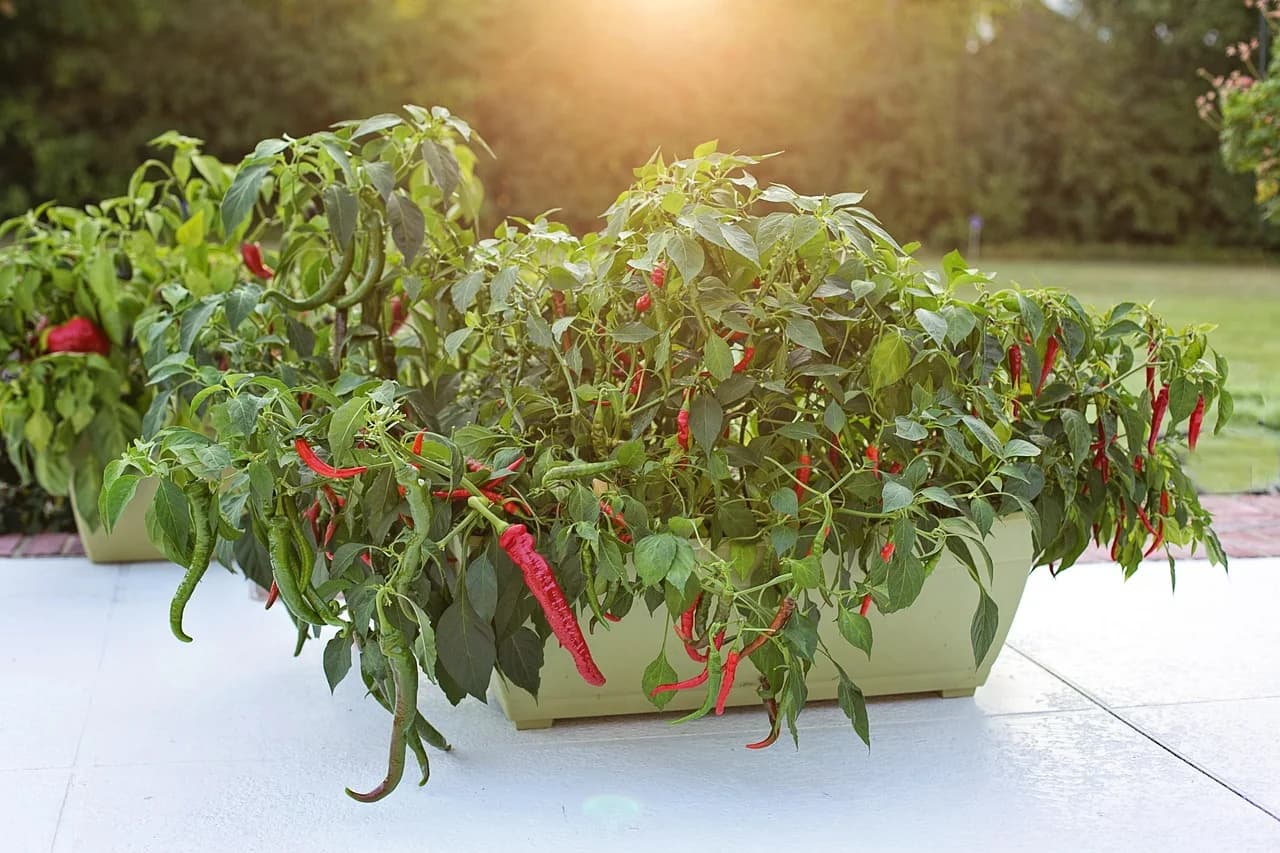
Pots and windowsills. Chilies grow well in containers. Use a 9-inch (22 cm) pot per plant, or three plants in a standard grow bag; compact varieties can even grow on a sunny windowsill indoors.
03 · Care
Caring for chili pepper
Water evenly. Keep the soil or compost evenly moist: flower buds may drop if plants get too dry, and pots may need watering every day in hot weather. Too little water also leads to smaller fruit and blossom end rot, while too much can cause Phytophthora root rot.
Feed. Feed container plants weekly with a high-potassium liquid fertilizer once flowering starts. Don’t overdo nitrogen, which grows leaves at the expense of fruit.
Watch the temperature. Plants grow and set fruit best at 65–85 °F (18–29 °C) by day and 60–70 °F (16–21 °C) at night, and flowers may not set below 60 °F (16 °C) or above 90 °F (32 °C). In a greenhouse, ventilate and add shade during hot spells.
Support and overwintering. Large plants may need several canes; tie them in gently because the stems are brittle. Chili plants can also be cut back and kept over winter in a warm, bright place for a head start the next year.
At a glance
How chili pepper compares with other seeds in Fruits & other
Worked out from the growing facts of the 35 seeds in Fruits & other on SeedBattle.
- Chili Pepper
- Each of the other seeds in Fruits & other
- Their average
- Days to maturityAbout average
70–85 days from transplanting
Average for Fruits & other: 78 days, from 5 other seeds
- Sowing depthShallower than average
6 mm¼ in
Average for Fruits & other: 2 cm⅞ in, from 11 other seeds
04 · Problems
Common chili pepper problems
Pests. Aphids, whiteflies, red spider mites and other sap-sucking pests can be a problem, especially indoors. Outdoors, flea beetles, cutworms, thrips, leafhoppers and aphids can damage young plants, and hornworms and cabbage loopers turn up later in the season.
Diseases. Gardening experts list Verticillium wilt, Phytophthora root rot and curly top as common, and gardening experts name bacterial wilt and bacterial leaf spot as the most troublesome pepper diseases in home gardens. Use disease-free seed and transplants and rotate where you grow peppers. Under-watering can also cause blossom end rot, a dry rot on the tips of the fruit.
05 · Harvest
Harvesting chili pepper
Gardening experts give about 70 to 85 days after transplanting for peppers in general; under ideal conditions, mature green chilies are ready 45–55 days after the flower is pollinated, and cool weather slows this down. Outdoors in the UK, fruiting should start by August.
Hot peppers can be picked green or left to ripen and change color on the plant. Picking them green keeps the plant producing; letting fruit ripen on the plant early in the season gives a richer, hotter flavor but a smaller overall harvest. A ready pod is full size, firm and crisp when squeezed.
06 · Storage
Storing chili pepper
Chilies are easy to dry, freeze or pickle. Red pods can dry on the plant or be hung up by their stems; in New Mexico they’re often tied into long strings called ristras. Fresh peppers keep best in the refrigerator at 45–50 °F (7–10 °C).
07 · Safety
Chili Pepper safety
Wear plastic gloves when handling hot peppers, or coat your hands with fat, to avoid burns. Some ornamental varieties, such as ‘Aurora’, ‘Candelabra’ and ‘Chilly Chili’, are listed as not edible, so check the label before eating the fruit.
Chili Pepper questions
When should I start chili seeds indoors?
Early, because chilies need a long season: sow indoors from late winter to mid-spring, about 6 to 8 weeks before your last frost date.
What temperature do chili seeds need to germinate?
Warmth. Gardening experts suggest around 70 °F (21 °C), and gardening experts aim for 80–90 °F (27–32 °C) soil, since pepper seeds germinate very slowly in cooler soil.
Can I grow chili peppers in a pot?
Yes. Chilies grow well in containers: use a 9-inch (22 cm) pot per plant. Compact varieties can even grow on a sunny windowsill.
Are the seeds the hottest part of a chili pepper?
No. The heat comes from capsaicinoids made in the placenta, the pale tissue at the center of the pod. The seeds aren’t a source of heat, though they can pick some up during cooking.
Should I wear gloves when handling hot peppers?
Yes. Wear plastic gloves, or coat your hands with fat, to avoid burns.
Quick answers
More chili pepper questions
Short answers taken from the growing facts on this page.
How deep should I sow chili pepper seeds?
Sow them 6 mm¼ in deep.
How much sun does chili pepper need?
Chili pepper grows in full sun.
How long does chili pepper take to mature?
Chili pepper takes 70–85 days from transplanting to mature.
Can chili pepper survive frost?
No. Chili pepper is tender, so it can't take frost.
Side by side
Compare chili pepper with…
Two seeds, every growing fact lined up, so you can pick the one that suits your space.
Fruits & other
More seeds like chili pepper
Related seeds, plus others in the Fruits & other category.
Find your next seed to grow
Browse all 223 seeds by sun, difficulty or pot size, or line chili pepper up against another seed.
