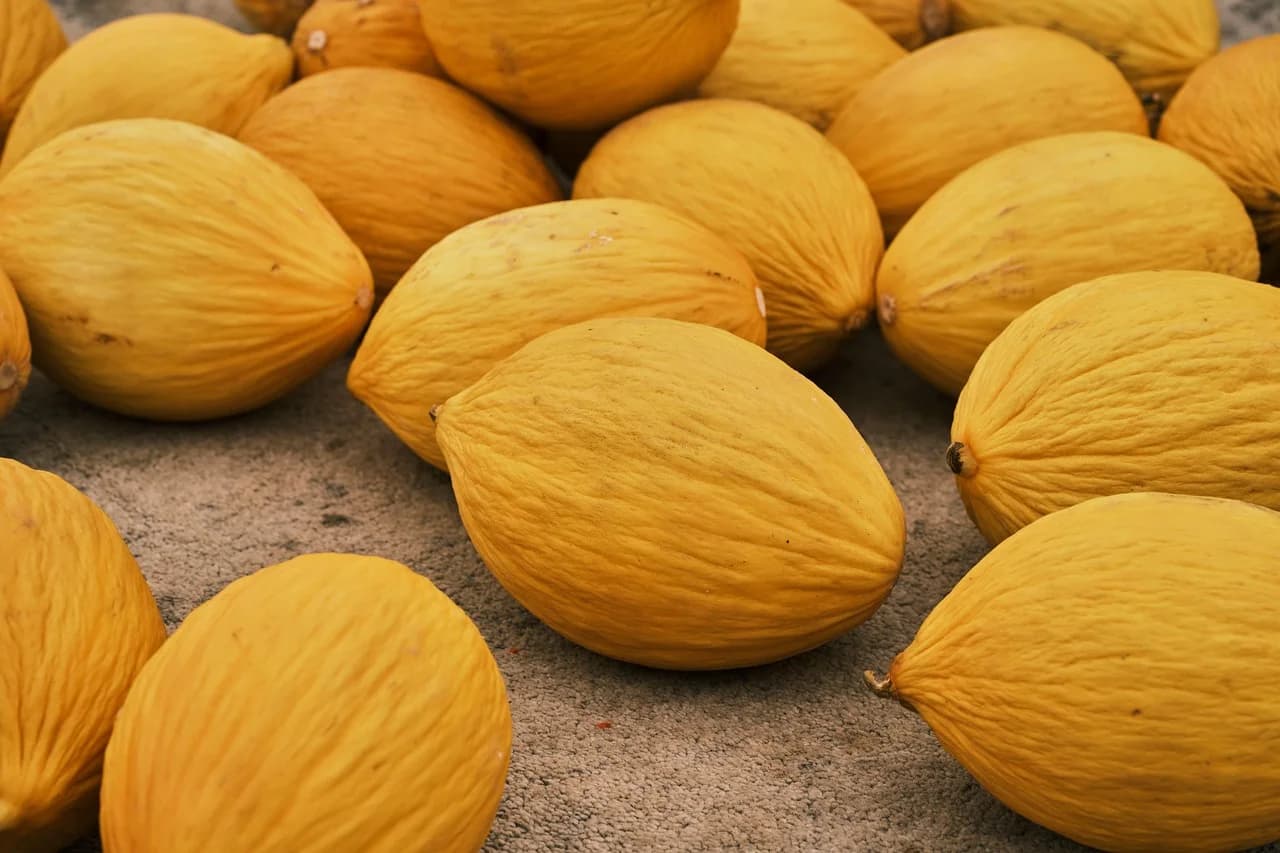
Canary Melon
Cucumis melo var. inodorus
Also called juan canary melon
Canary melon (Juan Canary) is a winter melon that needs full sun, warm soil and a long season. Start with transplants, since it ripens later than cantaloupe.
Quick facts
- Germination time
- Not yet verified
- Germination temperature
- 27–32 °C81–90 °F
- Sowing depth
- 2.5–4 cm1–1½ in
- Spacing between plants
- 61 cm2 ft
- Days to maturity
- Not yet verified
- Sun
- Full sun
Safety for cats and dogs: not yet verified.
By SeedBattle EditorsUpdated
Spotted a mistake or missing detail? Improve this page
01 · Overview
About canary melon
Canary melon, also sold as Juan Canary, is a winter melon in the Inodorus group of Cucumis melo, the same group as honeydew. Winter melons have no netting, are less aromatic and store longer than cantaloupes. They are warm-season crops that need lots of sun and warmth.
Growing details
- Start indoors
- Not yet verified
- Sow outdoors
- 1–2 weeks after the last frost
- Water
- Not yet verified
- Containers
- Not yet verified
- Height
- Not yet verified
- Spread
- Not yet verified
- Frost tolerance
- Not yet verified
- Soil pH
- pH 5.5–7.0
- Life cycle
- Not yet verified
Sowing timeline
When to sow canary melon seeds
Counted from your area's average last spring frost date. Find yours from a local weather service or garden center, then count back or forward.
- Germination temperature
- 27–32 °C81–90 °F
02 · How to grow
How to grow canary melon from seed
When to sow. Sow outdoors after the last frost, once the soil has warmed to about 65 °F (18 °C). One seed company suggests 1 to 2 weeks after the last frost, with soil above 70 °F (21 °C). Winter melons need a growing season 2 to 4 weeks longer than cantaloupe, so transplants are recommended over direct sowing.
How to sow. Plant 4 to 6 seeds per mound, about 1 to 1½ inches (2.5 to 3.8 cm) deep, with mounds 4 feet (1.2 m) apart. Once the seedlings have two leaves, thin to two plants per mound. A seed company sows indoor seed about ¼ inch (6 mm) deep and direct-sown seed about ½ inch (1.3 cm) deep. Keep seeds at 80 to 90 °F (27 to 32 °C) until they sprout.
Transplants. Allow about 6 weeks to grow transplants, which should have 2 to 3 mature leaves. Set them 2 feet (61 cm) apart and avoid damaging the roots. Harden the plants off outdoors for a few days before planting.
Site. Choose full sun and fertile, well-drained soil with a pH of 5.5 to 7.0. Black plastic mulch warms the soil and allows earlier planting.
03 · Care
Caring for canary melon
Watering. Water deeply but not often, about 1 to 2 inches (2.5 to 5 cm) per week, and drip irrigation is best. Cut back as the fruit ripens to improve flavor.
Mulch and feeding. Don’t put organic mulch down until the soil is warmer than 75 °F (24 °C). Once runners form, side-dress each plant with nitrogen fertilizer and water it in.
Pollination. The first flowers are male. Bees pollinate the later female flowers, which have a swelling at the base that becomes the fruit.
At a glance
How canary melon compares with other seeds in Fruits & other
Worked out from the growing facts of the 35 seeds in Fruits & other on SeedBattle.
- Canary Melon
- Each of the other seeds in Fruits & other
- Their average
- Germination temperatureWarmer than average
27–32 °C81–90 °F
Average for Fruits & other: 21 °C70 °F, from 13 other seeds
- Sowing depthDeeper than average
2.5–4 cm1–1½ in
Average for Fruits & other: 2 cm¾ in, from 11 other seeds
- Spacing between plantsCloser than average
61 cm2 ft
Average for Fruits & other: 1.8 m6 ft, from 8 other seeds
04 · Problems
Common canary melon problems
Watch for aphids, cucumber beetles, powdery mildew, wilt diseases and virus. Row covers can protect young plants from cold, but ventilate them above 80 °F (27 °C) and remove them when flowering starts or temperatures pass 90 °F (32 °C). Heavy rain or too much watering just before harvest can crack the fruit.
05 · Harvest
Harvesting canary melon
Juan Canary fruits do not separate from the vine when ripe. Instead the rind feels quite waxy and the skin turns dark yellow. Winter melons need 45 or more days from flowering to mature, depending on temperature and type. Winter melons also develop small cracks near the blossom end as they mature.
06 · Storage
Storing canary melon
Winter melons keep much better than cantaloupe, lasting 3 to 6 weeks at 45 to 50 °F (7 to 10 °C).
Canary Melon questions
When should I plant Canary melon?
Plant outdoors when the soil is about 65 °F (18 °C) or after all danger of frost has passed. Transplants are recommended because winter melons need a longer season than cantaloupe.
How deep do I sow Canary melon seeds?
Sow about 1 to 1½ inches (2.5 to 3.8 cm) deep. A seed company suggests ½ inch (1.3 cm) for direct sowing.
How do I know when a Canary melon is ripe?
The fruit does not slip off the vine. The rind feels quite waxy and the skin turns dark yellow.
Will Canary melons cross with other melons?
Yes, they can cross-pollinate with cantaloupe and other melons. Flavor this year is not affected, but saved seed may produce different melon types.
Quick answers
More canary melon questions
Short answers taken from the growing facts on this page.
How far apart should I plant canary melon?
Space the plants 61 cm2 ft apart.
How much sun does canary melon need?
Canary melon grows in full sun.
What temperature do canary melon seeds need to sprout?
Canary melon seeds germinate at 27–32 °C81–90 °F.
What soil pH does canary melon need?
Aim for soil at pH 5.5–7.0.
Side by side
Compare canary melon with…
Two seeds, every growing fact lined up, so you can pick the one that suits your space.
Fruits & other
More seeds like canary melon
Related seeds, plus others in the Fruits & other category.
Find your next seed to grow
Browse all 223 seeds by sun, difficulty or pot size, or line canary melon up against another seed.
