Watercress
Nasturtium officinale
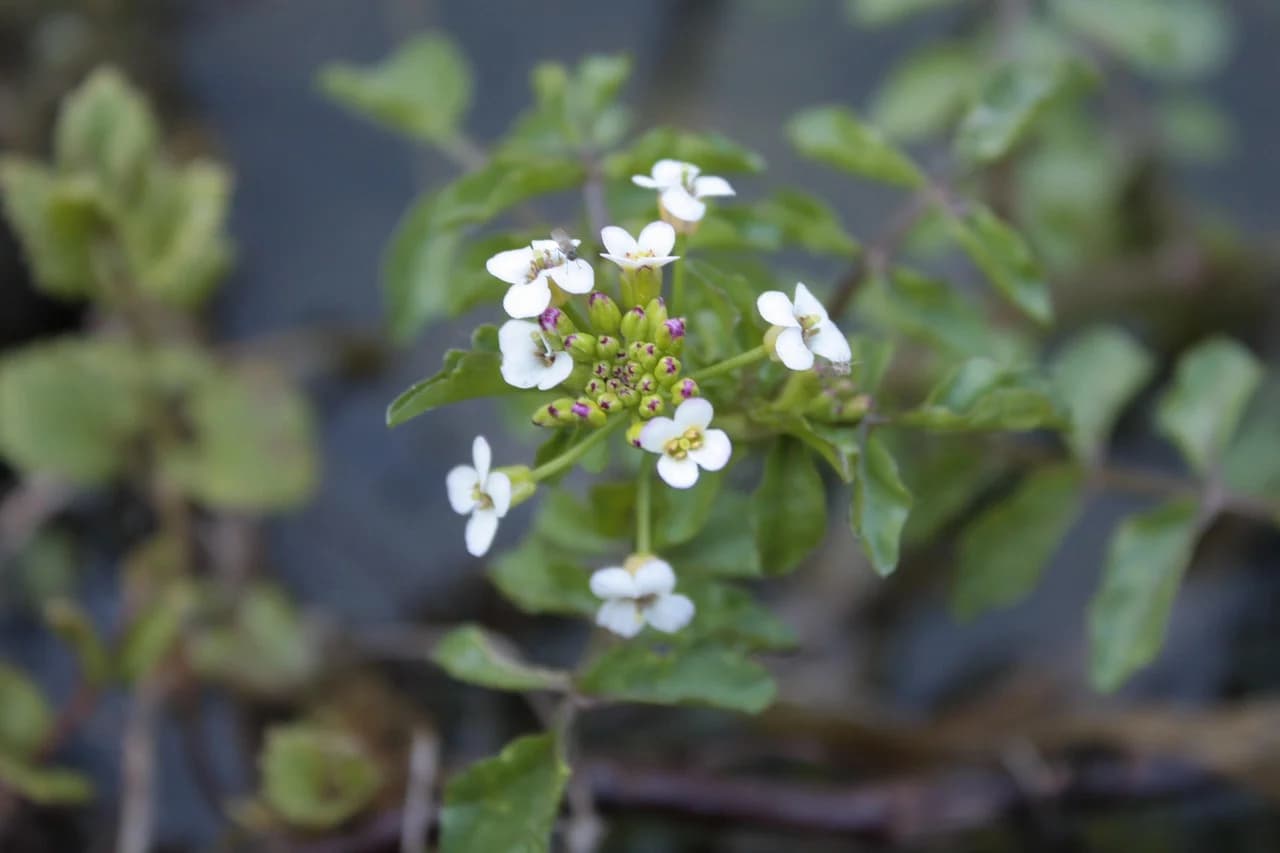
Watercress is a fast-growing perennial that grows in wet or saturated soil or shallow water, in sun or partial shade, and its peppery leaves are harvested for salads and soups.
Quick facts
- Germination time
- Not yet verified
- Germination temperature
- 10–16 °C50–61 °F
- Sowing depth
- 6 mm¼ in
- Spacing between plants
- 20 cm8 in
- Days to maturity
- Not yet verified
- Sun
- Full sun, partial shade
Safety for cats and dogs: not yet verified.
By SeedBattle EditorsUpdated
Spotted a mistake or missing detail? Improve this page
01 · Overview
About watercress
Watercress is a perennial that grows naturally along running water, and its peppery leaves are popular in salads. It is an aquatic plant that forms dense colonies of floating and submerged rooting stems, along with edible foliage. Harvested leaves are used in salads and soups, potato dishes, and chopped into butter blends and fish sauces.
Growing details
- Start indoors
- Not yet verified
- Sow outdoors
- Not yet verified
- Water
- Not yet verified
- Containers
- Yes
- Height
- 10–50 cm4–20 in
- Spread
- 0.5–1 m1½–3½ ft
- Frost tolerance
- Not yet verified
- Soil pH
- pH 6.5–7.5
- Life cycle
- Perennial
- Hardiness zones
- Not yet verified
02 · How to grow
How to grow watercress from seed
Sowing. Sow seeds just below the soil surface, about ¼ inch (0.6 cm) deep. Sow roughly three weeks before the frost-free date for your area. Seeds can be started indoors or outdoors under cool conditions of 50 to 60 °F (10 to 16 °C) that stay wet.
Propagation. Watercress can also be grown from stem cuttings, or from rooted runners in spring.
Planting and spacing. Choose a sunny spot for the plant. When transplanting, space plants 8 inches (20 cm) apart and place them outdoors after the last frost. It grows in humus-rich, wet soil or soil that stays reliably moist through summer. The mature plant reaches about 4 to 20 inches (10 to 50 cm) tall and 20 to 39 inches (50 to 100 cm) across.
03 · Care
Caring for watercress
Water. Keep the soil or potting mix saturated. For potted plants, place the pot in a bucket with 2 to 3 inches (5 to 8 cm) of water, and change the water once or twice a week.
Feeding. Watercress does not need many nutrients. Mixing a complete soluble fertilizer into the water at the recommended rate helps prevent phosphorus, potassium and iron shortages.
At a glance
How watercress compares with other vegetables
Worked out from the growing facts of the 79 seeds in Vegetables on SeedBattle.
- Watercress
- Each of the other vegetables
- Their average
- Germination temperatureCooler than average
10–16 °C50–61 °F
Average for vegetables: 23 °C73 °F, from 38 other seeds
- Sowing depthShallower than average
6 mm¼ in
Average for vegetables: 1 cm½ in, from 58 other seeds
- Spacing between plantsCloser than average
20 cm8 in
Average for vegetables: 35 cm14 in, from 43 other seeds
- HeightShorter than average
10–50 cm4–20 in
Average for vegetables: 94 cm3 ft, from 57 other seeds
04 · Problems
Common watercress problems
Pests. Slugs and snails, aphids and caterpillars may attack the plant. White flies, spider mites and snails are among the more common insect problems.
Diseases. The plant may be affected by a leaf spot and by root rots. Watercress has no specific disease problems in most production settings.
Nutrient shortages. Phosphorus-deficient plants are stunted and dark colored. Iron-deficient leaves, which are common in winter, turn yellow between the veins on the newer foliage.
05 · Harvest
Harvesting watercress
Pinch out growing tips regularly to get a supply of young leaves. Leaves and young stems taste best if you harvest them before the plant flowers. The flavor is strongest in cooler spring and fall and fades as temperatures rise above 85 °F (29 °C). To encourage regrowth, cut the plant back to 4 inches (10 cm) tall.
06 · Storage
Storing watercress
Harvest only what you can use in one meal. If needed, the leaves can be kept in the refrigerator for about a week.
07 · Safety
Watercress safety
Don’t gather watercress from the wild. Pollutants have been reported to cause illness from wild-gathered plants.
Watercress questions
Can I grow watercress in a pot?
Yes. A potted watercress plant can be grown in a bucket to imitate a stream, and the pot should sit in water.
When should I sow watercress seeds?
Sow seeds roughly three weeks before the frost-free date for your area, just below the soil surface.
How much sun does watercress need?
It grows in full sun or partial shade, and a sunny location is recommended.
Is wild watercress safe to eat?
Gathering watercress from the wild is not recommended, because pollutants have been reported to cause illness.
Quick answers
More watercress questions
Short answers taken from the growing facts on this page.
How deep should I sow watercress seeds?
Sow them 6 mm¼ in deep.
How far apart should I plant watercress?
Space the plants 20 cm8 in apart.
What temperature do watercress seeds need to sprout?
Watercress seeds germinate at 10–16 °C50–61 °F.
How tall does watercress grow?
Watercress grows 10–50 cm4–20 in tall.
Is watercress an annual or a perennial?
Watercress is a perennial.
What soil pH does watercress need?
Aim for soil at pH 6.5–7.5.
Side by side
Compare watercress with…
Two seeds, every growing fact lined up, so you can pick the one that suits your space.
Vegetables
More seeds like watercress
Other seeds in the Vegetables category.
Find your next seed to grow
Browse all 223 seeds by sun, difficulty or pot size, or line watercress up against another seed.