Artichoke
Cynara cardunculus var. scolymus
Also called globe artichoke
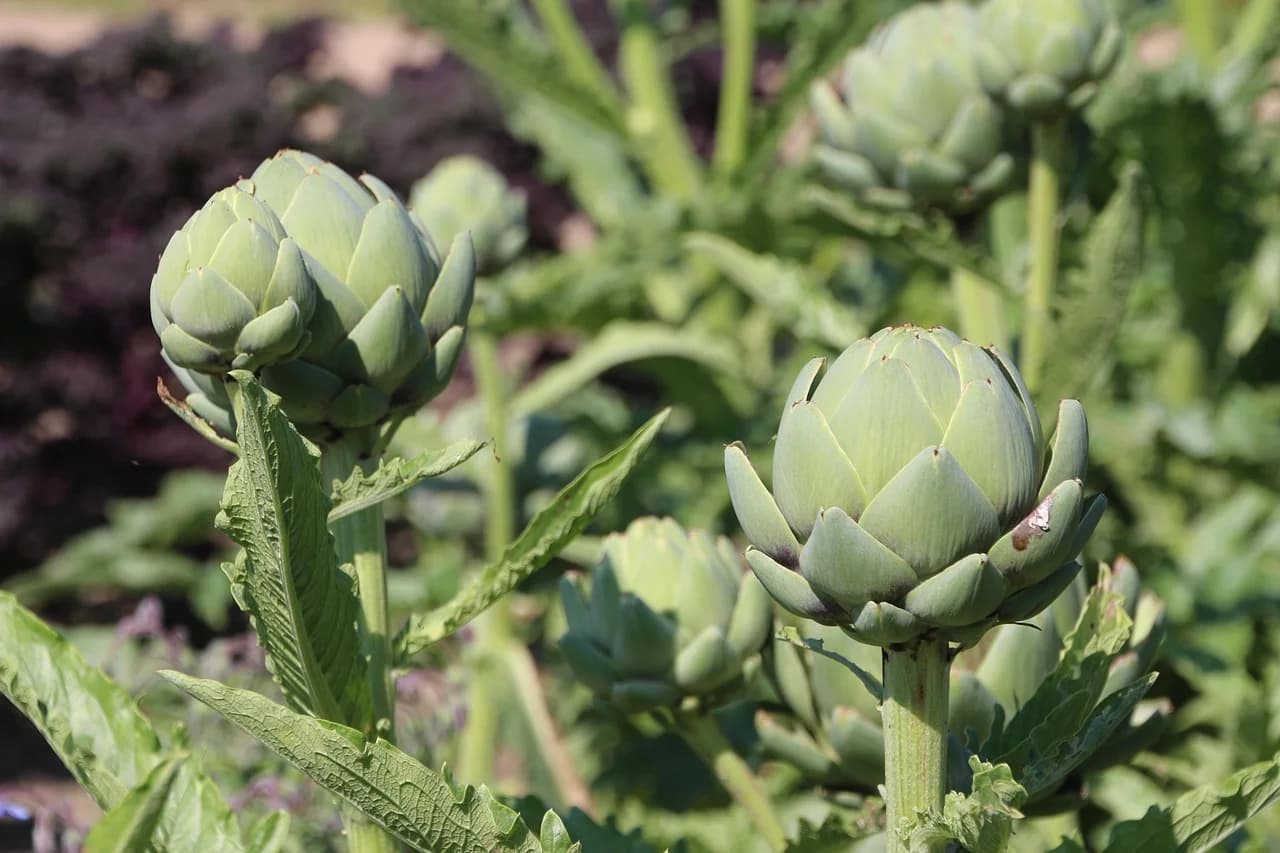
Globe artichokes are large, thistle-like plants grown for their edible flower buds. They need full sun and rich, well-drained soil. Seed results are variable, so many growers start with plants or divisions.
Quick facts
- Germination time
- 8–12 days
- Germination temperature
- 21–26 °C70–79 °F
- Sowing depth
- 6 mm¼ in
- Spacing between plants
- 46 cm18 in
- Days to maturity
- Not yet verified
- Sun
- Full sun
Safety for cats and dogs: not yet verified.
By SeedBattle EditorsUpdated
Spotted a mistake or missing detail? Improve this page
01 · Overview
About artichoke
Globe artichokes are grown for their edible flower buds, which are picked before the bracts open. The plants look a lot like thistles, with silvery leaves and flower stalks that can reach 5 feet (152 cm) tall if they are left to bloom. They can live for many years in frost-free climates, but they can also be grown as an annual for a fall harvest.
Growing details
- Start indoors
- 8–12 weeks before the last frost
- Sow outdoors
- Not yet verified
- Water
- Not yet verified
- Containers
- Not yet verified
- Height
- 0.9–1.5 m3–5 ft
- Spread
- 61–91 cm2–3 ft
- Frost tolerance
- Not yet verified
- Soil pH
- pH 6.5–8.0
- Life cycle
- Not yet verified
Sowing timeline
When to sow artichoke seeds
Counted from your area's average last spring frost date. Find yours from a local weather service or garden center, then count back or forward.
- Germination time
- 8–12 days
- Germination temperature
- 21–26 °C70–79 °F
02 · How to grow
How to grow artichoke from seed
Start seeds indoors about 8 to 12 weeks before the last spring frost. Plant 2 or 3 seeds per cell in 50-cell trays or individual containers, about ¼ inch (0.6 cm) deep. Keep them at 70 to 80 °F (21 to 26 °C) to germinate, and expect seedlings to emerge in 8 to 12 days. Plants need 2 to 3 months to reach transplant size.
Seed results are highly variable and often weaker than the parent plant, so many growers plant root divisions instead. Divisions go in after the last frost, 2 to 3 feet (61 to 91 cm) apart in rows 2.5 to 3 feet (76 to 91 cm) apart. If you transplant seedlings, space them 18 inches (46 cm) apart in rows 2 to 3 feet (61 to 91 cm) apart. Plant 3 to 4 weeks before the frost-free date for your area.
Artichokes need full sun and rich, well-drained soil with plenty of organic matter worked in before planting. A soil pH between 6.5 and 8.0 suits them. Plants need cool spring weather to start flower stalks, so planting too late can stop them from flowering. Cold exposure of about 10 days at 35 to 50 °F (2 to 10 °C) can help first-year plants flower.
03 · Care
Caring for artichoke
Watering. Water 1 to 2 inches (2.5 to 5 cm) per week, in several sessions, and use drip irrigation if you can. The shallow roots do not tolerate hot, dry conditions.
Mulch and feeding. Mulch 2 to 3 inches (5 to 8 cm) deep with compost or straw to hold moisture and reduce weeds. One approach is to apply 2 teaspoons per plant of a 21-0-0 nitrogen fertilizer every 4 weeks, starting 4 weeks after transplanting. Another approach is a low-nitrogen fertilizer high in phosphorus and potassium, worked in before planting.
Dividing. Divide the plants about every 3 years to keep them productive.
At a glance
How artichoke compares with other vegetables
Worked out from the growing facts of the 79 seeds in Vegetables on SeedBattle.
- Artichoke
- Each of the other vegetables
- Their average
- Germination timeAbout average
8–12 days
Average for vegetables: 10 days, from 39 other seeds
- Germination temperatureAbout average
21–26 °C70–79 °F
Average for vegetables: 23 °C73 °F, from 38 other seeds
- Sowing depthShallower than average
6 mm¼ in
Average for vegetables: 1 cm½ in, from 58 other seeds
- Spacing between plantsWider than average
46 cm18 in
Average for vegetables: 34 cm14 in, from 43 other seeds
- HeightTaller than average
0.9–1.5 m3–5 ft
Average for vegetables: 93 cm3 ft, from 57 other seeds
04 · Problems
Common artichoke problems
Aphids are the main pest mentioned. A strong stream of water can knock them off the plant. Fungal root rot lowers plant vigor, turns leaf tips yellow, and can kill plants; stress from overwatering, drought, over-cutting, and weeds raises the risk. Viruses spread by aphids cause plants to decline, so controlling aphids also helps prevent them.
05 · Harvest
Harvesting artichoke
Harvest usually begins in late July or early August and continues until frost. Cut buds at full size, before the bracts open, leaving 2 to 3 inches (5 to 8 cm) of stem. Buds left on the plant open into purple, thistle-like flowers.
06 · Storage
Storing artichoke
Harvested buds keep for 3 to 5 days in the refrigerator. After several frosts, cut back the leaves and mulch the roots heavily for winter. In colder areas, dig up the plants and store them in moist sand or peat in a cold cellar, then divide and replant the roots in spring. Cutting plants back to 12 inches and covering them with leaves helps them overwinter.
07 · Safety
Artichoke safety
Handling the plant may cause contact dermatitis, a skin reaction. The page does not say which part of the plant causes this, so wash your skin after handling it.
Artichoke questions
How long do artichoke seeds take to sprout?
Seedlings usually emerge 8 to 12 days after sowing. Sow the seeds at 70 to 80 °F (21 to 26 °C) to germinate them.
When should I start artichoke seeds indoors?
Start seeds about 8 to 12 weeks before the last spring frost. Seed results vary, so many growers buy plants or plant divisions instead.
Why won't my artichokes flower?
Plants need cool spring weather to start flower stalks, and plants set out too late may not flower. Hot weather during flower stalk formation can also stop flowering.
How far apart should I plant artichokes?
Space plants 18 inches (46 cm) apart in rows 2 to 3 feet (61 to 91 cm) apart.
Quick answers
More artichoke questions
Short answers taken from the growing facts on this page.
How deep should I sow artichoke seeds?
Sow them 6 mm¼ in deep.
How much sun does artichoke need?
Artichoke grows in full sun.
What temperature do artichoke seeds need to sprout?
Artichoke seeds germinate at 21–26 °C70–79 °F.
How tall does artichoke grow?
Artichoke grows 0.9–1.5 m3–5 ft tall.
What soil pH does artichoke need?
Aim for soil at pH 6.5–8.0.
Side by side
Compare artichoke with…
Two seeds, every growing fact lined up, so you can pick the one that suits your space.
Vegetables
More seeds like artichoke
Other seeds in the Vegetables category.
Find your next seed to grow
Browse all 223 seeds by sun, difficulty or pot size, or line artichoke up against another seed.