Asparagus
Asparagus officinalis
Asparagus is a long-lived perennial vegetable that most gardeners start from crowns. Growing it from seed adds a year or more before the first harvest, and the plant needs full sun.
Quick facts
- Germination time
- Not yet verified
- Germination temperature
- 18–27 °C64–81 °F
- Sowing depth
- 1.5–2 cm½–¾ in
- Spacing between plants
- 30–46 cm12–18 in
- Days to maturity
- Not yet verified
- Sun
- Full sun
Safety for cats and dogs: not yet verified.
By SeedBattle EditorsUpdated
Spotted a mistake or missing detail? Improve this page
01 · Overview
About asparagus
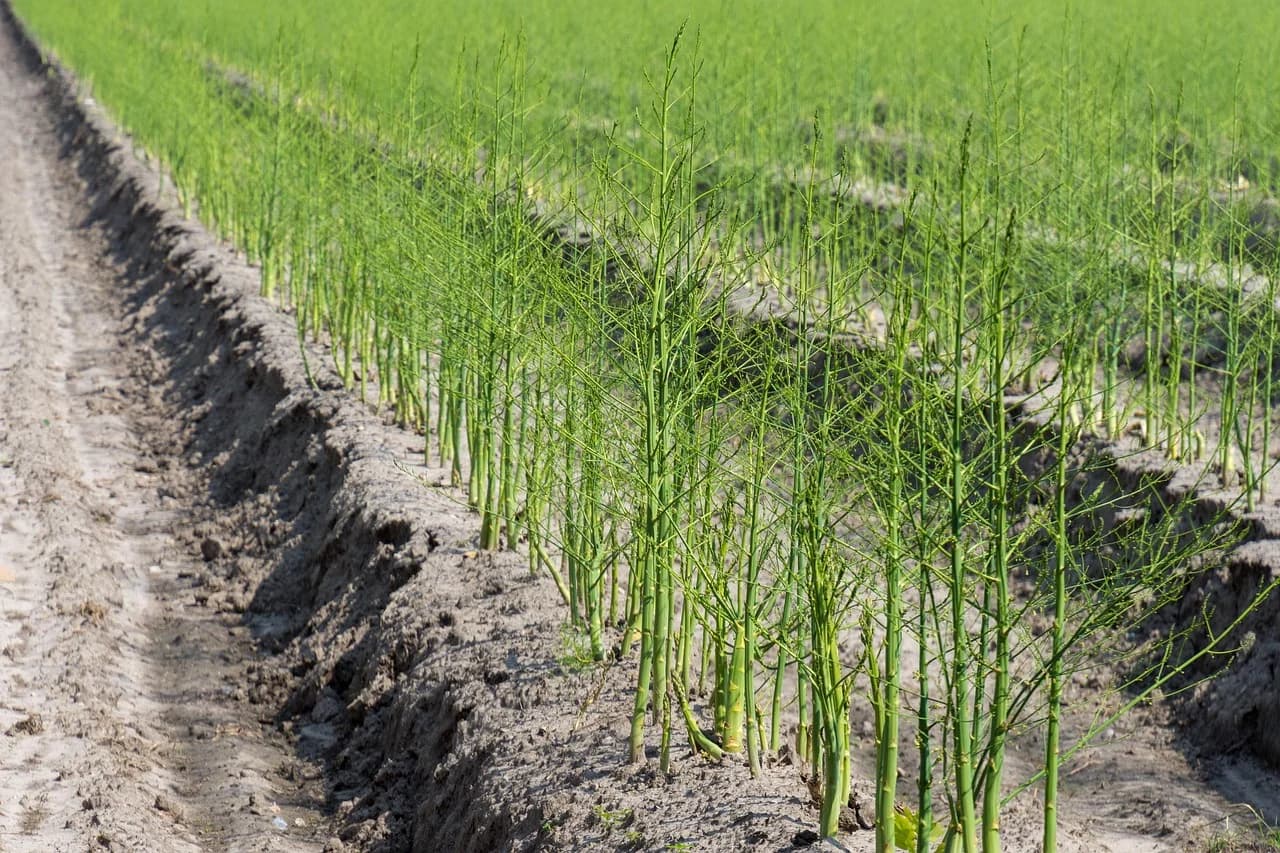
Asparagus is a long-lived perennial vegetable that can keep producing for 12 to 15 years or longer. It is grown for its young spears, which are picked in early spring. Plants can grow 3 to 5 feet (91–152 cm) tall with a canopy of 18 inches to 3 feet (46–91 cm) wide. Plants are either male or female, and male plants live longer and are more productive. Plants are hardy and can withstand winters with protection in colder areas.
Growing details
- Start indoors
- Not yet verified
- Sow outdoors
- Not yet verified
- Water
- Not yet verified
- Containers
- Not yet verified
- Height
- 0.9–1.5 m3–5 ft
- Spread
- 46–91 cm1½–3 ft
- Frost tolerance
- Hardy
- Soil pH
- pH 6.0–8.0
- Life cycle
- Perennial
- Hardiness zones
- USDA zones 2–9
02 · How to grow
How to grow asparagus from seed
Starting from seed. Sow seeds indoors about 12 to 14 weeks before the planned transplant date, one seed per 2-inch cell, ½ to ¾ inch (1.3–1.9 cm) deep. Keep them warm, at 75 to 80 °F (23–27 °C) by day and about 65 °F (18 °C) at night. Seed-started plants are slow to germinate and should be transplanted in June. Seed is possible but not advisable, because seedlings take longer and may not be male plants. After the last frost, plant seedlings in a W-shaped furrow, with each plant in the middle of the W for better drainage.
Starting from crowns. Crowns are the easiest way to start asparagus. Look for full, slightly moist roots that are not shriveled. Soak the crowns in warm water for 2 to 4 hours before planting. Dig a trench about 6 inches (15 cm) deep, spread the roots out with the buds facing up, and cover the crowns with just 1 to 2 inches (2.5–5 cm) of soil at first. Space crowns 12 to 18 inches (30–46 cm) apart.
Choosing a variety. Select all-male hybrids, which are more productive and disease-resistant than older varieties. Jersey Giant and Jersey Knight are all-male varieties. Mary Washington includes both male and female plants.
Site and soil. Choose full sun, meaning at least 6 hours of direct light a day, and plan for 8 to 10 hours if you can. The soil should be moist but well drained, and sandy or rich in organic matter. The ferns can shade other plants, so plan the bed’s location.
03 · Care
Caring for asparagus
Watering. During the first two years, water 1 to 2 inches (2.5–5 cm) every other week, using drip irrigation if possible. After year three, water about every 3 weeks.
Feeding. Apply nitrogen each year in early spring, and side-dress after harvest. A yearly top-dressing of compost is helpful.
Weeds and tilling. Weed the bed each spring before the first shoots come up. Avoid tilling, because damage to the roots may occur.
Ferns and winter. Let the ferns grow after harvest. In autumn, cut the foliage down to about 2 inches (5 cm) after frost, when it yellows. Then add a 4 to 6 inch (10–15 cm) mulch.
At a glance
How asparagus compares with other vegetables
Worked out from the growing facts of the 79 seeds in Vegetables on SeedBattle.
- Asparagus
- Each of the other vegetables
- Their average
- Germination temperatureAbout average
18–27 °C64–81 °F
Average for vegetables: 23 °C73 °F, from 38 other seeds
- Sowing depthDeeper than average
1.5–2 cm½–¾ in
Average for vegetables: 1 cm½ in, from 58 other seeds
- Spacing between plantsAbout average
30–46 cm12–18 in
Average for vegetables: 35 cm14 in, from 43 other seeds
- HeightTaller than average
0.9–1.5 m3–5 ft
Average for vegetables: 93 cm3 ft, from 57 other seeds
04 · Problems
Common asparagus problems
Insects. Common pests include asparagus beetle, spotted asparagus beetle and aphids. Slugs and snails may also be a problem.
Diseases. Watch for fusarium, rust and needle blight, and for foot and root rots. Planting resistant varieties helps, and you should remove all leaves after fall die-back.
05 · Harvest
Harvesting asparagus
Timing. Don’t harvest in the first season after planting crowns. In the second year, harvest lightly for 3 to 4 weeks. Another extension guide gives 4 to 6 weeks in early May to mid-June at two or three years. Plants grown from seed should not be harvested for the first two seasons and should be harvested only lightly in the third. From the fourth season, harvest for 8 to 10 weeks a year.
Picking. Snap off spears about 6 to 8 inches (15–20 cm) tall just below the soil surface. Cutting too deeply can injure the buds that make the next spears. Stop when most spears are thinner than a pencil.
06 · Storage
Storing asparagus
Refrigerate spears in a mesh or plastic bag as soon as you can. Fresh spears keep 3 to 4 days in the refrigerator with the cut ends wrapped in a wet paper towel. Standing them upright in a glass with clean water in the coldest part of the refrigerator can extend storage. Spears store for 3 to 5 days at 35 °F (2 °C).
07 · Safety
Asparagus safety
Skin contact. Young raw shoots can cause contact dermatitis, so wear gloves when handling them. Gloves are also advised for picking spears, since they may cause a skin allergy.
Berries. Don’t eat the red berries, which can cause stomach upset. The fruits are harmful if eaten.
Pesticides. Only pick spears from areas you know have not been treated with pesticides.
Asparagus questions
How long before I can harvest asparagus grown from seed?
Plants grown from seed should not be harvested for the first two seasons, and only lightly in the third. From the fourth season, harvest for 8 to 10 weeks a year.
How deep should I sow asparagus seeds?
Sow about ½ to ¾ inch (1.3–1.9 cm) deep, with one seed per 2-inch cell.
Should I grow asparagus from seed or from crowns?
Crowns are the easiest way to start asparagus. Seed is possible, but seedlings take longer and may not be male plants.
Are asparagus berries safe to eat?
No. The fruits are harmful if eaten, and eating the berries may cause stomach problems.
How tall do asparagus plants grow?
Plants can grow 3 to 5 feet (91–152 cm) tall, with a canopy of 18 inches to 3 feet (46–91 cm) wide.
Quick answers
More asparagus questions
Short answers taken from the growing facts on this page.
How far apart should I plant asparagus?
Space the plants 30–46 cm12–18 in apart.
How much sun does asparagus need?
Asparagus grows in full sun.
What temperature do asparagus seeds need to sprout?
Asparagus seeds germinate at 18–27 °C64–81 °F.
Can asparagus survive frost?
Yes. Asparagus is hardy.
Is asparagus an annual or a perennial?
Asparagus is a perennial.
What soil pH does asparagus need?
Aim for soil at pH 6.0–8.0.
Side by side
Compare asparagus with…
Two seeds, every growing fact lined up, so you can pick the one that suits your space.
Vegetables
More seeds like asparagus
Other seeds in the Vegetables category.
Find your next seed to grow
Browse all 223 seeds by sun, difficulty or pot size, or line asparagus up against another seed.