Turnip
Brassica rapa subsp. rapa
Turnips are cool-season root vegetables grown from seed for their roots and leaves. They can be sown in late winter or early spring, or in late summer for a fall crop, in full sun.
Quick facts
- Germination time
- 7–10 days
- Germination temperature
- 16–29 °C61–84 °F
- Sowing depth
- 6 mm–1.5 cm¼–½ in
- Spacing between plants
- 8–15 cm3¼–6 in
- Days to maturity
- 60–80 days from sowing
- Sun
- Full sun
Safety for cats and dogs: not yet verified.
By SeedBattle EditorsUpdated
Spotted a mistake or missing detail? Improve this page
01 · Overview
About turnip
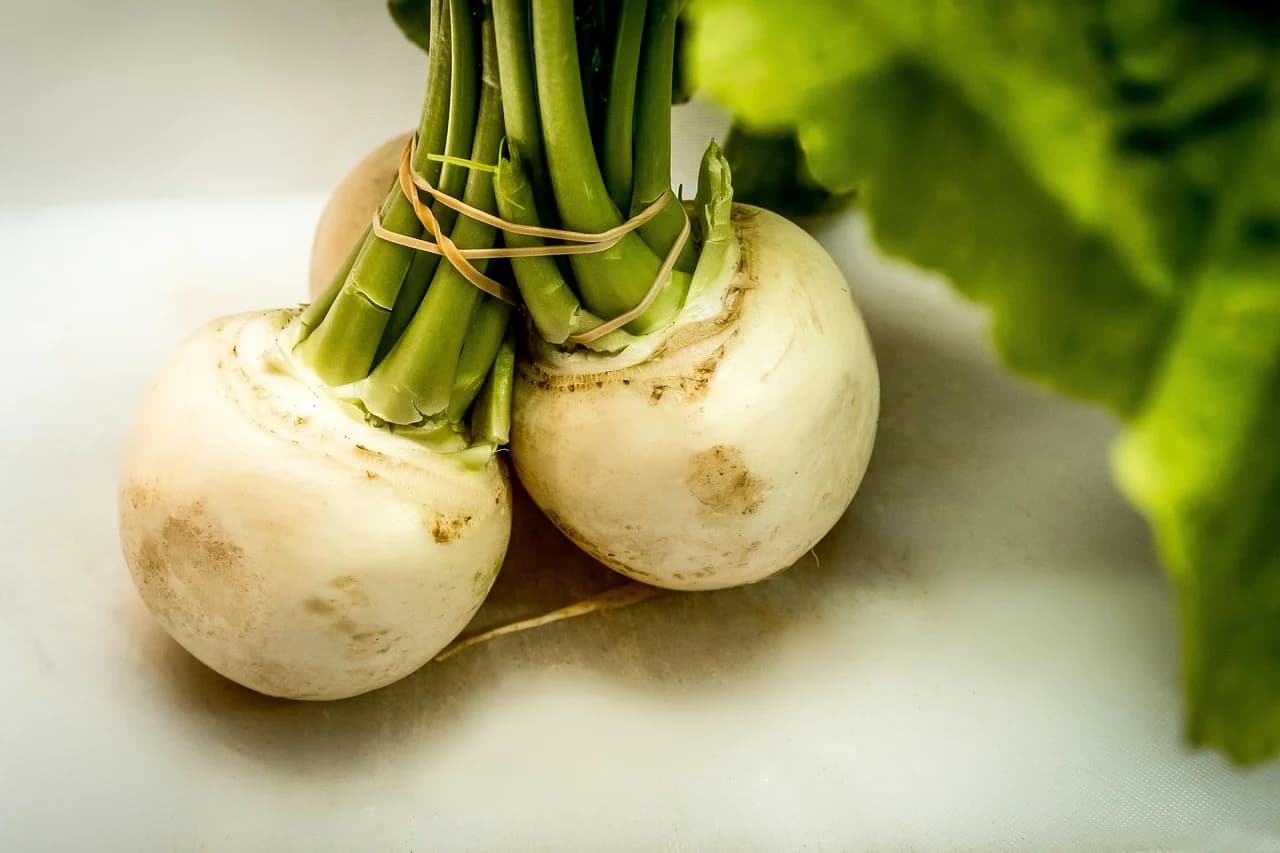
Turnips are cool-season vegetables in the mustard family. Both the roots and the leaves are edible. The roots come in several colors, from yellow to white, sometimes with red or purple at the top.
Growing details
- Start indoors
- Not yet verified
- Sow outdoors
- 2–3 weeks before the last frost
- Water
- Moderate
- Containers
- Not yet verified
- Height
- 30–46 cm12–18 in
- Spread
- 15–30 cm6–12 in
- Frost tolerance
- Half-hardy (light frost)
- Soil pH
- pH 6.0–6.5
- Life cycle
- Annual
Sowing timeline
When to sow turnip seeds
Counted from your area's average last spring frost date. Find yours from a local weather service or garden center, then count back or forward.
- Germination temperature
- 16–29 °C61–84 °F
- Frost tolerance
- Half-hardy (light frost)
02 · How to grow
How to grow turnip from seed
Sow turnip seed in late winter or early spring for a spring crop, or in late summer for a fall crop. Plant them about 2 to 3 weeks before the last frost in spring. Sow the seed ¼ to ½ inch (0.6 to 1.3 cm) deep. The seeds are very small, so sow them shallowly and keep the soil moist until they come up.
Turnips need full sun, which means at least six hours of direct sun a day. Choose a site with well-drained soil and loosen it well so the roots can form properly. Thin the seedlings to 3 to 6 inches (8 to 15 cm) apart after they sprout. Rows can be 14 to 18 inches (36 to 46 cm) apart. For a steady supply, sow a new batch about every 4 weeks.
03 · Care
Caring for turnip
Water so the soil stays moist but not soggy when the weather is dry. Roots need about 1 to 1½ inches of water each week, and turnips are not drought tolerant. Keep weeds down with frequent, shallow cultivation, less than 2 inches (5 cm) deep. Mulch with straw or grass clippings after thinning to help hold moisture.
Fertilizer advice differs between guides. One guide suggests a nitrogen fertilizer (21-0-0) about 6 weeks after the seedlings emerge. Another says turnips do not need extra fertilizer after the pre-plant application. Too much nitrogen may reduce root formation.
At a glance
How turnip compares with other vegetables
Worked out from the growing facts of the 79 seeds in Vegetables on SeedBattle.
- Turnip
- Each of the other vegetables
- Their average
- Germination timeSprouts sooner than average
7–10 days
Average for vegetables: 10 days, from 39 other seeds
- Days to maturityAbout average
60–80 days from sowing
Average for vegetables: 64 days, from 17 other seeds
- Germination temperatureAbout average
16–29 °C61–84 °F
Average for vegetables: 23 °C73 °F, from 38 other seeds
- Sowing depthShallower than average
6 mm–1.5 cm¼–½ in
Average for vegetables: 1 cm½ in, from 58 other seeds
- Spacing between plantsCloser than average
8–15 cm3¼–6 in
Average for vegetables: 35 cm14 in, from 43 other seeds
- HeightShorter than average
30–46 cm12–18 in
Average for vegetables: 94 cm3 ft, from 57 other seeds
04 · Problems
Common turnip problems
Common insect pests include aphids, whiteflies, flea beetles, cabbage loopers, cutworms and beet armyworms. Slugs and snails can also be a problem. Diseases include club root, white rust, leaf spot, damping off and bacterial soft rot. Insufficient water, lack of fertilizer or delayed harvesting can make the plant woody.
05 · Harvest
Harvesting turnip
Young leaves can be picked for salads or cooked as greens. Harvest turnip greens when the leaves are young, about 4 to 6 inches (10 to 15 cm) long. Pick the roots when they are about 2 inches (5 cm) across, since they taste best after a frost. One guide gives a larger target of 2½ to 2¾ inches (6 to 7 cm) across. Roots should be harvested before a hard freeze.
06 · Storage
Storing turnip
Greens can be kept in a plastic bag in the refrigerator for about one week. Roots store well in plastic bags in the refrigerator or a cold root cellar. Turnips lose moisture quickly and do not keep for long, so use the roots within two weeks.
Turnip questions
How long do turnip seeds take to germinate?
Turnip seeds usually emerge in 7 to 10 days when the soil is about 60 to 85 °F (16 to 29 °C).
When should I plant turnips?
Plant in late winter or early spring for a spring crop, or in late summer for a fall crop. In spring, sow about 2 to 3 weeks before the last frost.
How deep should I plant turnip seeds?
Sow turnip seeds ¼ to ½ inch (0.6 to 1.3 cm) deep.
How far apart should I space turnip plants?
After the seedlings come up, thin them to 3 to 6 inches (8 to 15 cm) apart.
Quick answers
More turnip questions
Short answers taken from the growing facts on this page.
How much sun does turnip need?
Turnip grows in full sun.
What temperature do turnip seeds need to sprout?
Turnip seeds germinate at 16–29 °C61–84 °F.
How long does turnip take to mature?
Turnip takes 60–80 days from sowing to mature.
How tall does turnip grow?
Turnip grows 30–46 cm12–18 in tall.
Can turnip survive frost?
Only a light frost. Turnip is half-hardy.
Is turnip an annual or a perennial?
Turnip is an annual.
Side by side
Compare turnip with…
Two seeds, every growing fact lined up, so you can pick the one that suits your space.
Vegetables
More seeds like turnip
Related seeds, plus others in the Vegetables category.
Find your next seed to grow
Browse all 223 seeds by sun, difficulty or pot size, or line turnip up against another seed.