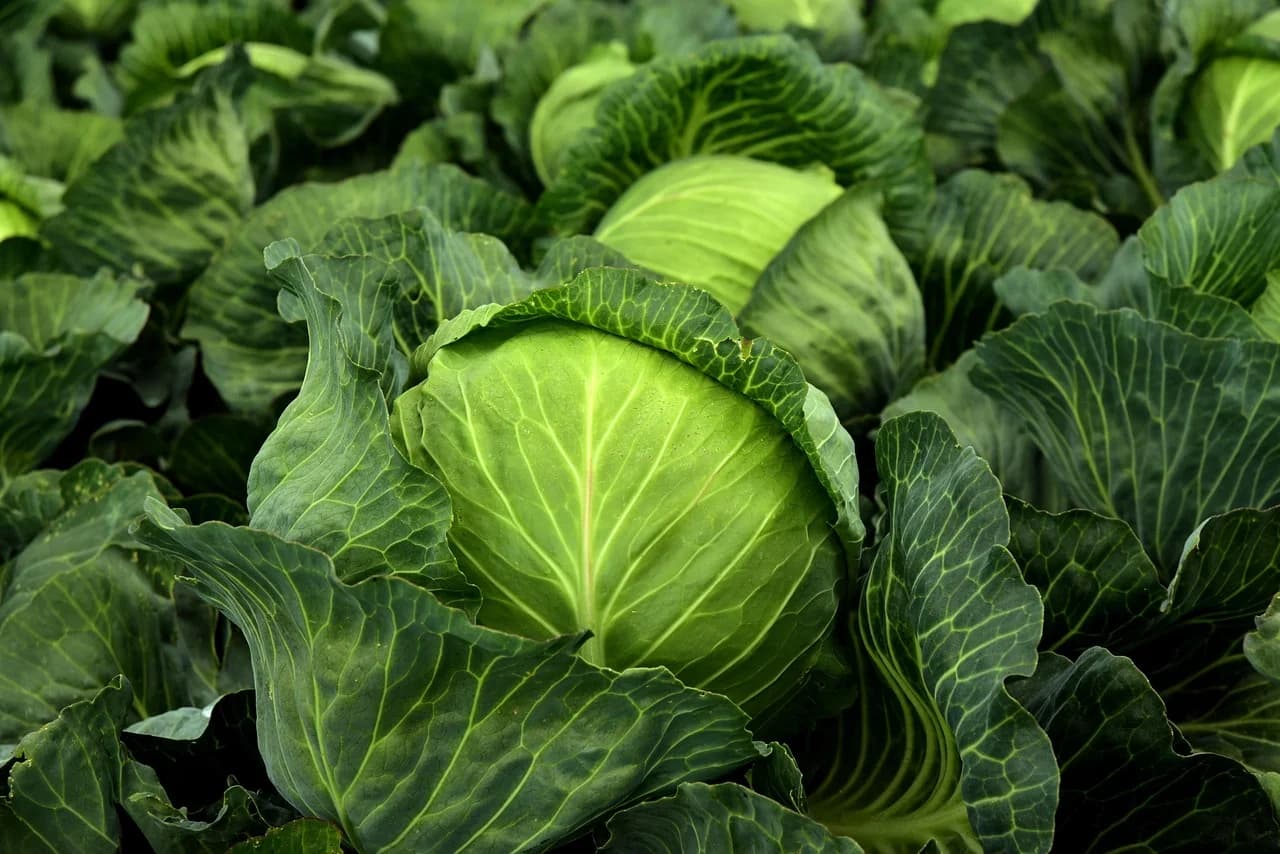
Cabbage
Brassica oleracea var. capitata
Cabbage is a cool-season vegetable grown for its dense head of leaves. It is best sown in early spring or fall, in full sun.
Quick facts
- Germination time
- Not yet verified
- Germination temperature
- Not yet verified
- Sowing depth
- 6 mm–1.5 cm¼–½ in
- Spacing between plants
- Not yet verified
- Days to maturity
- Not yet verified
- Sun
- Full sun
Safety for cats and dogs: not yet verified.
By SeedBattle EditorsUpdated
Spotted a mistake or missing detail? Improve this page
01 · Overview
About cabbage
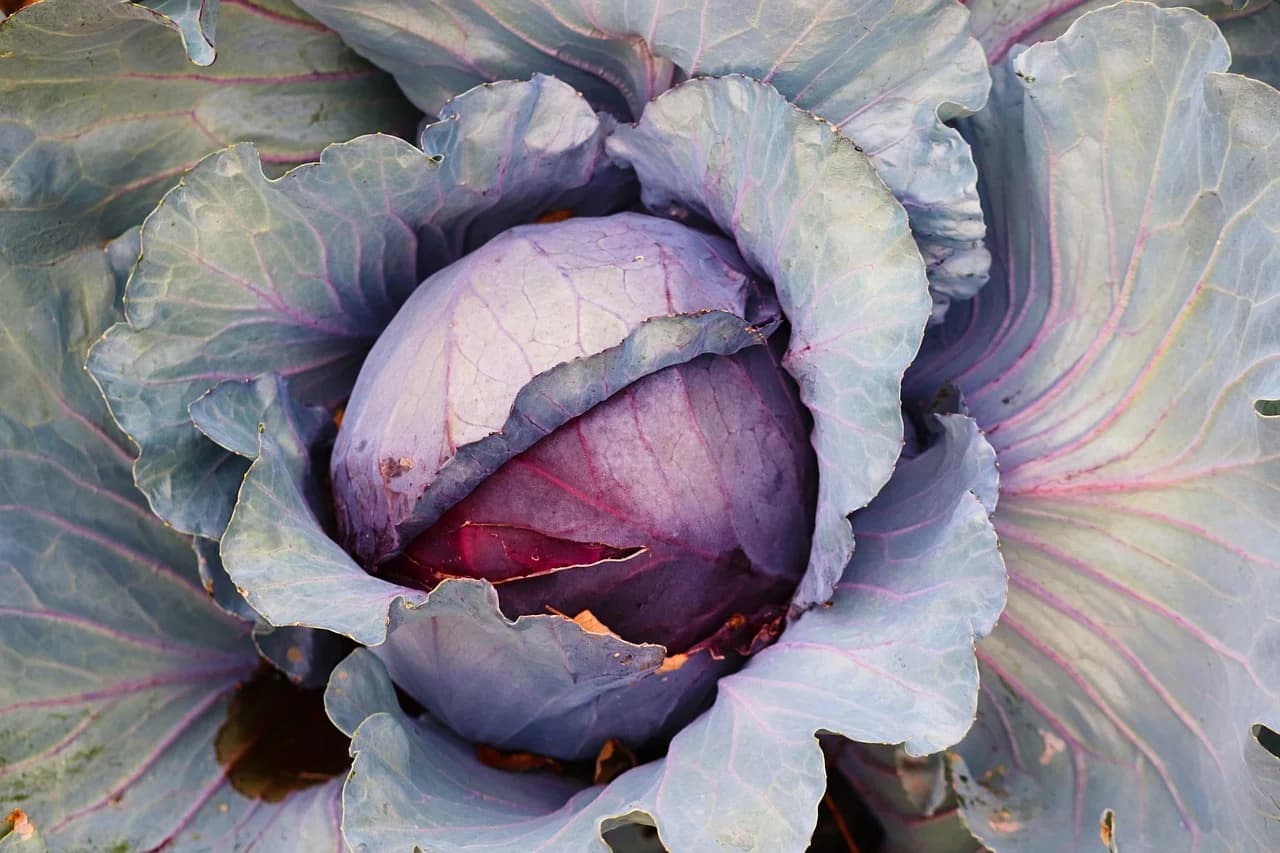
Cabbage is a cool-weather vegetable grown for its dense head of leaves. The plant is a biennial, which means it needs two growing seasons, but gardeners usually treat it as an annual. Heads can be rounded, oval or pointed, and the leaves range from smooth to crinkled and from light green to reddish. Varieties named on gardening experts page include ‘Bronco’, Conqueror, ‘Famosa’, ‘Piccadilly’, ‘Ruby Perfection’ and ‘Tiara’, with heads from about 1 to 8 pounds. Mature plants are about 10 inches to 2 feet tall (25 to 61 cm), and the leaves have the best flavor after a frost.
Growing details
- Start indoors
- Not yet verified
- Sow outdoors
- 2–3 weeks before the last frost
- Water
- Moderate
- Containers
- Not yet verified
- Height
- 25–61 cm10 in–2 ft
- Spread
- 30–61 cm1–2 ft
- Frost tolerance
- Hardy
- Soil pH
- Not yet verified
- Life cycle
- Biennial
Sowing timeline
When to sow cabbage seeds
Counted from your area's average last spring frost date. Find yours from a local weather service or garden center, then count back or forward.
- Frost tolerance
- Hardy
02 · How to grow
How to grow cabbage from seed
Sow seeds ¼ to ½ inch (6 to 13 mm) deep, 2 to 3 weeks before the last spring frost, or set out transplants at that time. Gardening experts’s guide says cabbage should be grown in early spring or fall, that transplants suit spring planting, and that fall crops can be direct seeded. In Maryland, spring crops are started indoors 4 to 6 weeks before setting plants out in mid-April to early May, and fall crops are sown about 3 weeks before transplanting. Cabbage can be grown from seed or transplants.
Spacing. Guides give different spacing. Utah suggests 12 to 18 inches (30 to 46 cm) apart in rows 2 to 3 feet apart. Iowa suggests 18 to 24 inches (46 to 61 cm) apart. Gardening experts suggest 9 to 12 inches (23 to 30 cm) apart for 2 to 3 pound heads. Close spacing gives smaller heads. For direct-seeded rows, thin plants when they reach the three-leaf stage.
Soil. Cabbage grows in a range of soils but prefers well-drained, fertile ground rich in organic matter. Get a soil test before planting. Gardening experts give a soil pH of 5.8 to 6.5, while gardening experts list a neutral range of 6.0 to 8.0.
Sun. Plant in full sun, meaning at least 6 hours of direct sun a day.
03 · Care
Caring for cabbage
Watering. Keep the soil evenly moist and water deeply, about 1 to 2 inches (2.5 to 5 cm) a week. Iowa suggests weekly watering if rain does not supply 1 inch (2.5 cm) per week. Water about every three days until seedlings are established. Gardening experts suggest watering in the morning so foliage dries before dark, and wetting the soil at least 6 inches (15 cm) deep.
Feeding. Where no soil test has been done, gardening experts suggest a 5-10-10 fertilizer before planting and a side-dressing during the season. Utah suggests a nitrogen fertilizer about 4 weeks after planting or thinning, and no extra nitrogen once heads start to form.
Weeds and mulch. Cabbage roots are shallow, so slice weeds off at ground level with a sharp hoe. A 2 to 3 inch (5 to 8 cm) layer of mulch such as straw helps control weeds and keep moisture in.
At a glance
How cabbage compares with other vegetables
Worked out from the growing facts of the 79 seeds in Vegetables on SeedBattle.
- Cabbage
- Each of the other vegetables
- Their average
- Sowing depthShallower than average
6 mm–1.5 cm¼–½ in
Average for vegetables: 1 cm½ in, from 58 other seeds
- HeightShorter than average
25–61 cm10 in–2 ft
Average for vegetables: 94 cm3 ft, from 57 other seeds
04 · Problems
Common cabbage problems
Gardening experts list imported cabbageworm, cabbage looper, diamondback moth caterpillar, harlequin bugs, cabbage maggots, aphids and flea beetles as the major insect pests. Iowa says cabbageworms chew large irregular holes and can be treated with products containing Bacillus thuringiensis (Bt). Flea beetles leave small round holes, called shothole damage.
Black rot is the most serious disease in gardening experts’s guide. It causes V-shaped lesions on leaves, has no control once it is established, and can come on transplants or seed. Gardening experts recommend buying certified disease-free transplants or chemically treated seed. Crop rotation within the cabbage family helps reduce pest and disease pressure.
Tipburn, a browning of leaf edges in the inner head, comes from water stress and too much fertilizer during head development. Spring cabbage must mature before temperatures get too hot, and Maryland lists bolting among common cabbage problems.
05 · Harvest
Harvesting cabbage
Harvest when the heads are firm and full size. Iowa says heads can be cut once they are firm and about the size of a softball. Maturity times differ: Maryland gives 60 to 90 days from transplanting, gardening experts give 60 to 80 days after planting transplants, and Iowa gives 60 to 100 days after planting transplants, depending on the variety.
Cut the stem below the head, leaving 2 to 3 outer wrapper leaves for protection. Move harvested heads out of direct sun quickly, because direct sun can cause sunblistering and weight loss. Heads split if they are left too long, so harvest promptly.
06 · Storage
Storing cabbage
Store harvested cabbage in the refrigerator. Gardening experts suggest a cold, moist spot such as the vegetable drawer. Guides give different storage times: gardening experts say up to five months at 34 °F (1 °C) and 98% humidity; Utah says 2 to 6 months at 32 °F (0 °C) and 95% relative humidity; Iowa says 2 to 4 weeks in a perforated plastic bag in the refrigerator. Keep cabbage away from apples and pears, which can make it taste bitter.
07 · Safety
Cabbage safety
Gardening experts page tags cabbage as a problem for horses, but it gives no detail about which part of the plant or how much is involved. The leaves are described as edible for people. None of the pages reviewed rate cabbage’s toxicity for people, cats or dogs, so no such rating is given here.
Cabbage questions
When should I plant cabbage?
Sow seeds or transplants 2 to 3 weeks before the last spring frost. Gardening experts say cabbage should be grown in early spring or fall.
How much sun does cabbage need?
Cabbage grows best in full sun, meaning at least 6 hours of direct sunlight a day.
How long does cabbage keep after harvest?
Guides differ: gardening experts say up to five months at 34 °F (1 °C), Utah says 2 to 6 months at 32 °F (0 °C), and Iowa says 2 to 4 weeks in a perforated bag in the refrigerator.
Why did my cabbage head split?
Heads split when they take in too much water near maturity. Pulling the plant up or twisting the stalk to break some roots reduces water uptake.
Quick answers
More cabbage questions
Short answers taken from the growing facts on this page.
How deep should I sow cabbage seeds?
Sow them 6 mm–1.5 cm¼–½ in deep.
How tall does cabbage grow?
Cabbage grows 25–61 cm10 in–2 ft tall.
Can cabbage survive frost?
Yes. Cabbage is hardy.
Is cabbage an annual or a perennial?
Cabbage is a biennial.
How much water does cabbage need?
Cabbage has moderate water needs.
Side by side
Compare cabbage with…
Two seeds, every growing fact lined up, so you can pick the one that suits your space.
Vegetables
More seeds like cabbage
Related seeds, plus others in the Vegetables category.
Find your next seed to grow
Browse all 223 seeds by sun, difficulty or pot size, or line cabbage up against another seed.
