Kale
Brassica oleracea var. sabellica
Also called borecole
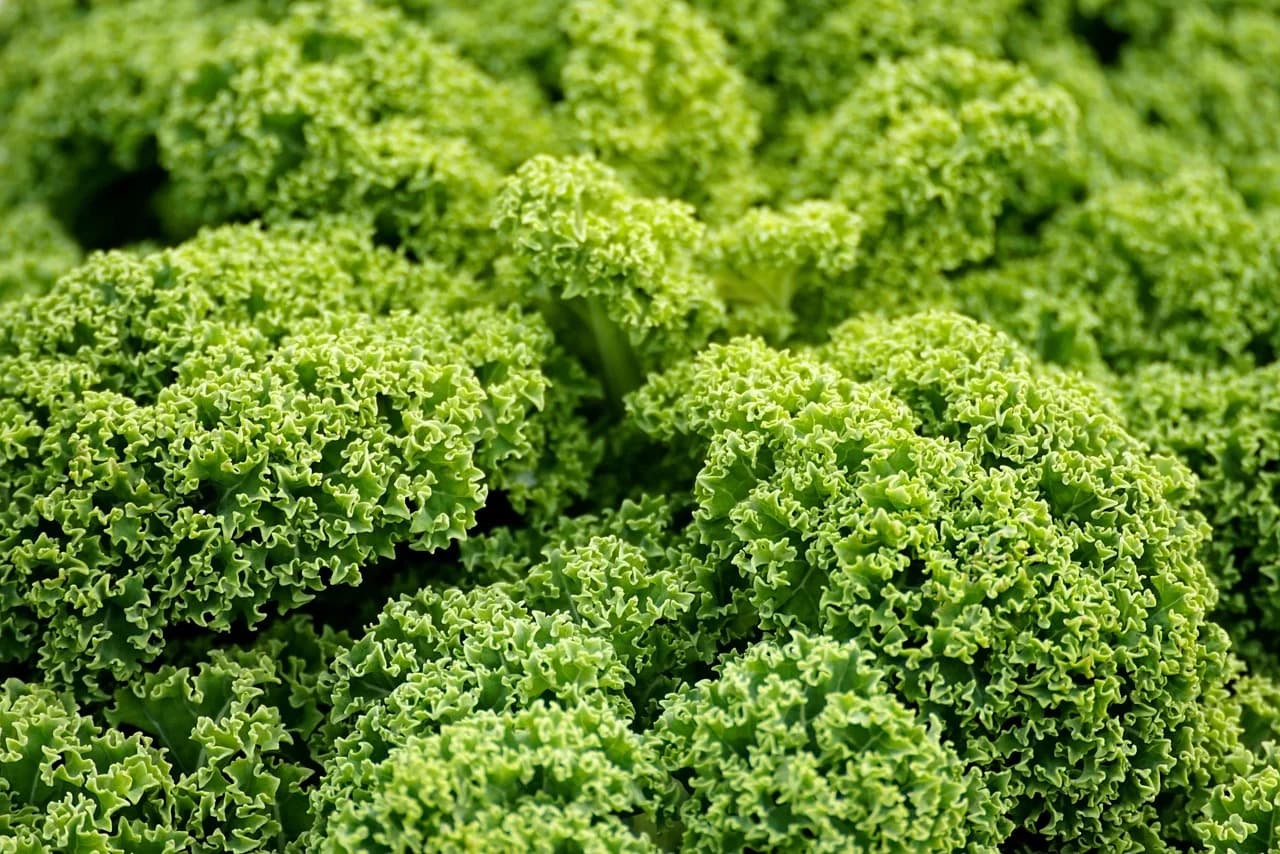
Kale is a cool-season leafy green that does best in full sun and can be sown outdoors in spring or fall. Mature plants commonly reach about 2 to 4 feet (61 to 122 cm) tall.
Quick facts
- Germination time
- Not yet verified
- Germination temperature
- 4–29 °C39–84 °F
- Sowing depth
- 6 mm–1.5 cm¼–½ in
- Spacing between plants
- 30–46 cm12–18 in
- Days to maturity
- Not yet verified
- Sun
- Full sun
Safety for cats and dogs: not yet verified.
By SeedBattle EditorsUpdated
Spotted a mistake or missing detail? Improve this page
01 · Overview
About kale
Kale is a biennial leafy green in the cabbage family, grown as a cool-season vegetable. It is thought to have started in the eastern Mediterranean, and its name comes from the Latin word for cabbage. Plants usually reach 2 to 4 feet (61 to 122 cm) tall and wide, with large, thick leaves in green, blue-green and red-tinged shades. In late winter or spring, plants bolt and produce clusters of small yellow flowers that attract early bees.
Types. Red Russian and Siberian are technically different species that gardeners grow as kale, and Siberian is the most cold-hardy. Tuscan kale has narrow, puckered blue-gray leaves that stand upright and are often used for kale chips. Redbor has ruffled, deep maroon leaves, and Winterbor is slow to bolt in spring, which gives a longer harvest.
Growing details
- Start indoors
- Not yet verified
- Sow outdoors
- Not yet verified
- Water
- Not yet verified
- Containers
- Yes
- Height
- 0.6–1.2 m2–4 ft
- Spread
- 0.6–1.2 m2–4 ft
- Frost tolerance
- Hardy
- Soil pH
- Not yet verified
- Life cycle
- Biennial
02 · How to grow
How to grow kale from seed
Sow kale seed outdoors in spring or fall, as North Carolina Extension notes it can be sown directly or planted as seedlings in either season. Plant seed about ¼ to ½ inch (0.6 to 1.3 cm) deep and space plants 12 to 18 inches (30 to 46 cm) apart, depending on the variety. Gardening experts suggest thinning when seedlings have 3 to 4 true leaves, and spacing rows about 2 feet (61 cm) apart. Gardening experts suggest sowing 3 to 4 seeds at each spot, thinning to one plant, and direct sowing from early spring until about 3 months before the expected fall frost.
Germination. Seed germinates with soil temperatures between 40 and 85 °F (4 to 29 °C). Gardening experts advise keeping soil above 75 °F (24 °C) until germination, if possible.
Transplants. Transplants should have 4 to 6 mature leaves and a well-developed root system, and should go out 4 to 5 weeks before the last frost-free date. Seeded kale may be planted at the same time.
03 · Care
Caring for kale
Water. Gardening experts advise watering deeply and infrequently, about 1 to 2 inches (2.5 to 5 cm) per week, while keeping soil moisture even. Mulch helps hold moisture and reduce weeds. Gardening experts note kale responds well to regular watering.
Feeding. Get a soil test before planting and fertilize based on the results. Gardening experts suggest a nitrogen fertilizer about 4 weeks after transplanting or thinning.
At a glance
How kale compares with other vegetables
Worked out from the growing facts of the 79 seeds in Vegetables on SeedBattle.
- Kale
- Each of the other vegetables
- Their average
- Germination temperatureCooler than average
4–29 °C39–84 °F
Average for vegetables: 23 °C73 °F, from 38 other seeds
- Sowing depthShallower than average
6 mm–1.5 cm¼–½ in
Average for vegetables: 1 cm½ in, from 58 other seeds
- Spacing between plantsAbout average
30–46 cm12–18 in
Average for vegetables: 35 cm14 in, from 43 other seeds
- HeightAbout average
0.6–1.2 m2–4 ft
Average for vegetables: 93 cm3 ft, from 57 other seeds
04 · Problems
Common kale problems
Diseases and soil pests. Nematodes can be a big problem in sandy soils, and diseases may include leaf spot, black rot, mildew and bacterial leaf blight.
Insects. Aphids, cabbage worms and loopers, and flea beetles are common pests; flea beetles can reduce stands or kill seedlings. Gardening experts note kale has fewer pest problems than other brassicas, suggests row covers at planting, and recommends Bacillus thuringiensis (Bt) for cabbage worms and loopers.
05 · Harvest
Harvesting kale
Harvest leaves when they reach full size, taking the older leaves first so the young ones keep growing. For mature plants, pick leaves that are large but still tender from the bottom of the stem. Gardening experts say harvest can begin about 2 months after planting by clipping individual leaves. Frost improves the flavor.
06 · Storage
Storing kale
Keep kale in a plastic container or bag lined with paper towels, in the produce drawer of the refrigerator, and wash it just before use. Gardening experts say it may keep up to a week or longer when stored well. Gardening experts say it can be stored 2 to 3 weeks at 32 °F (0 °C) and 95% humidity. To freeze, blanch clean leaves in boiling water for 2 to 3 minutes, cool them in ice water, drain, and freeze.
Kale questions
How long do kale seeds take to germinate?
Gardening experts give a soil temperature range of 40 to 85 °F (4 to 29 °C) for germination but does not give a number of days to emergence.
Can I grow kale in a pot?
Yes. Gardening experts list containers as one place kale can be grown, along with the vegetable garden and raised beds. Gardening experts also lists kale as a container plant.
When should I plant kale?
North Carolina Extension says kale can be direct sown or planted as seedlings in spring or fall. Gardening experts say direct seeding can run from early spring to about 3 months before the expected fall frost.
Does kale tolerate frost?
Mature kale plants are extremely hardy and can withstand very cold temperatures. Frost also improves the flavor of the leaves.
Quick answers
More kale questions
Short answers taken from the growing facts on this page.
How deep should I sow kale seeds?
Sow them 6 mm–1.5 cm¼–½ in deep.
How far apart should I plant kale?
Space the plants 30–46 cm12–18 in apart.
How much sun does kale need?
Kale grows in full sun.
What temperature do kale seeds need to sprout?
Kale seeds germinate at 4–29 °C39–84 °F.
How tall does kale grow?
Kale grows 0.6–1.2 m2–4 ft tall.
Is kale an annual or a perennial?
Kale is a biennial.
Side by side
Compare kale with…
Two seeds, every growing fact lined up, so you can pick the one that suits your space.
Vegetables
More seeds like kale
Related seeds, plus others in the Vegetables category.
Find your next seed to grow
Browse all 223 seeds by sun, difficulty or pot size, or line kale up against another seed.