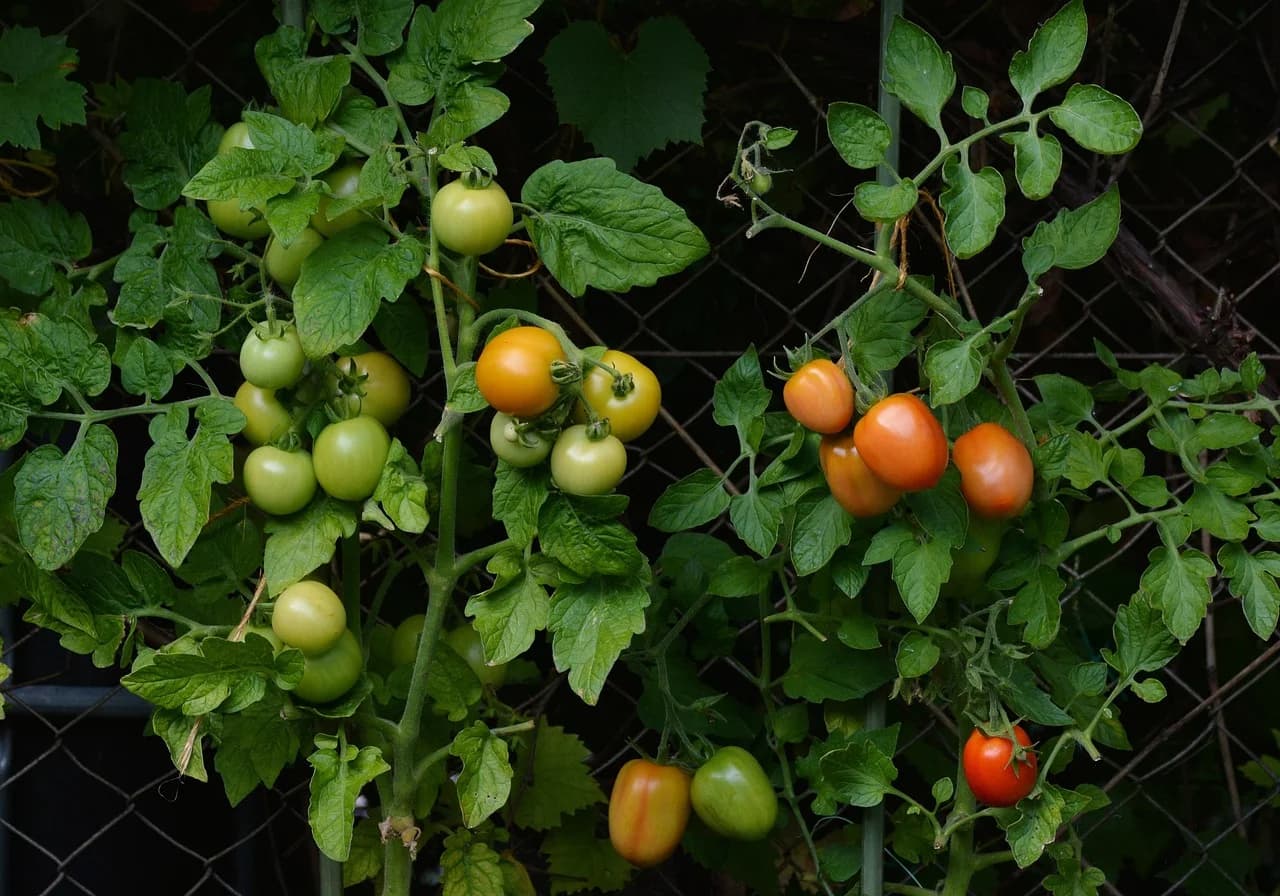
Tomato
Solanum lycopersicum
A warm-season favorite you start indoors 6 to 8 weeks before the last frost. Give it full sun, even watering and good support, and it rewards you with homegrown fruit from midsummer on.
Quick facts
- Germination time
- Not yet verified
- Germination temperature
- Not yet verified
- Sowing depth
- Not yet verified
- Spacing between plants
- 45–60 cm18–24 in
- Days to maturity
- Not yet verified
- Sun
- Full sun
Toxic to cats and dogs Read the safety notes
By SeedBattle EditorsUpdated
Spotted a mistake or missing detail? Improve this page
01 · Overview
About tomato
Tomato (Solanum lycopersicum) is a warm-season crop in the nightshade family, native to Peru. It’s usually grown as an annual, although it lives on as a perennial in frost-free climates. The plants are tender, so they need protection from frost and a steady supply of moisture.
Varieties come in two main growth habits. Bush (determinate) types stay compact and ripen most of their fruit at about the same time, while cordon (indeterminate) types keep growing and fruiting until frost and need tall supports. Small-fruited varieties tend to be the easiest and quickest to crop.
Growing details
- Start indoors
- 6–8 weeks before the last frost
- Sow outdoors
- Not yet verified
- Water
- Not yet verified
- Containers
- Yes, 18.9 L or largerYes, 5 gal or larger
- Height
- 0.3–3 m1–10 ft
- Spread
- 0.3–1.2 m1–4 ft
- Frost tolerance
- Tender (no frost)
- Soil pH
- pH 6.0–6.5
- Life cycle
- Annual
Sowing timeline
When to sow tomato seeds
Counted from your area's average last spring frost date. Find yours from a local weather service or garden center, then count back or forward.
- Frost tolerance
- Tender (no frost)
02 · How to grow
How to grow tomato from seed
Start seeds indoors. Sow 6 to 8 weeks before your last frost date. Don’t start earlier than that: transplants that are too big, leggy or already flowering tend to stall after planting and crop less early on. Sow shallowly, about ⅛ to ¼ inch (3–6 mm) deep. Seeds come up in about a week at 75 °F (24 °C) and very slowly in the cold; gardening experts suggest about 64 °F (18 °C) in a heated propagator or on a warm windowsill. Give seedlings as much light as you can, because low light makes them tall and spindly.
Plant out after the frost. Harden plants off for about a week first. Never plant before your frost-free date: gardening experts suggest waiting a week or two after the last frost, until nights stay above 45 °F (7 °C), and gardening experts wait until temperatures are reliably above 60 °F (16 °C).
Plant deep. Bury the stem so only the top leaves show; new roots grow along the buried part.
Choose a sunny spot. Tomatoes need full sun, at least 6 hours of direct sun a day, and gardening experts recommend 8 or more. Space plants 18–24 inches (45–60 cm) apart in soil with a pH around 6.0–6.5. Avoid spots where tomatoes, peppers, eggplant or potatoes grew in the last two to three years.
Pots work too. Tomatoes do well in large containers and grow bags. Use a pot of at least 5 gallons (19 L), 1–2 feet (30–60 cm) deep, with one plant per pot. Compact bush varieties suit containers best.
03 · Care
Caring for tomato
Water evenly. Keep the soil evenly moist: big swings in moisture cause split fruit and blossom end rot. If rain gives less than 1 inch (2.5 cm) a week, water to make up the difference. Pots dry out fast and may need water every day in hot weather. Water the soil rather than the leaves, since wet foliage encourages fungal disease, and mulch once the soil has warmed to hold moisture in.
Feed, but go easy on nitrogen. Too much nitrogen gives lots of leaves and little fruit. For potted plants, feed every 10–14 days with a high-potassium liquid fertilizer once the first fruits start to swell.
Support and pruning. Stakes, cages or a trellis keep plants and fruit off the ground, which makes picking easier and improves airflow. On cordon (indeterminate) types, pinch out the side shoots that grow where a leaf meets the main stem. Bush types don’t need this.
At a glance
How tomato compares with other vegetables
Worked out from the growing facts of the 79 seeds in Vegetables on SeedBattle.
- Tomato
- Each of the other vegetables
- Their average
- Spacing between plantsWider than average
45–60 cm18–24 in
Average for vegetables: 34 cm13 in, from 43 other seeds
- HeightTaller than average
0.3–3 m1–10 ft
Average for vegetables: 92 cm3 ft, from 57 other seeds
04 · Problems
Common tomato problems
Pests. Common pests include hornworms, aphids, whiteflies, stink bugs, cutworms, flea beetles, spider mites, slugs and Colorado potato beetles.
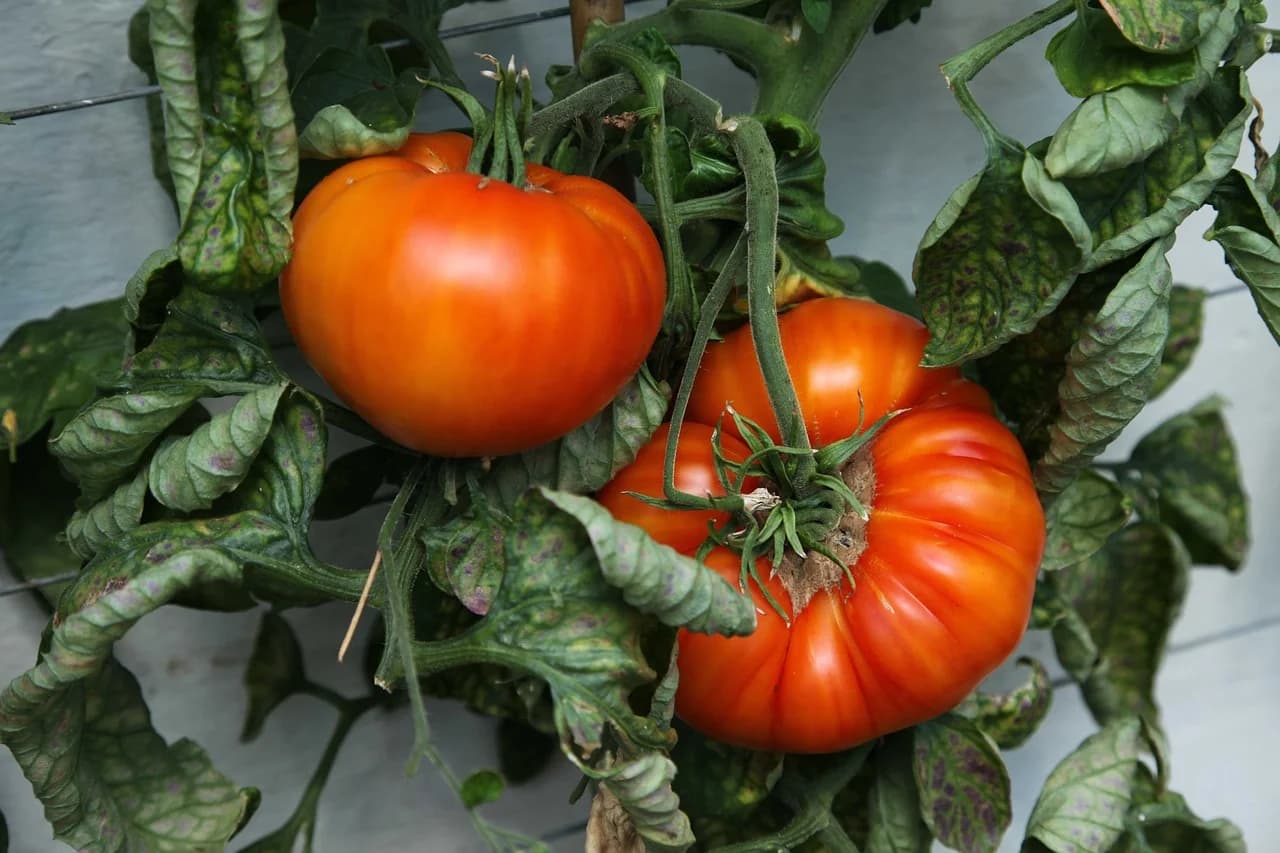
Diseases. Tomatoes can get early and late blight, Septoria leaf spot, Fusarium and Verticillium wilt, and several viruses. Outdoors, blight is most common in warm, wet weather. Choose disease-resistant varieties where you can; letters such as V, F and N on the label show resistance to Verticillium wilt, Fusarium wilt and nematodes.
Fruit problems. Blossom end rot (a dark, leathery patch at the bottom of the fruit) and cracking are linked to uneven watering. Misshapen, scarred “catfaced” fruit comes from poor pollination in cold weather, one more reason not to plant out too early.
05 · Harvest
Harvesting tomato
Depending on the variety, it takes about 52 to 90 days to reach the first harvest. Variety “days to harvest” figures count from transplanting, not from sowing: early varieties take about 55 to 65 days from transplanting, midseason ones 66 to 80, and late ones more than 80.
Flavor is best when the fruit ripens fully on the vine but is still firm. Fruit starts ripening from midsummer, depending on the variety and the weather. Check plants every few days and pick each tomato once it’s fully colored, with the stalk still attached. At the end of the season, unripe fruit can finish ripening indoors.
06 · Storage
Storing tomato
Don’t refrigerate green tomatoes: ripen them at about 70 °F (21 °C), and they don’t need light to do it. Green fruit keeps for one to three weeks at 50–70 °F (10–21 °C). Ripe tomatoes keep 4 to 7 days at room temperature or in the fridge, but chilling can dull the flavor and make them mealy. For canning or other preserving, follow the tested methods of the National Center for Home Food Preservation.
07 · Safety
Tomato safety
The ripe fruit is edible, but the leaves and stems contain the alkaloids tomatine and solanine. Eating large amounts can cause stomach upset and other symptoms, though poison-center records show very few reactions. Pet poison experts list the tomato plant as toxic to dogs, cats and horses, while noting that the ripe fruit is non-toxic.
Tomato questions
How long do tomato seeds take to germinate?
Usually 6 to 12 days, and about a week at 75 °F (24 °C). In cool conditions they germinate very slowly.
When should I start tomato seeds indoors?
About 6 to 8 weeks before your last frost date. Starting earlier doesn’t help: transplants that are too mature often stall after planting.
Can I grow tomatoes in a pot?
Yes. Use a container of at least 5 gallons (19 L), 1–2 feet (30–60 cm) deep, with one plant per pot. Compact bush varieties suit pots best, and potted plants may need watering every day in hot weather.
Why are my tomatoes splitting or getting black bottoms?
Usually uneven watering. Swings in soil moisture cause both splitting and blossom end rot, so keep the soil evenly moist.
Are tomato plants poisonous to cats and dogs?
Pet poison experts list the tomato plant as toxic to dogs and cats, but notes that the ripe fruit is non-toxic.
Quick answers
More tomato questions
Short answers taken from the growing facts on this page.
How far apart should I plant tomato?
Space the plants 45–60 cm18–24 in apart.
How much sun does tomato need?
Tomato grows in full sun.
How tall does tomato grow?
Tomato grows 0.3–3 m1–10 ft tall.
Can tomato survive frost?
No. Tomato is tender, so it can't take frost.
Is tomato an annual or a perennial?
Tomato is an annual.
What soil pH does tomato need?
Aim for soil at pH 6.0–6.5.
Side by side
Compare tomato with…
Two seeds, every growing fact lined up, so you can pick the one that suits your space.
Vegetables
More seeds like tomato
Other seeds in the Vegetables category.
Find your next seed to grow
Browse all 223 seeds by sun, difficulty or pot size, or line tomato up against another seed.
