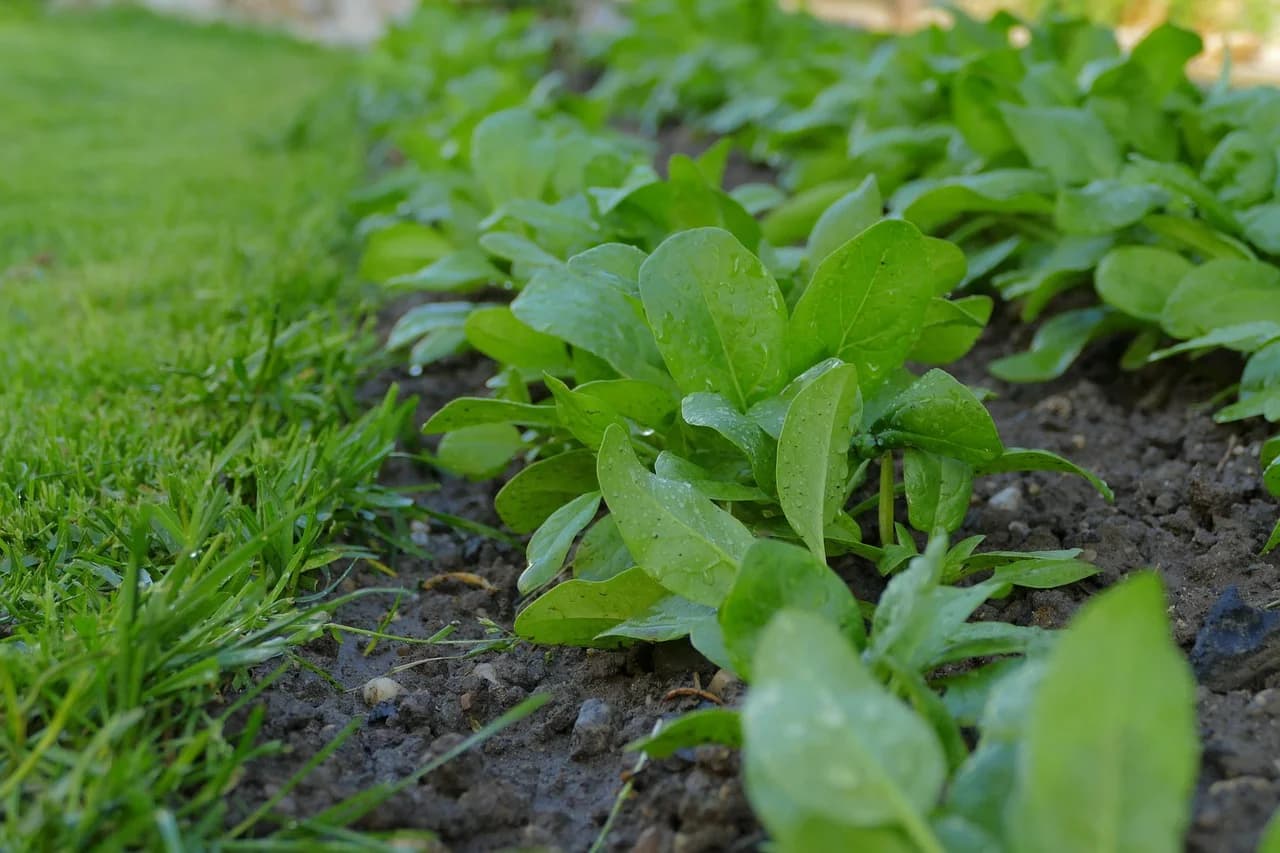
Spinach
Spinacia oleracea
A hardy, fast-growing leafy green for spring and fall. Sow it early in cool soil and keep it moist, because long days and summer heat make it bolt.
Quick facts
- Germination time
- 7–10 days
- Germination temperature
- Not yet verified
- Sowing depth
- Not yet verified
- Spacing between plants
- Not yet verified
- Days to maturity
- 28–55 days from sowing
- Sun
- Full sun, partial shade
Safety for cats and dogs: not yet verified.
By SeedBattle EditorsUpdated
Spotted a mistake or missing detail? Improve this page
01 · Overview
About spinach
Spinach (Spinacia oleracea) is a fast-growing, cool-season annual in the amaranth family, native to a region stretching from central Asia to southwest Siberia. It’s a hardy crop that can survive 20 °F (−7 °C) without injury, so it suits spring and fall. The catch is that long days and heat make it bolt, so sowing early enough matters more than with most leafy greens.
There are smooth-leaved and crinkly savoy types; flat-leaved varieties tend to cope better with warm weather than savoy ones. Several other plants are called spinach because they’re used the same way, but many are unrelated, and some handle summer heat better.
Growing details
- Start indoors
- Not yet verified
- Sow outdoors
- Not yet verified
- Water
- Not yet verified
- Containers
- Yes
- Height
- 15–30 cm6–12 in
- Spread
- 15–30 cm6–12 in
- Frost tolerance
- Hardy
- Soil pH
- pH 6.0–7.0
- Life cycle
- Annual
Sowing timeline
Spinach from seed to maturity
Counted in days from the day you sow.
- Frost tolerance
- Hardy
02 · How to grow
How to grow spinach from seed
When to sow. Spinach germinates best in cool soil, so start sowing in early spring as soon as the ground can be worked, once the soil has reached about 45 °F (7 °C). Sources differ on exact timing: gardening experts suggest sowing 4–8 weeks before your average last spring frost, while gardening experts suggest 2–3 weeks before. Sow again from late summer to early fall for an autumn crop, choosing hardy varieties if you want plants to overwinter. Soil above 85 °F (29 °C) holds back germination.
How to sow. Sow directly outdoors, because transplanting can make spinach more likely to bolt. US sources recommend sowing ½ inch (13 mm) deep, while gardening experts sow in a drill 1 inch (2.5 cm) deep. Seedlings usually appear in 7–10 days. Use fresh seed: spinach seed more than a year old doesn’t germinate well.
Spacing. Thin seedlings to 2–3 inches (5–7.5 cm) apart; full-size plants need 4–6 inches (10–15 cm). Crowded plants are more likely to get downy mildew.
Site and soil. Spinach grows best in moist, rich, well-drained soil in full sun to partial shade, and some shade helps in hot weather. It’s sensitive to acidic soil, so aim for a pH between 6.0 and 7.0.
Pots. Gardening experts say spinach can grow in containers as small as 1 gallon (about 4 L) and 4–6 inches (10–15 cm) deep. Gardening experts recommend a larger pot, at least 30 cm (1 ft) wide and deep, so the compost doesn’t dry out too fast.
03 · Care
Caring for spinach
Watering. Spinach needs a steady supply of moisture. Gardening experts call it a thirsty crop: dry soil interrupts growth and leads to bolting. Water in the morning and aim at the soil rather than the leaves, since wet foliage encourages fungal disease. A mulch keeps the soil moist and cool.
Bolting. Longer days and summer heat make spinach send up a flower stalk, which stops leaf growth and turns the leaves bitter. Spinach tends to bolt once temperatures reach about 80 °F (27 °C), and that day length alone can trigger it even in cool weather. Shade cloth helps once days warm to about 70 °F (21 °C). For spring crops in warm climates, choose bolt-resistant varieties.
Weeds. Weed shallowly, since deep cultivation damages the roots, and don’t pile soil against the plants, because buried leaves rot quickly.
Winter. Spinach can overwinter for an early spring crop if plants have 4–5 true leaves by late in the year; mulch them heavily and remove the mulch once the snow melts. Unless your climate is mild, cover overwintering plants with cloches or fleece from October.
At a glance
How spinach compares with other vegetables
Worked out from the growing facts of the 79 seeds in Vegetables on SeedBattle.
- Spinach
- Each of the other vegetables
- Their average
- Germination timeSprouts sooner than average
7–10 days
Average for vegetables: 10 days, from 39 other seeds
- Days to maturityMatures sooner than average
28–55 days from sowing
Average for vegetables: 66 days, from 17 other seeds
- HeightShorter than average
15–30 cm6–12 in
Average for vegetables: 94 cm3 ft, from 57 other seeds
04 · Problems
Common spinach problems
Insect pests include aphids, cutworms, cabbage loopers, corn earworms and diamondback moth caterpillars. Aphids matter most because they spread viruses. Slugs and snails like the soft young leaves, and birds may eat seedlings. Row covers keep out spinach leaf miners.
The main diseases are downy mildew, white rust and damping-off of seedlings; resistant varieties help avoid downy mildew. Downy mildew takes hold most easily in humid weather and when plants are crowded.
05 · Harvest
Harvesting spinach
You can pick baby leaves about a month after sowing and mature leaves after about two months; gardening experts expect spinach to be ready in about 37–45 days. Pick the outer leaves first and let the younger ones keep growing. As long as the growing point isn’t damaged, you can cut all the leaves to about 2 inches (5 cm) above the soil and let the plant regrow. Once plants start sending up flower stalks, make a final harvest.
06 · Storage
Storing spinach
Rinse and dry the leaves, then keep them in plastic bags in the refrigerator. Fresh leaves only last a few days in a home fridge, so pick what you need and freeze spinach for longer storage. In very cold, humid storage (32 °F/0 °C, 95% humidity) it keeps for one to three weeks.
07 · Safety
Spinach safety
Raw spinach is safe to eat, but it contains oxalates, which can reduce how much iron and calcium the body absorbs. Cooking it in several changes of water lowers the oxalate level. Gardening experts note this is a concern only with large amounts over time or a low calcium intake.
Spinach questions
How long do spinach seeds take to germinate?
Usually 7 to 10 days. Spinach germinates best in cool soil; hot soil gives poor or patchy germination.
When should I plant spinach?
Start in early spring, as soon as the ground can be worked, and sow again in mid-to-late summer for a fall crop. Gardening experts suggest sowing 4–8 weeks before your average last spring frost.
Why is my spinach bolting?
Lengthening days and heat make spinach bolt, and dry soil makes it worse. Sow early, keep the soil moist, and choose bolt-resistant varieties for spring crops.
Can I grow spinach in a pot?
Yes. Gardening experts say containers as small as 1 gallon (about 4 L) work, but a pot at least 30 cm (1 ft) wide and deep dries out less quickly. Keep it out of hot midday sun and water often.
Quick answers
More spinach questions
Short answers taken from the growing facts on this page.
How much sun does spinach need?
Spinach grows in full sun or partial shade.
How long does spinach take to mature?
Spinach takes 28–55 days from sowing to mature.
How tall does spinach grow?
Spinach grows 15–30 cm6–12 in tall.
Can spinach survive frost?
Yes. Spinach is hardy.
Is spinach an annual or a perennial?
Spinach is an annual.
What soil pH does spinach need?
Aim for soil at pH 6.0–7.0.
Side by side
Compare spinach with…
Two seeds, every growing fact lined up, so you can pick the one that suits your space.
Vegetables
More seeds like spinach
Related seeds, plus others in the Vegetables category.
Find your next seed to grow
Browse all 223 seeds by sun, difficulty or pot size, or line spinach up against another seed.