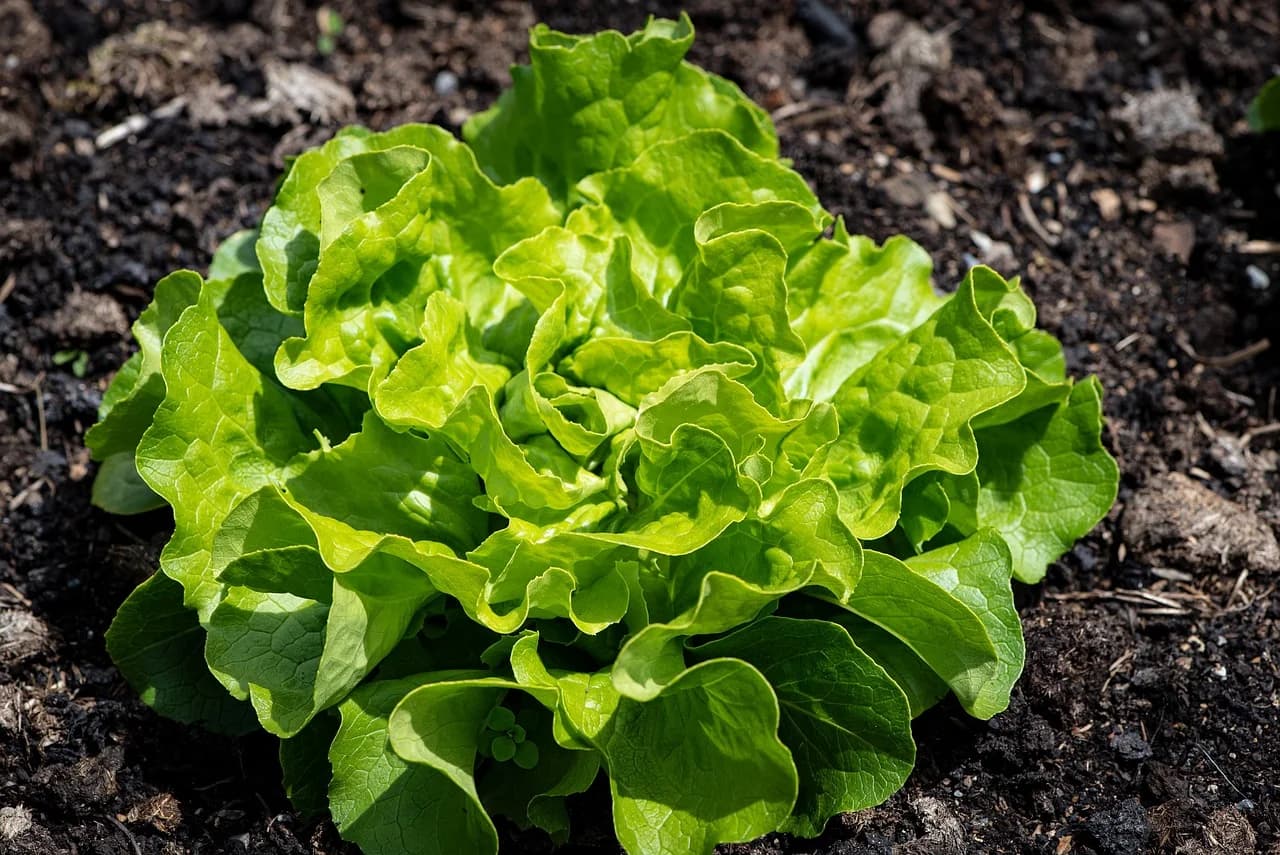
Lettuce
Lactuca sativa
A fast, cool-season salad crop for garden beds and pots. Sow it in spring or fall, keep the soil evenly moist, and pick it before summer heat makes it bolt and turn bitter.
Quick facts
- Germination time
- 7–10 days
- Germination temperature
- Not yet verified
- Sowing depth
- 6 mm–1.5 cm¼–½ in
- Spacing between plants
- Not yet verified
- Days to maturity
- Not yet verified
- Sun
- Full sun, partial shade
Safety for cats and dogs: not yet verified.
By SeedBattle EditorsUpdated
Spotted a mistake or missing detail? Improve this page
01 · Overview
About lettuce
Lettuce (Lactuca sativa) is a leafy, cool-season annual in the daisy family, native to a region stretching from the Mediterranean to Siberia. It’s one of the easiest cool-season vegetables to grow and handles light frosts, but summer heat makes it bolt (send up a flower stalk) and taste bitter.
Gardeners usually grow four types: loose-leaf, butterhead (Bibb), romaine (cos) and crisphead (iceberg). Loose-leaf types and salad mixes grow fastest and suit small spaces and containers, while hearting types take longer and need more room.
Growing details
- Start indoors
- 6–8 weeks before the last frost
- Sow outdoors
- 2–3 weeks before the last frost
- Water
- Not yet verified
- Containers
- Yes
- Height
- 15–30 cm6–12 in
- Spread
- 15–30 cm6–12 in
- Frost tolerance
- Half-hardy (light frost)
- Soil pH
- pH 6.0–6.5
- Life cycle
- Annual
Sowing timeline
When to sow lettuce seeds
Counted from your area's average last spring frost date. Find yours from a local weather service or garden center, then count back or forward.
- Germination time
- 7–10 days
- Frost tolerance
- Half-hardy (light frost)
02 · How to grow
How to grow lettuce from seed
When to sow. Lettuce likes the cool weather of spring and fall. Sow outdoors about 2–3 weeks before your last spring frost, or start seeds indoors 6–8 weeks before the last frost and transplant them later. For a fall crop, sow about three months before the first fall frost.
How to sow. Sow seeds ¼–½ inch (6–13 mm) deep. Lettuce germinates best in cool soil, around 55–65 °F (13–18 °C), and seedlings usually appear in 7–10 days; soil above 80 °F (27 °C) reduces germination. If you sow in summer, do it in the evening, water with cold water and shade the seedbed to keep it cool.
Spacing. The seed is tiny and hard to space exactly, so sow a little thickly and thin the seedlings. Gardening experts suggest about 4–6 inches (10–15 cm) between leaf lettuces and 10 inches (25 cm) between head lettuces; gardening experts suggest 15 cm (6 in) for loose-leaf types and 30 cm (12 in) for hearting types.
Site and soil. Choose full sun to partial shade and rich, moist, well-drained soil. In midsummer, light shade during the hottest part of the day helps stop plants from flowering early. Aim for a soil pH of 6.0–6.5.
Pots. Lettuce does well in containers. Gardening experts suggest one at least 30 cm (1 ft) wide, filled with peat-free multi-purpose compost.
Sow little and often. A new sowing every two weeks gives a steady supply instead of a glut.
03 · Care
Caring for lettuce
Watering. Lettuce has shallow roots and needs consistently moist soil to grow well and taste good. Water in the morning so the leaves dry before dark, and soak the soil about 6 inches (15 cm) deep, because light sprinklings encourage shallow roots. Pots dry out fast and may need water every day in summer. A mulch of garden compost helps hold moisture in hot weather.
Heat and bolting. High temperatures of 70–80 °F (21–27 °C) and dry soil can trigger bolting, which makes the leaves bitter and stops new leaves forming. For summer crops, give plants 3–4 hours of sun and shade for the rest of the day, and choose slow-bolting or heat-resistant varieties. Leaf and butterhead types cope with heat better than romaine, and romaine better than head lettuce.
Weeds and feeding. Seedlings compete poorly with weeds, so weed often but shallowly to avoid damaging roots. Lettuce in the ground doesn’t usually need feeding; in containers you can give a general-purpose organic liquid feed every two weeks through summer.
Cold. Lettuce withstands light frosts but needs protection from hard frosts. Row covers or a cold frame extend the season into late fall.
At a glance
How lettuce compares with other vegetables
Worked out from the growing facts of the 79 seeds in Vegetables on SeedBattle.
- Lettuce
- Each of the other vegetables
- Their average
- Germination timeSprouts sooner than average
7–10 days
Average for vegetables: 10 days, from 39 other seeds
- Sowing depthShallower than average
6 mm–1.5 cm¼–½ in
Average for vegetables: 1 cm½ in, from 58 other seeds
- HeightShorter than average
15–30 cm6–12 in
Average for vegetables: 94 cm3 ft, from 57 other seeds
04 · Problems
Common lettuce problems
Slugs and snails are the pests to watch most closely, along with aphids and cutworms; birds sometimes peck seedlings in early spring. Cabbage loopers, corn earworms and leafhoppers can also feed on lettuce, and pest pressure is higher on summer and fall crops than on spring ones.
Diseases include gray mold, Rhizoctonia bottom rot and Sclerotinia drop, and damping-off can kill young seedlings. Tipburn, a browning of the edges of some inner leaves, is linked to calcium deficiency and is mostly caused by drought and uneven watering.
05 · Harvest
Harvesting lettuce
Pick loose-leaf lettuce once plants are 5–6 inches (13–15 cm) tall. Take the outer leaves first so the center keeps growing, or cut the whole plant at or above the soil. Romaine is ready when its leaves overlap into a fairly tight head 6–8 inches (15–20 cm) tall, and Bibb when its leaves cup inward. Cut hearting lettuce once a firm heart forms, leaving a 1-inch (2.5 cm) stump that may sprout again.
Timing depends on the type and the season. In warm weather, loose-leaf varieties can be ready in four to six weeks, while hearting types take around 10 to 14 weeks. Harvest in the morning when the leaves are fresh, and don’t wait too long once a heart has formed, because every lettuce flowers eventually.
06 · Storage
Storing lettuce
Keep lettuce in the coldest part of the refrigerator. Crisphead keeps about two weeks, and leaf and Bibb types up to four weeks if the leaves are dry when bagged. To prevent browning, store it at 34–36 °F (1–2 °C) without excess moisture on the leaves, and away from apples and pears, which can cause spotting.
07 · Safety
Lettuce safety
Lettuce sap can cause mild skin irritation (contact dermatitis) in some people, and rates the severity as low.
Lettuce questions
How long do lettuce seeds take to germinate?
Usually 7 to 10 days. Lettuce germinates best in cool soil, around 55–65 °F (13–18 °C), and soil above 80 °F (27 °C) reduces germination.
When should I plant lettuce?
Lettuce is a cool-season crop. Sow outdoors about 2–3 weeks before your last spring frost, or start seeds indoors 6–8 weeks before the last frost. For a fall crop, sow about three months before the first frost.
Can I grow lettuce in a pot?
Yes. Gardening experts suggest a container at least 30 cm (1 ft) wide filled with peat-free multi-purpose compost. Pots dry out quickly, so check them often; in summer they may need water every day.
Why is my lettuce bolting and turning bitter?
Heat (around 70–80 °F, or 21–27 °C) and dry soil trigger bolting. Keep the soil moist, give plants light shade in summer, and choose slow-bolting varieties.
Quick answers
More lettuce questions
Short answers taken from the growing facts on this page.
How deep should I sow lettuce seeds?
Sow them 6 mm–1.5 cm¼–½ in deep.
How much sun does lettuce need?
Lettuce grows in full sun or partial shade.
How tall does lettuce grow?
Lettuce grows 15–30 cm6–12 in tall.
Can lettuce survive frost?
Only a light frost. Lettuce is half-hardy.
Is lettuce an annual or a perennial?
Lettuce is an annual.
What soil pH does lettuce need?
Aim for soil at pH 6.0–6.5.
Side by side
Compare lettuce with…
Two seeds, every growing fact lined up, so you can pick the one that suits your space.
Vegetables
More seeds like lettuce
Related seeds, plus others in the Vegetables category.
Find your next seed to grow
Browse all 223 seeds by sun, difficulty or pot size, or line lettuce up against another seed.
