Rutabaga
Brassica napus subsp. rapifera
Also called swede
Rutabaga is a cool-season root crop from the cabbage family that does best in full sun and is usually sown in summer for a fall harvest. Estimates for root maturity range from 60 to 110 days.
Quick facts
- Germination time
- Not yet verified
- Germination temperature
- Not yet verified
- Sowing depth
- 6 mm–1.5 cm¼–½ in
- Spacing between plants
- 15 cm6 in
- Days to maturity
- Not yet verified
- Sun
- Full sun
Safety for cats and dogs: not yet verified.
By SeedBattle EditorsUpdated
Spotted a mistake or missing detail? Improve this page
01 · Overview
About rutabaga
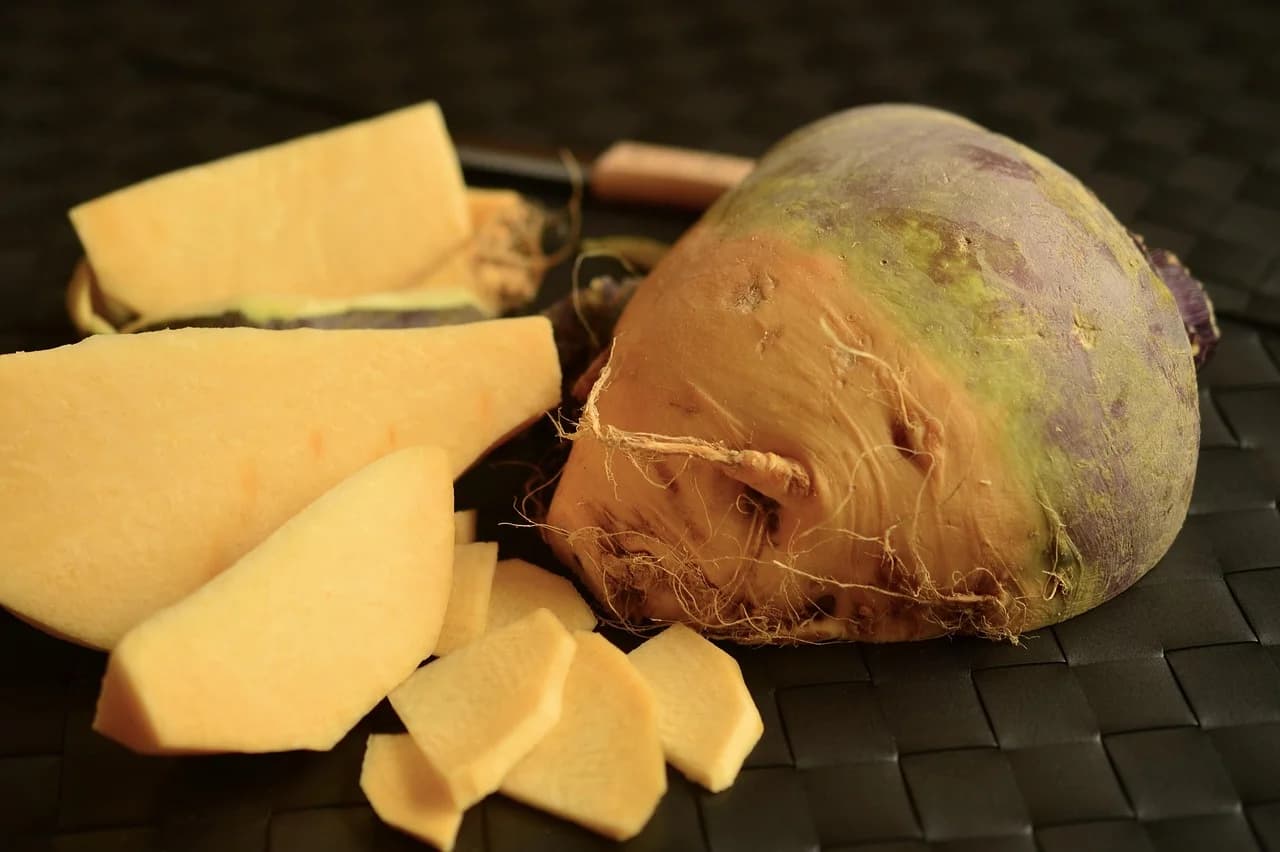
Rutabaga is a cool-season root crop in the cabbage family, and it is a cross between turnips and cabbage. It is also called swede, Swedish turnip, Russian turnip or yellow turnip. Botanically it is a biennial, but it is grown as an annual. Compared with a turnip, the root is larger, denser and sweeter, and it takes longer to mature. Plants usually reach about 1 to 2 feet (30 to 61 cm) tall, with a spread of about 8 to 12 inches (20 to 30 cm). Growers often choose it for a fall harvest, and it grows best in full sun.
Growing details
- Start indoors
- Not yet verified
- Sow outdoors
- Not yet verified
- Water
- Not yet verified
- Containers
- Not yet verified
- Height
- 30–61 cm1–2 ft
- Spread
- 20–30 cm8–12 in
- Frost tolerance
- Half-hardy (light frost)
- Soil pH
- pH 6.0–6.5
- Life cycle
- Biennial
02 · How to grow
How to grow rutabaga from seed
Sow rutabaga seed in summer for a fall crop, because the plants develop slowly and do not handle summer heat well; summer sowing is the approach most often described for a fall crop. Sow the seed about ¼ to ½ inch (0.6 to 1.3 cm) deep. One seed supplier suggests 3/8 inch (1 cm) deep. Seeds are very small, so provide frequent, light watering to help them come up. Thin the seedlings to about 6 inches (15 cm) apart; another suggestion is 4 to 6 inches (10 to 15 cm) apart in rows about 18 inches (46 cm) apart.
Soil and sowing sites. Choose a site with well-drained soil where other Brassica crops have not grown in the past three years. Hard, crusty soil slows seedling emergence, so loosen the surface before sowing.
03 · Care
Caring for rutabaga
Soil and fertility. Rutabagas prefer fertile, well-drained soil rich in organic matter. A soil test is the best way to work out fertilizer needs. Side-dress with calcium nitrate about 3 to 4 weeks after planting, and avoid too much nitrogen, which may reduce root formation.
Watering. Plan on about 1 inch (2.5 cm) of water per week, or 1 to 1½ inches (2.5 to 3.8 cm) per week according to another source. Keep the soil moist but not soggy, and don’t let the leaves wilt between waterings. Uneven moisture can cause cracking, woody roots and bitter flavor.
Weeds and mulch. Rutabagas do not compete well with weeds. Cultivate shallowly, less than 2 inches (5 cm) deep, and add a light mulch of straw or grass clippings. Mulch also helps conserve soil moisture.
At a glance
How rutabaga compares with other vegetables
Worked out from the growing facts of the 79 seeds in Vegetables on SeedBattle.
- Rutabaga
- Each of the other vegetables
- Their average
- Sowing depthShallower than average
6 mm–1.5 cm¼–½ in
Average for vegetables: 1 cm½ in, from 58 other seeds
- Spacing between plantsCloser than average
15 cm6 in
Average for vegetables: 35 cm14 in, from 43 other seeds
- HeightShorter than average
30–61 cm1–2 ft
Average for vegetables: 94 cm3 ft, from 57 other seeds
04 · Problems
Common rutabaga problems
Clubroot. Clubroot is a soil-borne disease. If it appears, avoid planting rutabaga in that spot for at least 6 years.
Pests. Slugs, aphids, cutworms, looper caterpillars and flea beetles can chew the foliage, and a row cover helps protect the greens and keeps moths from laying eggs on the leaves. Aphids can be knocked off with a strong stream of water.
Rotation and leaf spot. Rotate planting locations from year to year. Avoid overhead watering and practice good sanitation to help control leaf spot.
05 · Harvest
Harvesting rutabaga
Roots are usually harvested when they are about 3 to 5 inches (8 to 13 cm) across, because roots over 5 inches (13 cm) can turn tough. Estimates of time to maturity differ: one says 60 to 80 days from seeding, and another says 90 to 110 days from planting. Light frosts sweeten the flavor, so many growers wait for several light frosts before harvesting. Harvest ahead of a hard freeze, and avoid leaving roots in hot weather, which can make them pithy and strong-flavored. Leaves can be picked once plants are about 4 inches (10 cm) tall, as long as the top of the bulb is not damaged.
06 · Storage
Storing rutabaga
Before storing, trim the foliage to within 1 inch (2.5 cm) of the crown. Store them at 32 to 35 °F (0 to 2 °C) and 90 to 95% humidity for 2 to 4 months. Another estimate is about 35 °F (2 °C) and 95% humidity for 3 to 4 months, after washing the roots. Roots also keep well in plastic bags in the refrigerator or a cold root cellar.
Rutabaga questions
How long do rutabagas take to mature?
Estimates vary: one gives 60 to 80 days from seeding, and another gives 90 to 110 days from planting.
When should I plant rutabaga?
Summer sowing for a fall crop is the approach most often described, though spring sowing about 4 to 6 weeks before the last frost is also suggested.
How far apart should I thin rutabagas?
Thin them to about 6 inches (15 cm) apart. Another suggestion is 4 to 6 inches (10 to 15 cm) apart.
Do rutabagas tolerate frost?
They are quite tolerant of light frosts, and frost helps improve the flavor.
What soil pH do rutabagas need?
Keep the soil pH between 6.0 and 6.5.
Quick answers
More rutabaga questions
Short answers taken from the growing facts on this page.
How deep should I sow rutabaga seeds?
Sow them 6 mm–1.5 cm¼–½ in deep.
How much sun does rutabaga need?
Rutabaga grows in full sun.
How tall does rutabaga grow?
Rutabaga grows 30–61 cm1–2 ft tall.
Is rutabaga an annual or a perennial?
Rutabaga is a biennial.
Side by side
Compare rutabaga with…
Two seeds, every growing fact lined up, so you can pick the one that suits your space.
Vegetables
More seeds like rutabaga
Related seeds, plus others in the Vegetables category.
Find your next seed to grow
Browse all 223 seeds by sun, difficulty or pot size, or line rutabaga up against another seed.