Radish
Raphanus sativus
One of the fastest crops to grow from seed: salad radishes can be ready in about a month. Sow them straight into the ground in cool spring or fall weather and keep the soil evenly moist.
Quick facts
- Germination time
- 5–10 days
- Germination temperature
- 13–24 °C55–75 °F
- Sowing depth
- 1.5 cm½ in
- Spacing between plants
- Not yet verified
- Days to maturity
- Not yet verified
- Sun
- Full sun, partial shade
Safety for cats and dogs: not yet verified.
By SeedBattle EditorsUpdated
Spotted a mistake or missing detail? Improve this page
01 · Overview
About radish
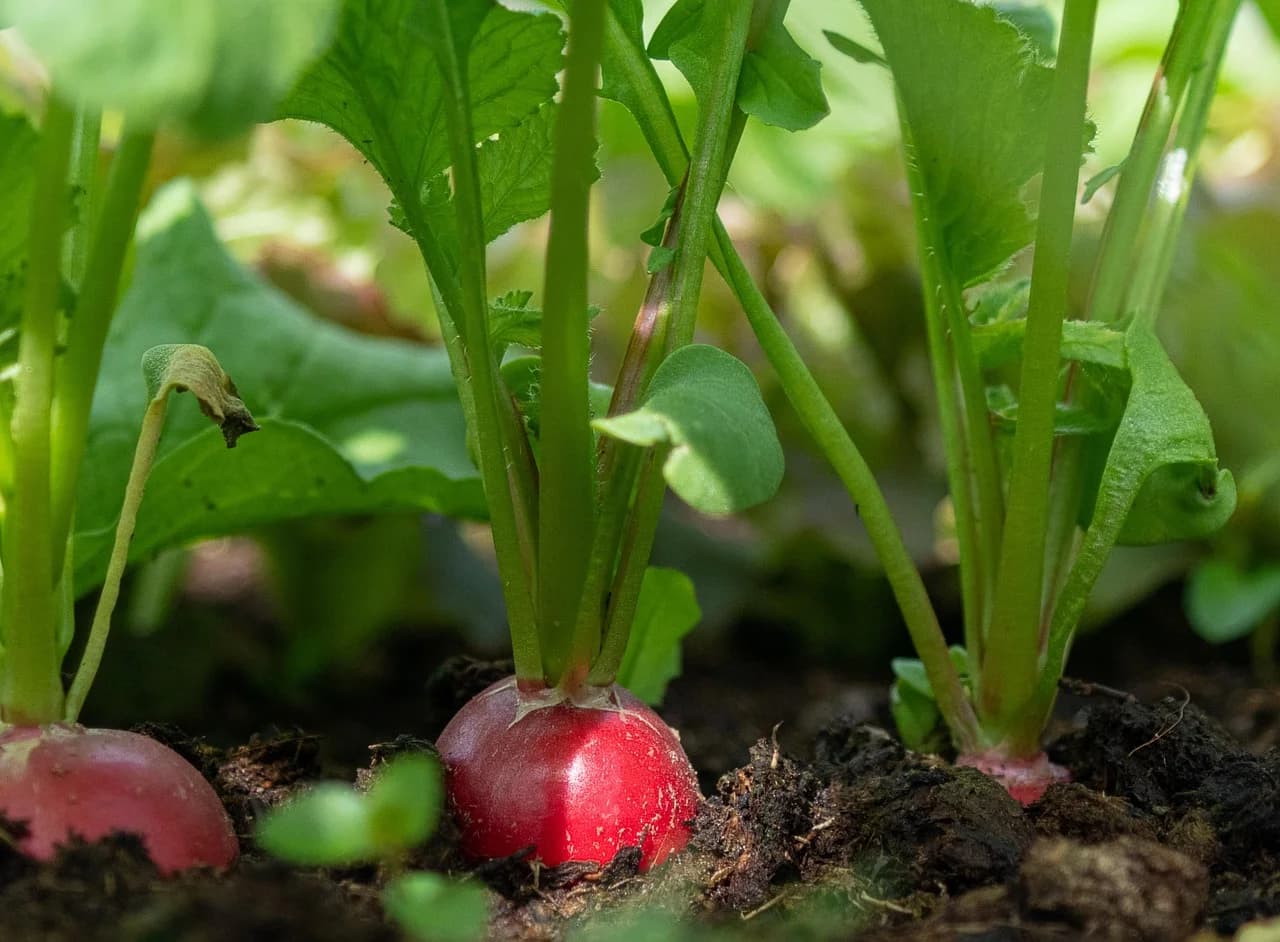
Radish (Raphanus sativus) is a quick, cool-season root crop in the cabbage (brassica) family. Salad radishes are the fastest and most popular type and can be ready in as little as four weeks; there are also slower winter radishes, long oriental types such as daikon (mooli), and varieties grown for their edible seed pods. Because they grow so quickly, radishes are a fun crop to grow with children, and gardeners often sow a few with slow-germinating crops such as carrots to mark the rows.
Roots range from small globes to long, tapering roots in red, pink, white, yellow or black. The leaves and flowers are edible too.
Growing details
- Start indoors
- Not yet verified
- Sow outdoors
- 2–3 weeks before the last frost
- Water
- Not yet verified
- Containers
- Yes
- Height
- Not yet verified
- Spread
- Not yet verified
- Frost tolerance
- Hardy
- Soil pH
- pH 6.0–6.5
- Life cycle
- Annual
Sowing timeline
When to sow radish seeds
Counted from your area's average last spring frost date. Find yours from a local weather service or garden center, then count back or forward.
- Germination time
- 5–10 days
- Germination temperature
- 13–24 °C55–75 °F
- Frost tolerance
- Hardy
02 · How to grow
How to grow radish from seed
When to sow. Radishes grow best in the cool weather of spring and fall. Sow about 2–3 weeks before your last spring frost, and again in late summer for a fall crop. Avoid sowing in hot, dry weather, when plants tend to bolt (flower early). For a steady supply, sow a few seeds every five to ten days rather than one big batch.
How to sow. Radishes are always grown from seed, sown outdoors where they’ll grow. Sow salad radishes about ½ inch (1.3 cm) deep; larger winter and oriental types go a little deeper, about 1 inch (2–2.5 cm). Seeds germinate best in soil at 55–75 °F (13–24 °C) and come up in 5–10 days; they won’t germinate in soil above 95 °F (35 °C).
Spacing. Sow salad radishes 1–2 inches (2.5–5 cm) apart, or thin small varieties to 1–3 inches (2.5–7.5 cm). Winter and oriental radishes need 6–8 inches (15–20 cm). Don’t skip thinning: crowded plants may not form a root at all.
Site and soil. Choose a sunny spot; light shade is fine for salad radishes in midsummer. Loose, sandy or sandy-loam soil gives the smoothest roots, and long-rooted types need deep soil. A soil pH of 6.0–6.5 suits radishes and other root crops.
Pots. Small varieties grow well in containers. Gardening experts suggest one at least 30 cm (1 ft) wide and deep, filled with peat-free multi-purpose compost.
03 · Care
Caring for radish
Watering. Keep the soil evenly moist so the roots grow quickly and evenly. Roots that run short of water may not swell, and uneven watering makes them split. Moisture stress also makes radishes strong-flavored, woody or pithy. Containers and seedlings dry out fastest, so check them often.
Heat. Radishes grow best when temperatures stay below 80 °F (27 °C). Hot weather makes many varieties flower and leaves the roots bitter, hotter and hollow. In warm weather, sow in a cooler, lightly shaded spot out of the midday sun.
Weeds and feeding. Radishes compete poorly with weeds. Hoe between rows but pull weeds by hand near the plants, because a hoe can easily damage the roots. Go easy on fertilizer: too much nitrogen gives big leafy tops at the expense of the roots.
At a glance
How radish compares with other vegetables
Worked out from the growing facts of the 79 seeds in Vegetables on SeedBattle.
- Radish
- Each of the other vegetables
- Their average
- Germination timeSprouts sooner than average
5–10 days
Average for vegetables: 10 days, from 39 other seeds
- Germination temperatureCooler than average
13–24 °C55–75 °F
Average for vegetables: 23 °C73 °F, from 38 other seeds
- Sowing depthDeeper than average
1.5 cm½ in
Average for vegetables: 1 cm½ in, from 58 other seeds
04 · Problems
Common radish problems
Flea beetles chew small holes in the leaves, but the damage is usually only cosmetic; floating row covers keep them off seedlings. Root maggots (the larvae of the cabbage root fly) tunnel into roots, mostly in slow-growing winter and oriental types, and covering the crop with fleece or insect-proof netting keeps the flies out. Slugs and snails may eat seedlings, and cutworms can damage young plants. Diseases are rarely a problem in home gardens.
Most radish trouble comes from growing conditions. Roots that don’t swell usually point to dry soil, heat or crowding, split roots to uneven watering, and woody or very hot roots to radishes left too long. Too much shade can also stop roots from filling out.
05 · Harvest
Harvesting radish
Salad radishes are usually ready about three to four weeks after sowing, though early spring sowings can take six to eight weeks. They’re ready when the top of the root starts to show above the soil. Pull round red radishes before they reach an inch (2.5 cm) across, and check the row often, because oversized radishes turn pithy and strong-flavored. Winter radishes can stay in the ground and be dug as needed through winter; protect them with fleece or cardboard in freezing weather.
06 · Storage
Storing radish
Trim off the leaves, wash the roots and keep them in plastic bags in the refrigerator. Small radishes last about 1–2 weeks in the fridge, while large ones such as daikon can last up to two months.
07 · Safety
Radish safety
Handling radish leaves and roots may mildly irritate the skin of some people.
Radish questions
How long do radish seeds take to germinate?
Usually 5 to 10 days, and fastest in soil at 55–75 °F (13–24 °C). Gardening experts give 7–10 days for seed sown outdoors.
How long do radishes take to grow?
Salad radishes are usually ready about three to four weeks after sowing. Early spring sowings can take six to eight weeks, and oriental types such as daikon take at least eight weeks.
Can I grow radishes in a pot?
Yes, short-rooted salad radishes do well in containers. Gardening experts suggest one at least 30 cm (1 ft) wide and deep. Keep the compost moist, because pots dry out quickly.
Why are my radishes all leaves and no root?
The usual causes are crowding, heat and dry soil, or too much shade. Thin seedlings, keep the soil moist, and avoid extra nitrogen, which favors leaves over roots.
Quick answers
More radish questions
Short answers taken from the growing facts on this page.
When can I sow radish seeds outdoors?
Sow them outdoors 2–3 weeks before the last frost.
How deep should I sow radish seeds?
Sow them 1.5 cm½ in deep.
How much sun does radish need?
Radish grows in full sun or partial shade.
What temperature do radish seeds need to sprout?
Radish seeds germinate at 13–24 °C55–75 °F.
Can radish survive frost?
Yes. Radish is hardy.
Is radish an annual or a perennial?
Radish is an annual.
Side by side
Compare radish with…
Two seeds, every growing fact lined up, so you can pick the one that suits your space.
Vegetables
More seeds like radish
Related seeds, plus others in the Vegetables category.
Find your next seed to grow
Browse all 223 seeds by sun, difficulty or pot size, or line radish up against another seed.