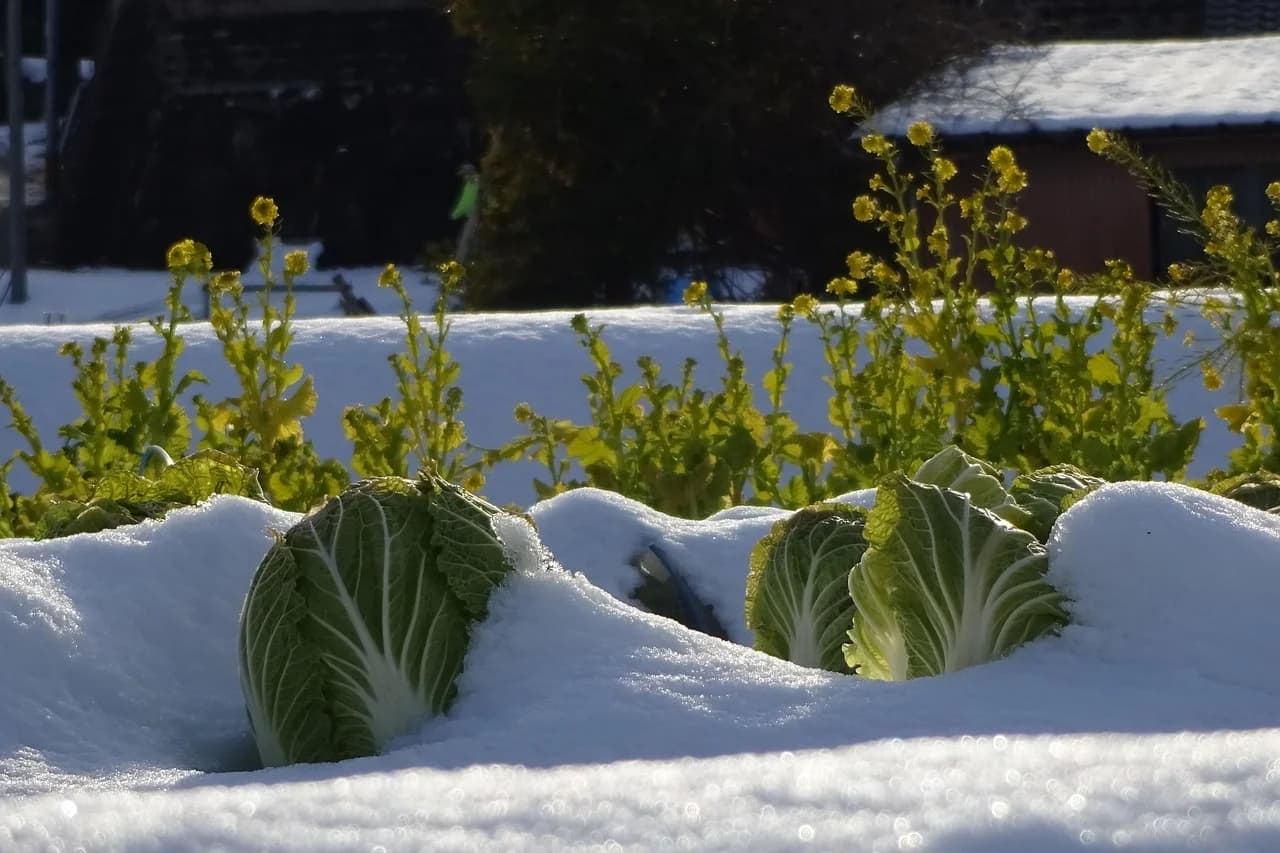
Napa Cabbage
Brassica rapa subsp. pekinensis
Also called chinese cabbage, wombok
Napa cabbage is a cool-season vegetable with barrel-shaped heads and edible leaves. Sow it in midsummer in full sun for a fall harvest, since spring sowings can bolt.
Quick facts
- Germination time
- Not yet verified
- Germination temperature
- Not yet verified
- Sowing depth
- 6 mm–1.5 cm¼–½ in
- Spacing between plants
- 46 cm18 in
- Days to maturity
- Not yet verified
- Sun
- Full sun
Safety for cats and dogs: not yet verified.
By SeedBattle EditorsUpdated
Spotted a mistake or missing detail? Improve this page
01 · Overview
About napa cabbage
Napa cabbage is a cool-weather vegetable in the mustard family, grown as an annual or biennial. It forms a dense, barrel-shaped head with pale, thin, tender leaves, and it grows about 1 to 2 feet (30 to 61 cm) tall in the garden. Gardeners also know it as Chinese cabbage, Peking cabbage or celery cabbage. It has a sweeter, milder flavor than regular cabbage, and its crisp leaves can be eaten raw in salads or cooked.
Growing details
- Start indoors
- Not yet verified
- Sow outdoors
- At the last frost
- Water
- Moderate
- Containers
- Yes
- Height
- 30–61 cm1–2 ft
- Spread
- Not yet verified
- Frost tolerance
- Not yet verified
- Soil pH
- pH 5.8–6.5
- Life cycle
- Not yet verified
Sowing timeline
When to sow napa cabbage seeds
Counted from your area's average last spring frost date. Find yours from a local weather service or garden center, then count back or forward.
02 · How to grow
How to grow napa cabbage from seed
When to sow. Sowing in July works well for a fall crop. Late summer and fall sowings are preferred over spring sowings.
How to sow. Sow the seed about ¼ to ½ inch (0.6 to 1.3 cm) deep, in rows about 2 feet (60 cm) apart. Sow thinly, then thin the plants when they are 1 to 2 inches (2.5 to 5 cm) tall. Leave Napa types 18 inches (46 cm) apart in the row.
Full sun. Give it full sun, with at least 6 hours of direct light a day. Plant in fertile, well-drained garden soil that stays moist.
Spring and transplants. Spring sowings can bolt early if seedlings meet frost or a long stretch of cold nights. A seed company sows in cell trays about ¼ inch (6 mm) deep, keeps soil above 75 °F (24 °C) until germination, and transplants 3 to 5 weeks later around the last frost date.
03 · Care
Caring for napa cabbage
Watering. Water so the soil is moist at least 6 inches (15 cm) deep, and keep the moisture steady. Mulch helps keep water in the soil and reduces weeds.
Soil and feeding. Get a soil test before planting and fertilize according to the recommendations.
At a glance
How napa cabbage compares with other vegetables
Worked out from the growing facts of the 79 seeds in Vegetables on SeedBattle.
- Napa Cabbage
- Each of the other vegetables
- Their average
- Sowing depthShallower than average
6 mm–1.5 cm¼–½ in
Average for vegetables: 1 cm½ in, from 58 other seeds
- Spacing between plantsWider than average
46 cm18 in
Average for vegetables: 34 cm14 in, from 43 other seeds
- HeightShorter than average
30–61 cm1–2 ft
Average for vegetables: 94 cm3 ft, from 57 other seeds
04 · Problems
Common napa cabbage problems
Insects. Aphids, whiteflies, flea beetles, cabbage loopers, cutworms, beet armyworms, slugs and snails can all cause trouble. Cabbageworms, harlequin bugs and cabbage maggots are also common pests. Floating row covers from the day of planting help control flea beetles and cabbage root maggots.
Diseases. Watch for club root, white rust, leaf spot, damping off and bacterial soft rot. Black rot causes the most serious damage and has no cure once it is in a planting, so buy certified disease-free transplants or chemically treated seed. Chinese cabbage is more prone to Alternaria leaf spot than regular cabbage. Long crop rotations with non-brassica crops and strict sanitation also help.
05 · Harvest
Harvesting napa cabbage
Harvest when the heads feel firm and dense; if they feel loose, they need more time. Cut them when very firm. Harvest promptly once mature, because quality drops quickly. If a flower stalk appears, called bolting, leaf growth stops and the leaves turn bitter. The leaves can be eaten raw or cooked.
06 · Storage
Storing napa cabbage
Trim the heads and wrap them in newspaper, then keep them in a near-freezing, humid cooler or a root cellar for about 1 to 2 months.
Napa Cabbage questions
When should I plant Napa cabbage?
Sow in summer, around July, for a fall crop. Late summer and fall sowings do better than spring sowings, which can bolt.
How deep should I sow Napa cabbage seeds?
Sow the seeds about ¼ to ½ inch (0.6 to 1.3 cm) deep.
How far apart should Napa cabbage plants be?
Thin Napa types to 18 inches (46 cm) apart. Thin seedlings when they are 1 to 2 inches (2.5 to 5 cm) tall.
What is bolting in Napa cabbage?
Bolting is when a flower stalk forms, which ends leaf growth and leaves a bitter taste. Ten or more continuous days between 35 and 50 °F (2 and 10 °C) can trigger it.
How long can I store Napa cabbage heads?
Trimmed heads wrapped in newspaper keep about 1 to 2 months in a near-freezing, humid cooler.
Quick answers
More napa cabbage questions
Short answers taken from the growing facts on this page.
How much sun does napa cabbage need?
Napa cabbage grows in full sun.
How tall does napa cabbage grow?
Napa cabbage grows 30–61 cm1–2 ft tall.
Can I grow napa cabbage in a pot?
Yes, napa cabbage grows in containers.
What soil pH does napa cabbage need?
Aim for soil at pH 5.8–6.5.
How much water does napa cabbage need?
Napa cabbage has moderate water needs.
Side by side
Compare napa cabbage with…
Two seeds, every growing fact lined up, so you can pick the one that suits your space.
Vegetables
More seeds like napa cabbage
Related seeds, plus others in the Vegetables category.
Find your next seed to grow
Browse all 223 seeds by sun, difficulty or pot size, or line napa cabbage up against another seed.
