Kohlrabi
Brassica oleracea var. gongylodes
Kohlrabi is a cool-season biennial grown for the swollen stem that sits just above the soil. Sow in early spring or mid-summer in full sun, and harvest when the stem is 2 to 3 inches across.
Quick facts
- Germination time
- Not yet verified
- Germination temperature
- Not yet verified
- Sowing depth
- 6 mm–1.5 cm¼–½ in
- Spacing between plants
- Not yet verified
- Days to maturity
- 50–60 days from sowing
- Sun
- Full sun
Safety for cats and dogs: not yet verified.
By SeedBattle EditorsUpdated
Spotted a mistake or missing detail? Improve this page
01 · Overview
About kohlrabi
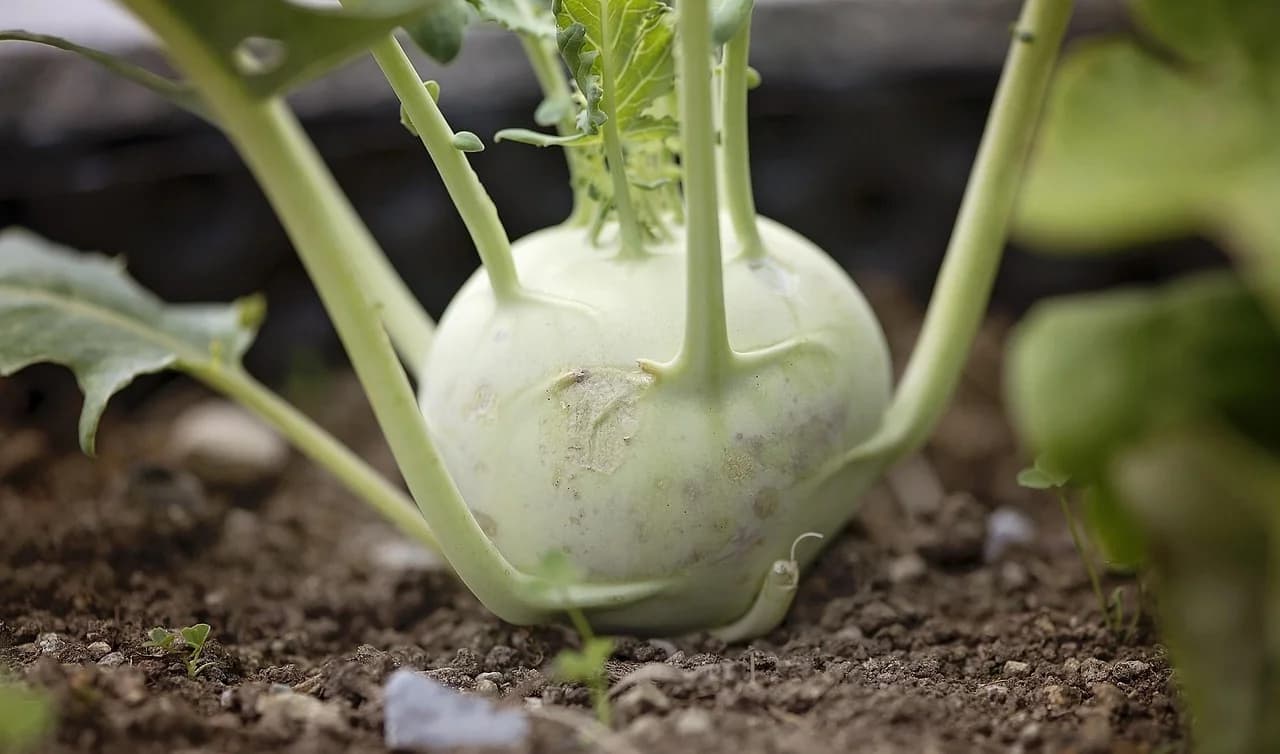
The edible part is the rounded, swollen stem that sits just above the ground, with a few stems and leaves growing from it. It is not a root vegetable, and its flavor is similar to turnips but milder and sweeter.
It is a biennial, and if it is left in the ground for a second year it will bloom and set seed. The plant stays low, usually 6 inches to 1 foot (15 to 30 cm) tall.
Growing details
- Start indoors
- Not yet verified
- Sow outdoors
- 1–2 weeks before the last frost
- Water
- Not yet verified
- Containers
- Not yet verified
- Height
- 15–30 cm6–12 in
- Spread
- 23–30 cm9–12 in
- Frost tolerance
- Half-hardy (light frost)
- Soil pH
- pH 6.0–7.0
- Life cycle
- Biennial
Sowing timeline
When to sow kohlrabi seeds
Counted from your area's average last spring frost date. Find yours from a local weather service or garden center, then count back or forward.
- Frost tolerance
- Half-hardy (light frost)
02 · How to grow
How to grow kohlrabi from seed
When and how to sow. Sow seed directly in the garden 1 to 2 weeks before the last spring frost, about ¼ to ½ inch (0.6 to 1.3 cm) deep. Another guide says to sow in early spring as soon as the soil can be worked. For a fall crop, sow in mid-summer; in central Iowa that means mid-July to mid-August. For an earlier harvest, seed can be started indoors 4 to 6 weeks before transplanting outdoors. Seedlings can also be bought and planted in spring or fall.
Site and spacing. Choose a sunny spot with fertile, moist, well-drained soil rich in organic matter. Thin seedlings once they have their first or second set of true leaves. Sources differ on the final spacing: about 6 inches (15 cm) apart in the row, with rows 1 foot (30 cm) apart, while another guide gives 2 to 5 inches (5 to 13 cm).
03 · Care
Caring for kohlrabi
Watering. Water often because the roots are shallow, aiming for about 1 to 2 inches (2.5 to 5 cm) per week. Uneven moisture can make the stems tough and woody.
Mulch and weeds. A 2 to 3 inch (5 to 8 cm) layer of mulch such as straw or grass clippings helps control weeds and conserves soil moisture. Cultivate carefully so you don’t damage the shallow roots.
Feeding. Get a soil test before planting and feed according to the results, and make sure the plants get enough nitrogen.
At a glance
How kohlrabi compares with other vegetables
Worked out from the growing facts of the 79 seeds in Vegetables on SeedBattle.
- Kohlrabi
- Each of the other vegetables
- Their average
- Days to maturityMatures sooner than average
50–60 days from sowing
Average for vegetables: 65 days, from 17 other seeds
- Sowing depthShallower than average
6 mm–1.5 cm¼–½ in
Average for vegetables: 1 cm½ in, from 58 other seeds
- HeightShorter than average
15–30 cm6–12 in
Average for vegetables: 94 cm3 ft, from 57 other seeds
04 · Problems
Common kohlrabi problems
Possible diseases include downy mildew and bacterial rot. Common pests include aphids, cabbage loopers, cutworms, flea beetles and cabbageworms. Flea beetles chew small round holes in the leaves, and cabbageworms can be treated with products containing Bacillus thuringiensis (Bt).
Kohlrabi generally has few insect or disease problems in the home garden. Temperatures below 45 °F (7 °C) will cause the plant to flower, and hot weather makes the stem woody and tough.
05 · Harvest
Harvesting kohlrabi
Harvest when the swollen stem is 2 to 3 inches (5 to 8 cm) across. Larger stems tend to be tough, woody and bitter. The mildest flavor comes from small bulbs, and you can start picking at about 1 inch (2.5 cm) across. Pull the whole plant or cut it off at ground level.
06 · Storage
Storing kohlrabi
Store it in perforated plastic bags in the refrigerator for up to 3 weeks. Another guide says to remove the leaf stems and store the unwashed bulbs in sealed plastic bags in the refrigerator.
Kohlrabi questions
When should I plant kohlrabi?
Sow seed 1 to 2 weeks before the last spring frost. A fall crop can be sown in mid-summer.
How long does kohlrabi take to be ready to harvest?
Plants are ready to harvest 50 to 60 days after sowing, depending on the cultivar.
Why is my kohlrabi tough and woody?
The stem becomes woodier the longer it keeps growing, so harvest it when it is 2 to 3 inches (5 to 8 cm) across. You can peel the tougher outer layer before eating.
Can kohlrabi tolerate frost?
It can tolerate frost but not a hard freeze, and young plants may be damaged by hard frosts.
Quick answers
More kohlrabi questions
Short answers taken from the growing facts on this page.
How deep should I sow kohlrabi seeds?
Sow them 6 mm–1.5 cm¼–½ in deep.
How much sun does kohlrabi need?
Kohlrabi grows in full sun.
How tall does kohlrabi grow?
Kohlrabi grows 15–30 cm6–12 in tall.
Is kohlrabi an annual or a perennial?
Kohlrabi is a biennial.
What soil pH does kohlrabi need?
Aim for soil at pH 6.0–7.0.
Side by side
Compare kohlrabi with…
Two seeds, every growing fact lined up, so you can pick the one that suits your space.
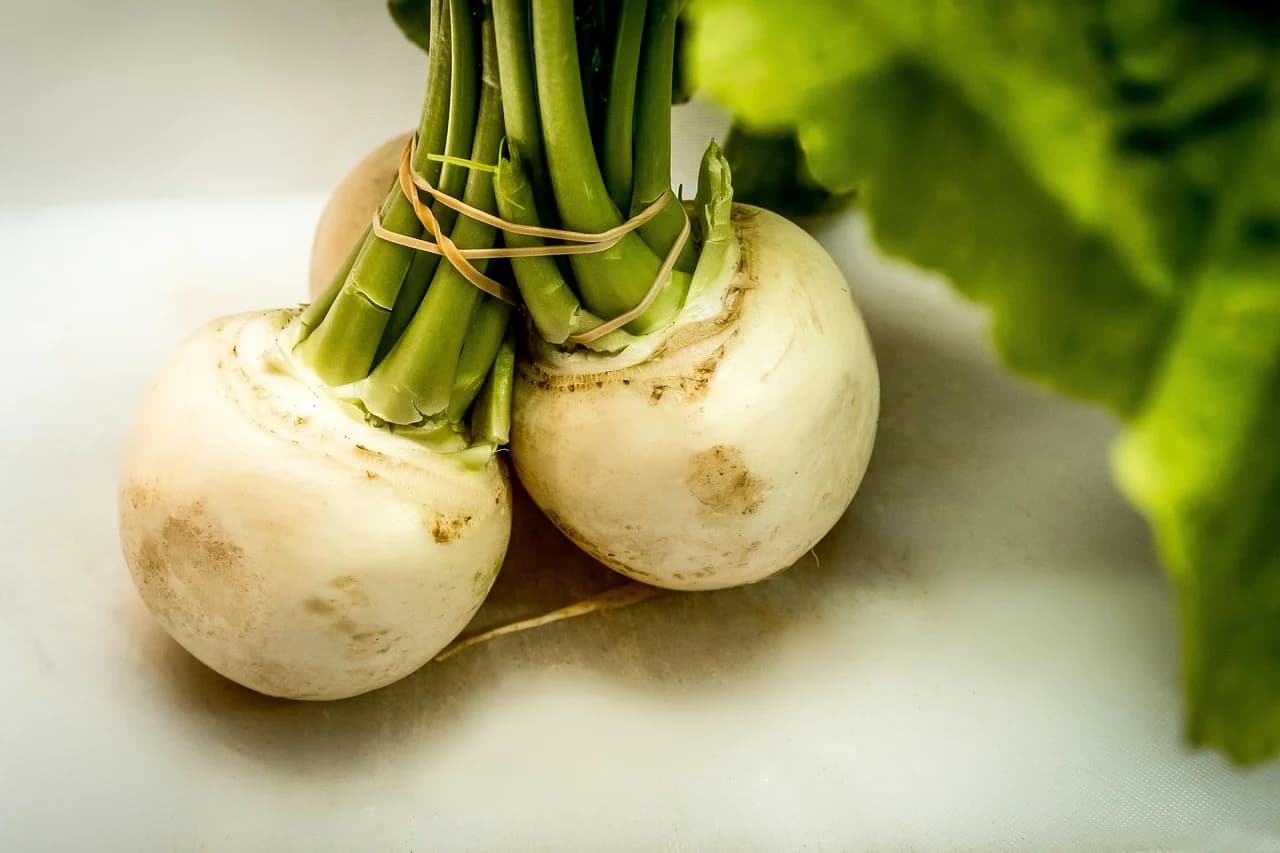
Vegetables
More seeds like kohlrabi
Related seeds, plus others in the Vegetables category.
Find your next seed to grow
Browse all 223 seeds by sun, difficulty or pot size, or line kohlrabi up against another seed.