Delicata Squash
Cucurbita pepo
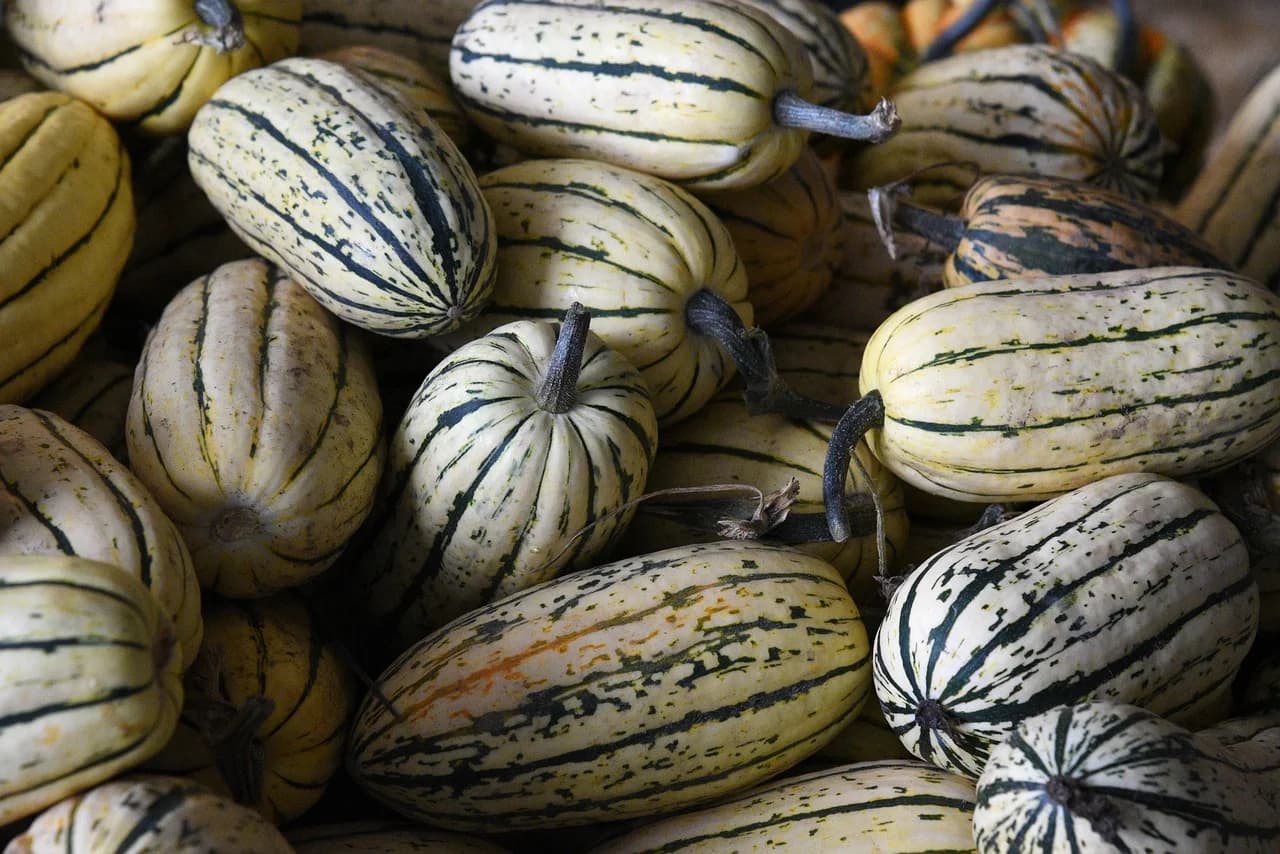
Delicata is a winter squash grown from seed in full sun once frost danger has passed and the soil is warm. Its hard-rinded fruit is harvested mature in fall and stored cool.
Quick facts
- Germination time
- Not yet verified
- Germination temperature
- Not yet verified
- Sowing depth
- 1.5–2.5 cm½–1 in
- Spacing between plants
- Not yet verified
- Days to maturity
- Not yet verified
- Sun
- Full sun
Non-toxic to cats and dogs
By SeedBattle EditorsUpdated
Spotted a mistake or missing detail? Improve this page
01 · Overview
About delicata squash
Delicata is a winter squash, a type grown for its hard rind and eaten once the fruit is mature. Bush Delicata is listed among recommended winter squash cultivars. The plants in the species group these pages describe are tender annuals that can trail or grow bushy, with yellow flowers and male and female flowers on the same plant.
Growing details
- Start indoors
- Not yet verified
- Sow outdoors
- At the last frost
- Water
- Moderate
- Containers
- Not yet verified
- Height
- Not yet verified
- Spread
- Not yet verified
- Frost tolerance
- Tender (no frost)
- Soil pH
- pH 6.2–6.5
- Life cycle
- Annual
Sowing timeline
When to sow delicata squash seeds
Counted from your area's average last spring frost date. Find yours from a local weather service or garden center, then count back or forward.
- Frost tolerance
- Tender (no frost)
02 · How to grow
How to grow delicata squash from seed
Sow Delicata seeds directly in the garden after all danger of frost is over, once the soil about 4 inches (10 cm) down is above 60 °F (16 °C). Untreated seed should go in when the soil is at least 70 °F (21 °C), and treated seed at 62 °F (17 °C); seeds rot in cool, wet soil.
Sow 1 to 2 seeds per spot, ½ to 1 inch (1.3 to 2.5 cm) deep, and thin to one plant per spot. Another method plants 2 to 3 seeds per hill about 1 inch (2.5 cm) deep, thinned to one plant per hill. Bush or short-vined varieties are planted 2 to 3 feet (60 to 90 cm) apart in rows 3 to 5 feet (90 to 150 cm) apart.
Give the plants full sun, meaning 6 or more hours of direct sunlight a day. The soil should be well-drained with a pH of 6.2 to 6.5. Another page gives a wider neutral range of 6.0 to 8.0. Plastic mulch warms the soil faster in spring, and you can plant through a small hole cut in it.
03 · Care
Caring for delicata squash
Watering. Keep a uniform moisture supply, and keep leaves and fruit dry where you can. Water deeply and regularly at the base of each plant, especially in hot, dry weather and once the first fruits form.
Mulch and weeds. Organic mulch helps control weeds, hold moisture and keep fruit off the soil. Pull or hoe young weed seedlings and mulch around the plants to keep weed seeds from sprouting.
Feeding. Too much nitrogen encourages excess vine growth and holds back fruit, so don’t overfeed.
At a glance
How delicata squash compares with other vegetables
Worked out from the growing facts of the 79 seeds in Vegetables on SeedBattle.
- Delicata Squash
- Each of the other vegetables
- Their average
- Sowing depthDeeper than average
1.5–2.5 cm½–1 in
Average for vegetables: 1 cm½ in, from 58 other seeds
04 · Problems
Common delicata squash problems
Diseases. Common problems include bacterial wilt spread by cucumber beetles, powdery mildew, downy mildew, fruit rot and anthracnose. Downy mildew may occur in damp weather, and powdery mildew can appear in hot or cold weather or during dry spells.
Insects. Squash bugs, cucumber beetles and squash vine borers can be a challenge. Aphids and squash bugs are also common. Slugs are listed as a common pest.
Rotation. Don’t plant after similar crops such as cantaloupe, cucumber or watermelon for at least three years.
05 · Harvest
Harvesting delicata squash
Harvest when the fruit is fully mature, which means the rind is too hard for a thumbnail to puncture and the surface looks dull. Cut the fruit from the vine and leave about 1 inch (2.5 cm) of stem attached. Winter squash is typically harvested in September or October, before heavy frost. Handle fruit gently, since it bruises easily.
06 · Storage
Storing delicata squash
Cure the harvested fruit at 80 to 85 °F (27 to 29 °C) for about 10 days. Then store it in a cool, dry, well-ventilated place at 50 to 55 °F (10 to 13 °C). Keep it away from apples and pears, since ripening fruit release ethylene gas that shortens storage life.
Delicata Squash questions
When should I plant delicata squash seeds?
Sow outdoors after all danger of frost is over, when the soil about 4 inches (10 cm) down is above 60 °F (16 °C).
How deep should I plant delicata squash seeds?
Sow them about ½ inch to 1 inch (1.3 to 2.5 cm) deep, with one or two seeds per spot.
How do I know when delicata squash is ready to pick?
Pick it when the rind is too hard for a thumbnail to puncture and the surface looks dull.
How should I store harvested delicata squash?
Store it in a cool, dry, well-ventilated place at 50 to 55 °F (10 to 13 °C). Keep it away from apples and pears, which release ethylene gas that shortens storage life.
Quick answers
More delicata squash questions
Short answers taken from the growing facts on this page.
How much sun does delicata squash need?
Delicata squash grows in full sun.
Can delicata squash survive frost?
No. Delicata squash is tender, so it can't take frost.
Is delicata squash an annual or a perennial?
Delicata squash is an annual.
What soil pH does delicata squash need?
Aim for soil at pH 6.2–6.5.
How much water does delicata squash need?
Delicata squash has moderate water needs.
Is delicata squash safe for cats and dogs?
Yes. It's listed as non-toxic to cats and dogs.
Side by side
Compare delicata squash with…
Two seeds, every growing fact lined up, so you can pick the one that suits your space.

Vegetables
More seeds like delicata squash
Related seeds, plus others in the Vegetables category.
Find your next seed to grow
Browse all 223 seeds by sun, difficulty or pot size, or line delicata squash up against another seed.