Daikon
Raphanus sativus var. longipinnatus
Also called daikon radish, mooli
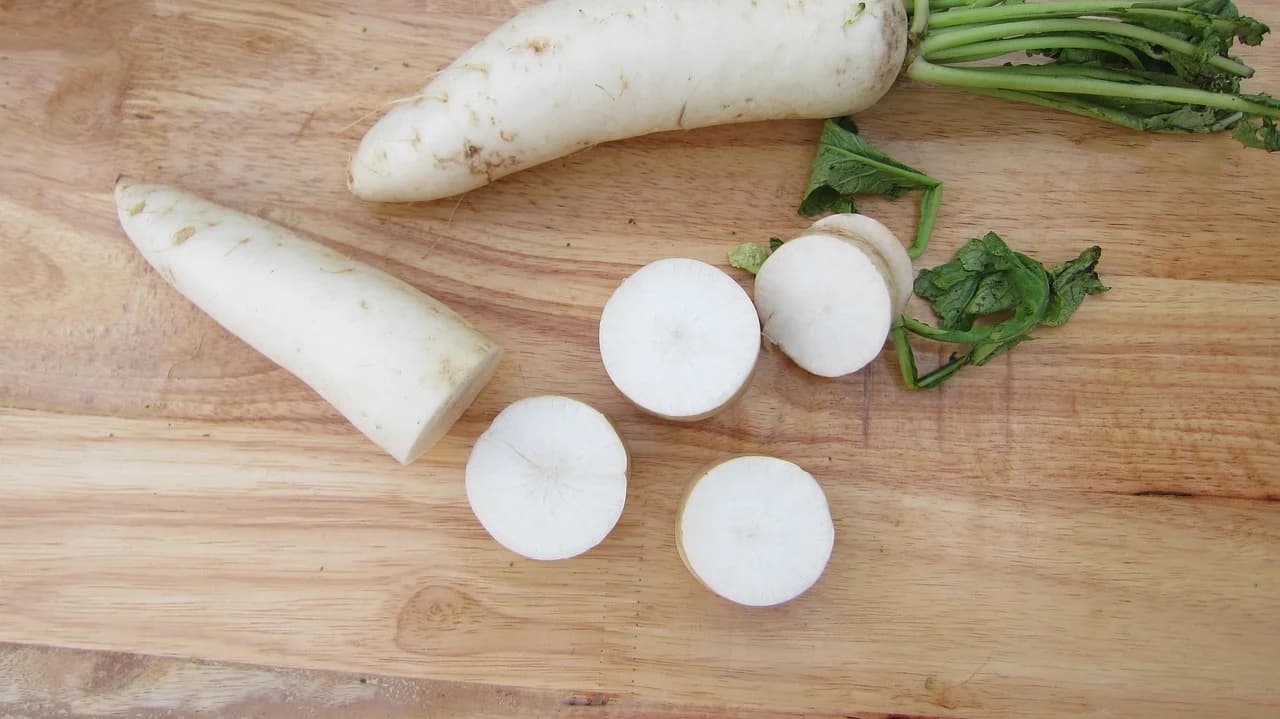
Daikon is a large, long-rooted radish grown from seed sown directly in the garden in cool weather. It needs deep, loose soil, steady moisture, and is too big for most containers.
Quick facts
- Germination time
- 7–10 days
- Germination temperature
- Not yet verified
- Sowing depth
- 6 mm–1.5 cm¼–½ in
- Spacing between plants
- 10–15 cm4–6 in
- Days to maturity
- Not yet verified
- Sun
- Full sun
Safety for cats and dogs: not yet verified.
By SeedBattle EditorsUpdated
Spotted a mistake or missing detail? Improve this page
01 · Overview
About daikon
Daikon is a large, elongated type of radish, grown as an annual vegetable. Compared with small round radishes, it takes longer to mature, often 50 to 60 days to reach harvest. Radishes in general prefer the cool temperatures of spring and fall.
Growing details
- Start indoors
- Not yet verified
- Sow outdoors
- Not yet verified
- Water
- Moderate
- Containers
- Not yet verified
- Height
- Not yet verified
- Spread
- Not yet verified
- Frost tolerance
- Not yet verified
- Soil pH
- Not yet verified
- Life cycle
- Annual
02 · How to grow
How to grow daikon from seed
Sowing. Sow seed directly in the garden, about ¼ to ½ inch (0.6 to 1.3 cm) deep in rows 12 inches (30 cm) apart. Don’t start daikon indoors for transplanting, because radishes don’t transplant easily. A seed supplier suggests sowing about 10 seeds per foot and thinning, with rows 18 inches (45 cm) apart. Seedlings usually appear after 7 to 10 days.
Thinning and spacing. Thin daikon so the remaining plants stand 4 to 6 inches (10 to 15 cm) apart.
Timing. Daikon can be sown in early spring for a early-summer harvest, or in late summer for a fall harvest, and many gardeners prefer the flavor of the fall crop. Avoid growing it in summer heat, when radishes turn spongy, woody and overly hot and quickly form seed heads.
Site and soil. Choose a spot with full sun, at least six hours of direct light a day, and moist, well-drained, uncompacted soil. Long types do best when the soil is worked deeply, in raised beds if possible, which gives straighter roots and easier harvesting. Heavy, rocky or compacted soil tends to give small, misshapen roots, so raised beds or added compost help.
03 · Care
Caring for daikon
Watering. Keep moisture consistent, about an inch (2.5 cm) of water a week if rain doesn’t supply it. Drought stress makes radishes tough and poor in flavor.
Feeding. Don’t over-fertilize, since too much feed encourages lush tops and little root. Skip fresh manure, because the roots are eaten raw and fresh manure can carry disease-causing microorganisms.
Weeds and mulch. Weed with light cultivation so you don’t disturb the roots, and use an organic mulch to cut weeds, hold moisture and moderate soil temperature.
At a glance
How daikon compares with other vegetables
Worked out from the growing facts of the 79 seeds in Vegetables on SeedBattle.
- Daikon
- Each of the other vegetables
- Their average
- Germination timeSprouts sooner than average
7–10 days
Average for vegetables: 10 days, from 39 other seeds
- Sowing depthShallower than average
6 mm–1.5 cm¼–½ in
Average for vegetables: 1 cm½ in, from 58 other seeds
- Spacing between plantsCloser than average
10–15 cm4–6 in
Average for vegetables: 35 cm14 in, from 43 other seeds
04 · Problems
Common daikon problems
Overcrowding, or compacted or heavy soil, produces small, misshapen roots. Hot weather or harvesting too late gives hot, pithy roots, and too much nitrogen or sudden heat can give all tops and little root. Uneven watering can make roots split or taste overly hot. Occasional pests include flea beetles on the foliage and root maggots in the roots, and poorly drained soil can lead to root rot.
05 · Harvest
Harvesting daikon
Daikon is ready roughly 7 to 10 weeks after planting. Dig the roots carefully with a spade or garden fork once they reach full size, typically 1 to 2 inches (2.5 to 5 cm) across and 8 or more inches (20+ cm) long. Harvest everything before frost, and don’t let roots get overly mature, as they turn fibrous and intensely flavored.
06 · Storage
Storing daikon
Cut the tops off, wash the roots and refrigerate them. A seed supplier gives 32 °F (0 °C) with 95% relative humidity as ideal, which can keep daikon roots for 6 to 10 weeks. In a home refrigerator, radishes in general keep about 2 to 3 weeks, so trim the foliage to within ½ inch (1.3 cm) of the root first.
Daikon questions
How long do daikon seeds take to germinate?
Radish seedlings, including daikon, typically emerge 7 to 10 days after sowing.
How long does daikon take to grow?
Daikon is often ready to harvest 50 to 60 days after planting, or about 7 to 10 weeks.
Can I grow daikon in a pot?
Daikon roots are too large for a typical patio or deck container, though smaller garden radishes suit containers. If you want daikon, a deep raised bed with loose soil is a better choice.
How far apart should I space daikon?
Thin daikon seedlings to 4 to 6 inches (10 to 15 cm) apart.
Quick answers
More daikon questions
Short answers taken from the growing facts on this page.
How deep should I sow daikon seeds?
Sow them 6 mm–1.5 cm¼–½ in deep.
How much sun does daikon need?
Daikon grows in full sun.
Is daikon an annual or a perennial?
Daikon is an annual.
How much water does daikon need?
Daikon has moderate water needs.
Side by side
Compare daikon with…
Two seeds, every growing fact lined up, so you can pick the one that suits your space.
Vegetables
More seeds like daikon
Related seeds, plus others in the Vegetables category.
Find your next seed to grow
Browse all 223 seeds by sun, difficulty or pot size, or line daikon up against another seed.