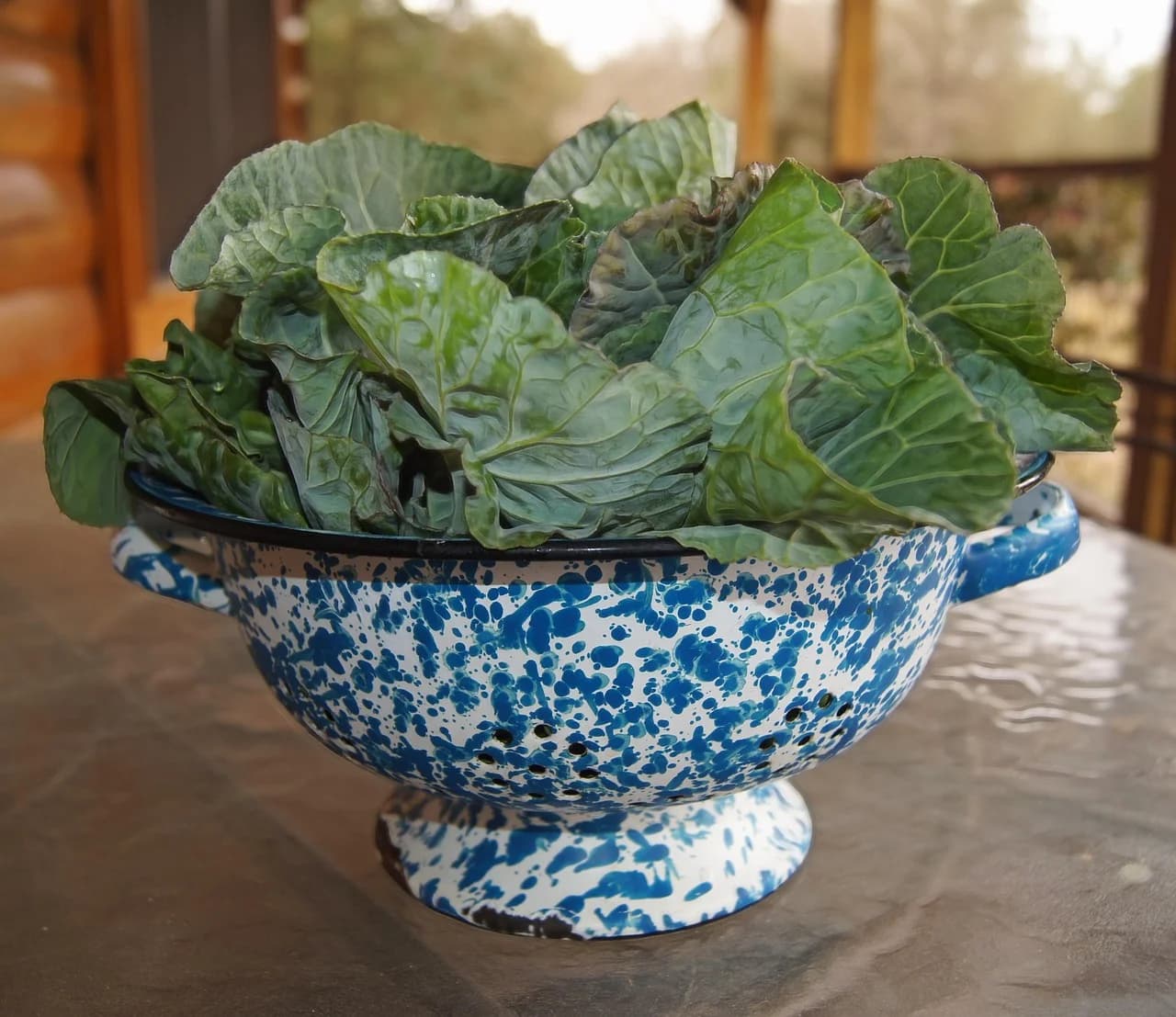
Collard Greens
Brassica oleracea var. viridis
Also called collards
Collards are cool-season leafy greens grown in full sun, usually from direct-sown seed in spring or fall, with harvest about 60 to 80 days after sowing.
Quick facts
- Germination time
- Not yet verified
- Germination temperature
- Not yet verified
- Sowing depth
- 6 mm–1.5 cm¼–½ in
- Spacing between plants
- 15–46 cm6–18 in
- Days to maturity
- 60–80 days from sowing
- Sun
- Full sun
Safety for cats and dogs: not yet verified.
By SeedBattle EditorsUpdated
Spotted a mistake or missing detail? Improve this page
01 · Overview
About collard greens
Collards are biennial, cool-weather edible garden plants in the mustard family. Plants can grow 2 to 6 feet (61 to 183 cm) tall, depending on the variety, and the Portuguese types are the tallest. They do best in full sun. The leaves are edible raw or cooked, and cooking can help tenderize tough leaves.
Growing details
- Start indoors
- Not yet verified
- Sow outdoors
- Not yet verified
- Water
- Moderate
- Containers
- Not yet verified
- Height
- 0.6–1.8 m2–6 ft
- Spread
- 30–61 cm1–2 ft
- Frost tolerance
- Hardy
- Soil pH
- pH 6.0–6.5
- Life cycle
- Biennial
Sowing timeline
Collard greens from seed to maturity
Counted in days from the day you sow.
- Frost tolerance
- Hardy
02 · How to grow
How to grow collard greens from seed
Sow collards in spring or fall, either by sowing seed straight into the garden or by planting purchased seedlings. Plant seed in moist soil about ¼ to ½ inch (0.6 to 1.3 cm) deep, and keep the soil moist while seedlings get established. Seeds germinate slowly in cool spring soil, so transplants are the preferred start for a spring crop; start seeds indoors six to eight weeks before the planting date. Direct seeding works well for a late-summer sowing for a fall harvest, because the soil is warmer then. For early crops started in trays, keep the soil above 75 °F (24 °C) until the seeds germinate, then lower the air temperature to about 60 °F (16 °C). Plant rows 18 to 36 inches (46 to 91 cm) apart, space plants 6 to 18 inches (15 to 46 cm) apart in the row, and thin to that spacing when seedlings reach the three-leaf stage.
03 · Care
Caring for collard greens
Collards need plenty of nitrogen for good leaves, so test your soil before planting and fertilize according to the results. Aim for a soil pH between 6.0 and 6.5. Side-dress with nitrogen three to four weeks after planting, placing the fertilizer 4 to 6 inches (10 to 15 cm) from the plants to avoid burning the roots, then repeat three to four weeks later.
Watering. Water so the soil is moistened to at least 6 inches (15 cm) deep, and water early in the day so the leaves dry before night. Mulch helps conserve water and reduce weeds.
At a glance
How collard greens compares with other vegetables
Worked out from the growing facts of the 79 seeds in Vegetables on SeedBattle.
- Collard Greens
- Each of the other vegetables
- Their average
- Days to maturityAbout average
60–80 days from sowing
Average for vegetables: 64 days, from 17 other seeds
- Sowing depthShallower than average
6 mm–1.5 cm¼–½ in
Average for vegetables: 1 cm½ in, from 58 other seeds
- Spacing between plantsCloser than average
15–46 cm6–18 in
Average for vegetables: 35 cm14 in, from 43 other seeds
- HeightTaller than average
0.6–1.8 m2–6 ft
Average for vegetables: 93 cm3 ft, from 57 other seeds
04 · Problems
Common collard greens problems
The main insect pests are caterpillars such as the imported cabbageworm, cabbage looper and diamondback moth caterpillar, plus harlequin bugs; aphids can appear, most often in fall. Nematodes are a big problem in sandy soils. Diseases include black rot, downy mildew and Alternaria leaf spot, and also leaf spot and bacterial leaf blight.
05 · Harvest
Harvesting collard greens
Collards are usually ready 60 to 80 days after direct seeding, depending on the cultivar. Pick leaves before they reach full size for the best texture. Start at the bottom of the plant and take only a few leaves from each plant so it can recover, or cut the whole plant when it is half or fully grown. Flavor is often best after a frost. Choose a slow-bolting variety to extend the season, because the flavor declines once flowers form.
06 · Storage
Storing collard greens
Store collard leaves in a plastic bag in the refrigerator for up to 2 weeks.
07 · Safety
Collard Greens safety
Collards are listed as a problem for horses, with no detail on which part or how much is a concern.
Collard Greens questions
How long do collards take to be ready to harvest?
Collards are usually ready 60 to 80 days after direct seeding, depending on the cultivar.
When should I plant collard greens?
Collards can be sown directly or planted as seedlings in spring or fall. Transplants are preferred for a spring crop, while direct seeding suits a late-summer sowing for a fall harvest.
How deep should I plant collard seeds?
Plant seed in moist soil about ¼ to ½ inch (0.6 to 1.3 cm) deep.
Do collard greens tolerate frost?
Mature plants withstand frosts and light to medium freezes. The flavor is often best after a frost.
How much sun do collards need?
Collards do best in full sun, which means 6 or more hours of direct sunlight a day.
Quick answers
More collard greens questions
Short answers taken from the growing facts on this page.
How far apart should I plant collard greens?
Space the plants 15–46 cm6–18 in apart.
How tall does collard greens grow?
Collard greens grows 0.6–1.8 m2–6 ft tall.
Is collard greens an annual or a perennial?
Collard greens is a biennial.
What soil pH does collard greens need?
Aim for soil at pH 6.0–6.5.
How much water does collard greens need?
Collard greens has moderate water needs.
Side by side
Compare collard greens with…
Two seeds, every growing fact lined up, so you can pick the one that suits your space.
Vegetables
More seeds like collard greens
Related seeds, plus others in the Vegetables category.
Find your next seed to grow
Browse all 223 seeds by sun, difficulty or pot size, or line collard greens up against another seed.
