Cardoon
Cynara cardunculus
Also called artichoke thistle
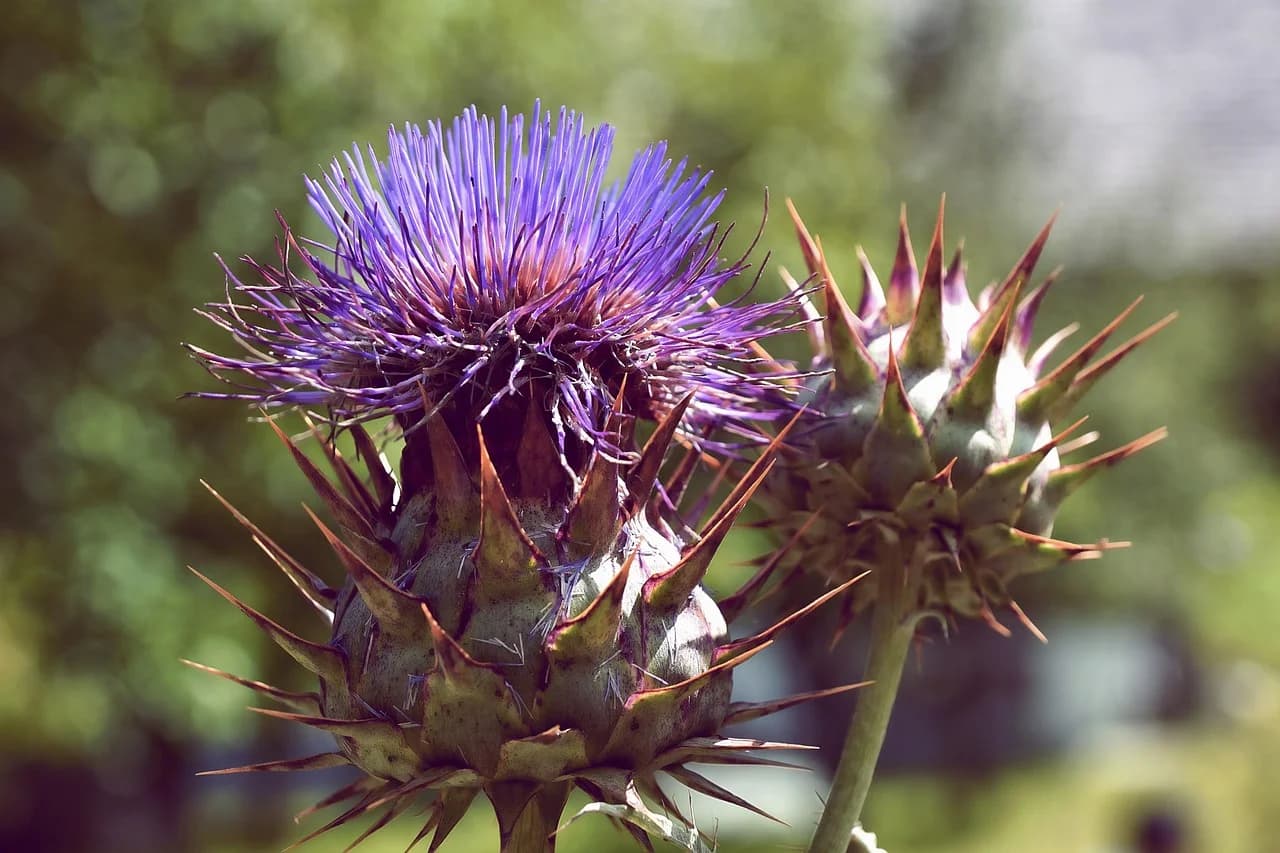
Cardoon is a large, spiny perennial from the Mediterranean, grown for its silvery foliage, thistle-like flowers and edible blanched stalks. In cold climates it is usually grown as an annual.
Quick facts
- Germination time
- Not yet verified
- Germination temperature
- Not yet verified
- Sowing depth
- 6 mm¼ in
- Spacing between plants
- Not yet verified
- Days to maturity
- Not yet verified
- Sun
- Full sun
Safety for cats and dogs: not yet verified.
By SeedBattle EditorsUpdated
Spotted a mistake or missing detail? Improve this page
01 · Overview
About cardoon
Cardoon is a large, spiny plant native to the Mediterranean region, with silvery to gray-green foliage and thistle-like purple flowers. It is grown both as an ornamental and as a food plant, since its blanched stems can be eaten. It is a perennial, but in cold climates it is treated as an annual.
Growing details
- Start indoors
- 6–8 weeks before the last frost
- Sow outdoors
- Not yet verified
- Water
- Not yet verified
- Containers
- Yes
- Height
- 0.9–1.2 m3–4 ft
- Spread
- 1.2–1.5 m4–5 ft
- Frost tolerance
- Not yet verified
- Soil pH
- Not yet verified
- Life cycle
- Perennial
- Hardiness zones
- USDA zones 7–10
Sowing timeline
When to sow cardoon seeds
Counted from your area's average last spring frost date. Find yours from a local weather service or garden center, then count back or forward.
02 · How to grow
How to grow cardoon from seed
Sowing. Start seeds indoors 6 to 8 weeks before the last frost. Sow 2 to 3 seeds about ¼ inch (6 mm) deep in each cell or container. Keep the soil moist until the seedlings emerge, then thin to one plant per cell when the first true leaves appear.
Transplanting. Move plants outdoors only after the danger of frost has passed.
Other ways to start. Plants can also be propagated by division in spring or by root cuttings in winter.
Site and space. Choose full sun and a spot sheltered from strong winds. Under ideal conditions, plants can reach 3 to 4 feet (91 to 122 cm) tall and 4 to 5 feet (122 to 152 cm) wide, so give them plenty of room.
03 · Care
Caring for cardoon
Soil. Cardoon prefers rich, well-drained but moist soil.
Trimming. Remove older leaves as they droop to keep a tidy, vase-shaped plant.
Winter protection. Plants may go dormant in hot summers and die back in winter, so mulch heavily to help them survive. In very cold winters, apply a dry mulch.
At a glance
How cardoon compares with other vegetables
Worked out from the growing facts of the 79 seeds in Vegetables on SeedBattle.
- Cardoon
- Each of the other vegetables
- Their average
- Sowing depthShallower than average
6 mm¼ in
Average for vegetables: 1 cm½ in, from 58 other seeds
- HeightTaller than average
0.9–1.2 m3–4 ft
Average for vegetables: 93 cm3 ft, from 57 other seeds
04 · Problems
Common cardoon problems
Diseases that may damage cardoon include root rot, gray mold and powdery mildew. Insect pests include snails, slugs and aphids. Slugs, snails and blackfly may also bother it. In the eastern United States, Japanese beetles have been reported attacking it. Strong winds can damage the plant.
Spreading. In some regions it has spread to form colonies and is considered invasive. In mild climates it may become invasive, though this is not a concern in cold winter areas.
05 · Harvest
Harvesting cardoon
The part most often eaten is the young leaf stalk, which is blanched, harvested, cooked and eaten as a vegetable. Stems are often blanched for a few weeks before harvest by covering them to exclude sunlight. The flowers are edible but are not considered as suitable for eating as globe artichokes.
06 · Safety
Cardoon safety
Be careful around the spines along the stems, although spineless cultivars exist. The leaves are also prickly.
Cardoon questions
When should I start cardoon seeds indoors?
Start seeds indoors 6 to 8 weeks before the last frost. Move the plants outside only after the danger of frost is past.
Can I grow cardoon in a pot?
Cardoon can be grown in a container, but it needs a very large one.
Does cardoon come back every year?
Cardoon is a perennial, but in cold climates it is treated as an annual. Its above-ground growth dies back each year and regrows from a large, deep taproot.
How much sun does cardoon need?
Cardoon needs full sun, which means 6 or more hours of direct sunlight a day.
How do you blanch cardoon stalks?
Tie the plants upright and cover the stems with cloth, paper or cardboard to exclude sunlight for a few weeks before harvest.
Quick answers
More cardoon questions
Short answers taken from the growing facts on this page.
How deep should I sow cardoon seeds?
Sow them 6 mm¼ in deep.
How tall does cardoon grow?
Cardoon grows 0.9–1.2 m3–4 ft tall.
Which USDA zones can cardoon grow in?
Cardoon is hardy in USDA zones 7–10.
Side by side
Compare cardoon with…
Two seeds, every growing fact lined up, so you can pick the one that suits your space.
Vegetables
More seeds like cardoon
Related seeds, plus others in the Vegetables category.
Find your next seed to grow
Browse all 223 seeds by sun, difficulty or pot size, or line cardoon up against another seed.