Bottle Gourd
Lagenaria siceraria
Also called calabash, cucuzza, opo squash
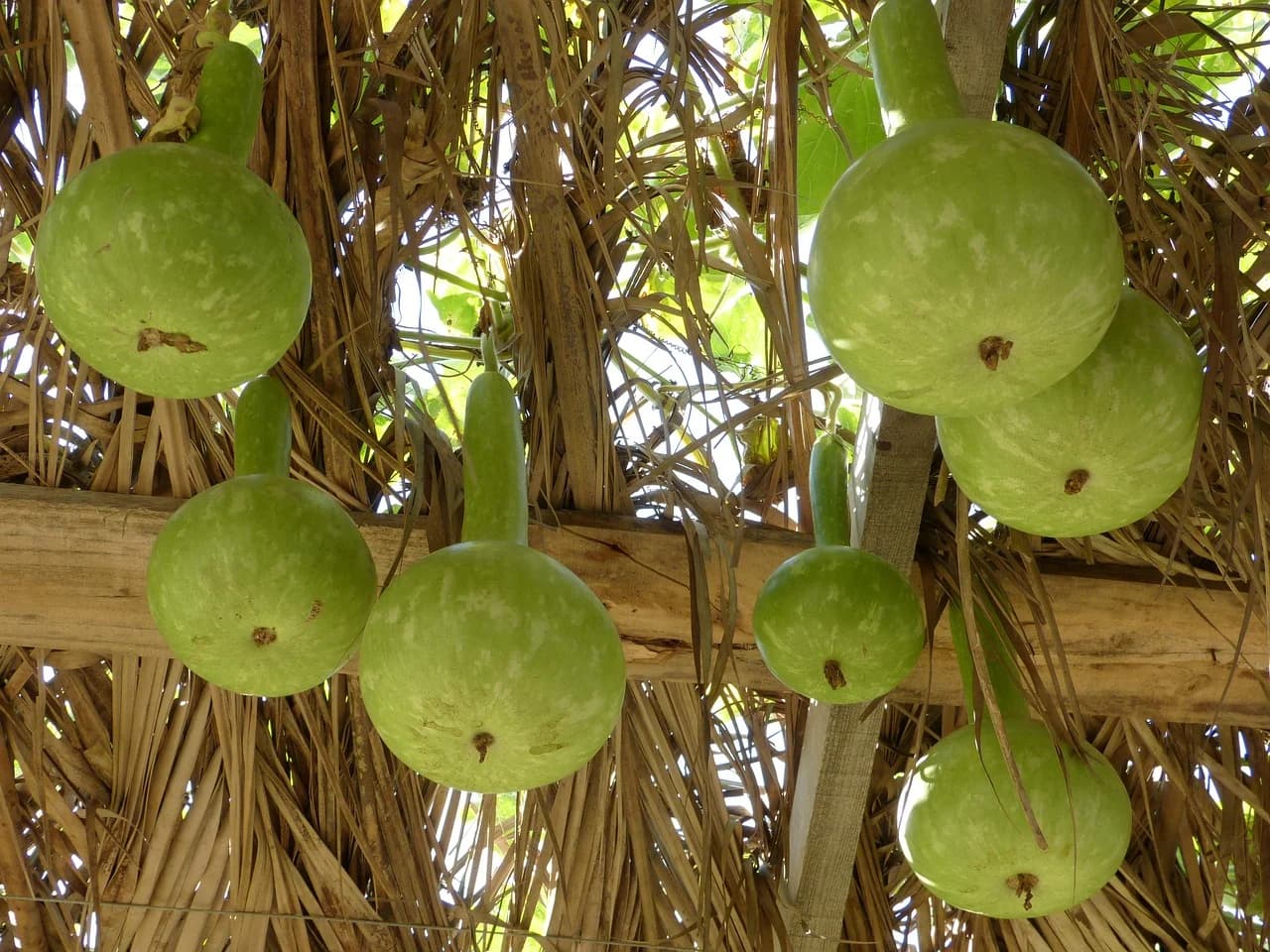
Bottle gourd (Lagenaria siceraria) is an annual climbing vine grown from seed in full sun for its edible young fruit and hard-shelled ornamental gourds.
Quick facts
- Germination time
- Not yet verified
- Germination temperature
- Not yet verified
- Sowing depth
- 1.5 cm⅝ in
- Spacing between plants
- 0.9–1.8 m3–6 ft
- Days to maturity
- Not yet verified
- Sun
- Full sun
Safety for cats and dogs: not yet verified.
By SeedBattle EditorsUpdated
Spotted a mistake or missing detail? Improve this page
01 · Overview
About bottle gourd
Bottle gourd is an annual vegetable and climbing vine in the cucumber family. It is widely grown for its interestingly shaped fruit, and its large white flowers open at night. Long green bottle-shaped gourds are described as used for ornamental purposes only.
Growing details
- Start indoors
- Not yet verified
- Sow outdoors
- At the last frost
- Water
- Moderate
- Containers
- Not yet verified
- Height
- Not yet verified
- Spread
- Not yet verified
- Frost tolerance
- Not yet verified
- Soil pH
- Not yet verified
- Life cycle
- Annual
Sowing timeline
When to sow bottle gourd seeds
Counted from your area's average last spring frost date. Find yours from a local weather service or garden center, then count back or forward.
02 · How to grow
How to grow bottle gourd from seed
Sowing. Direct seed outdoors after the danger of frost has passed and the ground reaches 70 °F (21 °C). Another method is to start seed indoors from mid to late April in individual pots, with seeds laid on their side about 1.5 cm (0.6 inch) deep, then harden off before June and transplant outdoors.
Spacing and support. Plant several seeds in mounds 3 feet (91 cm) apart if the vines will climb supports, or 4 to 6 feet (1.2 to 1.8 m) apart if the vines will trail on the ground. Provide a trellis or fence so the fruit does not rest on the ground and go flat on one side.
Site. Grow in rich, well-drained soil in full sun. The plants tolerate hot, humid summers.
03 · Care
Caring for bottle gourd
Watering. Keep the soil consistently moist.
Pruning. Remove dead or damaged leaves and thin out crowded vines. Pruning the main vine can encourage side growth that produces more fruit.
Pollination. Hand pollination improves fruit set.
At a glance
How bottle gourd compares with other vegetables
Worked out from the growing facts of the 79 seeds in Vegetables on SeedBattle.
- Bottle Gourd
- Each of the other vegetables
- Their average
- Sowing depthDeeper than average
1.5 cm⅝ in
Average for vegetables: 1 cm½ in, from 58 other seeds
- Spacing between plantsWider than average
0.9–1.8 m3–6 ft
Average for vegetables: 32 cm13 in, from 43 other seeds
04 · Problems
Common bottle gourd problems
Insect pests named for this plant include aphids, cucumber beetles, squash bugs, stink bugs, cutworms, pickleworm and squash vine borers. Disease problems include anthracnose, fusarium wilt, bacterial wilt, downy mildew, powdery mildew and blights. Its profile also notes slugs, snails, aphids, glasshouse whitefly, powdery mildews, downy mildews and cucumber mosaic virus.
05 · Harvest
Harvesting bottle gourd
Harvest the fruit when the skin has hardened. The plant needs a long, hot summer to mature. The seeds, leaves, flowers and young stems are edible while the fruit is young.
06 · Storage
Storing bottle gourd
Mature fruit has a hard shell that is waterproof, and it can be dried and used for containers, musical instruments or ornamental decoration. Dried gourds can be made into bird houses by drilling an access hole and a couple of drainage holes.
07 · Safety
Bottle Gourd safety
The plant is listed as toxic to humans and pets if eaten, and the fruit is intended for decoration only. A separate guide is available for pet safety. The seeds, leaves, flowers and young stems are edible while the fruit is young.
Bottle Gourd questions
When should I plant bottle gourd?
Sow outdoors after the danger of frost has passed and the ground reaches 70 °F (21 °C). The profile describes starting seed indoors from mid to late April and hardening off before June.
Can bottle gourd grow on a trellis?
It is best grown up a wall or trellis so the fruit does not flatten on the ground.
Is bottle gourd edible?
The seeds, leaves, flowers and young stems are edible while the fruit is young. The plant is toxic if eaten, and the fruit is for decoration only.
Quick answers
More bottle gourd questions
Short answers taken from the growing facts on this page.
How deep should I sow bottle gourd seeds?
Sow them 1.5 cm⅝ in deep.
How far apart should I plant bottle gourd?
Space the plants 0.9–1.8 m3–6 ft apart.
How much sun does bottle gourd need?
Bottle gourd grows in full sun.
Is bottle gourd an annual or a perennial?
Bottle gourd is an annual.
How much water does bottle gourd need?
Bottle gourd has moderate water needs.
Side by side
Compare bottle gourd with…
Two seeds, every growing fact lined up, so you can pick the one that suits your space.
Vegetables
More seeds like bottle gourd
Other seeds in the Vegetables category.
Find your next seed to grow
Browse all 223 seeds by sun, difficulty or pot size, or line bottle gourd up against another seed.