Beet
Beta vulgaris
Also called beetroot
Beets are cool-season root vegetables you can sow straight into the garden or into pots. They need steady moisture, and seedlings usually need thinning.
Quick facts
- Germination time
- Not yet verified
- Germination temperature
- 7–29 °C45–84 °F
- Sowing depth
- 1.5 cm½ in
- Spacing between plants
- Not yet verified
- Days to maturity
- Not yet verified
- Sun
- Not yet verified
Safety for cats and dogs: not yet verified.
By SeedBattle EditorsUpdated
Spotted a mistake or missing detail? Improve this page
01 · Overview
About beet
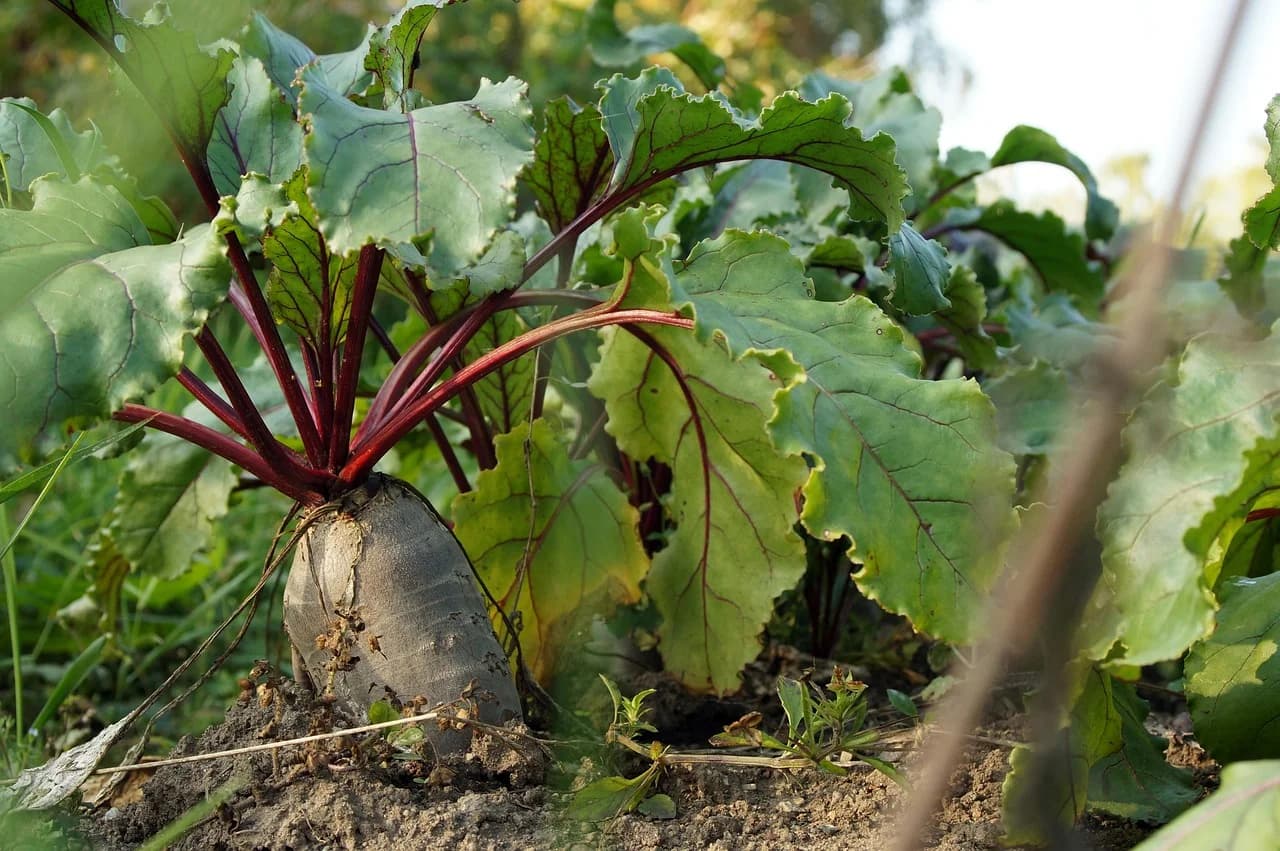
Beets, also called beetroot, are grown mainly for their round roots, though the leafy tops are edible too. Roots can be red, golden, white or striped, and they can be round, flat or cylindrical. Gardening experts list beets as native to Europe and the Mediterranean and as a cool-season vegetable that tolerates heat.
Growing details
- Start indoors
- Not yet verified
- Sow outdoors
- 2–3 weeks before the last frost
- Water
- Moderate
- Containers
- Yes, 1.9 L or largerYes, 2 qt or larger
- Height
- 30–46 cm12–18 in
- Spread
- 20–30 cm8–12 in
- Frost tolerance
- Half-hardy (light frost)
- Soil pH
- pH 6.0–8.0
- Life cycle
- Not yet verified
Sowing timeline
When to sow beet seeds
Counted from your area's average last spring frost date. Find yours from a local weather service or garden center, then count back or forward.
- Germination temperature
- 7–29 °C45–84 °F
- Frost tolerance
- Half-hardy (light frost)
02 · How to grow
How to grow beet from seed
Sowing. Sow beet seed directly in the ground when possible, because transplanting can disturb root development. Gardening experts suggest starting early sowings once the soil has warmed to 45°F (7°C). Maryland recommends direct seeding in early spring and late summer. Gardening experts say beets can be sown once the soil reaches 40°F (about 4 °C) and advises planting 2 to 3 weeks before the last frost.
Depth and spacing. Plant seed about ½ inch (1.3 cm) deep. Gardening experts give ¼ to ½ inch (6 to 13 mm) in its summary and ½ to 1 inch (1.3 to 2.5 cm) in its planting section. Rows about 12 to 18 inches (30 to 46 cm) apart work well. Each beet seed ball is really a fruit holding several seeds, so you will usually need to thin seedlings. Maryland notes that monogerm seed, with one embryo per fruit, avoids this, and otherwise thinning is needed when plants are about 2 inches (5 cm) tall.
Final spacing. Guides differ: 2 to 3 inches (5 to 8 cm), 3 inches (8 cm), or 3 to 4 inches (8 to 10 cm). Thinnings can be eaten in salads.
Germination. Guides give different germination times, from about 10 to 15 days to 7 to 14 days. Poor germination is common in dry soil where a crust forms, and a light mulch after sowing helps.
Sun and soil. Gardening experts say beets need full sun and will not make good roots in partial shade. Gardening experts say beets can grow in full sun to partial shade, though they take longer to mature. Beets prefer fertile, well-drained, deep soil rich in organic matter, and heavy soils need plenty of compost.
Containers. Gardening experts say beets can be grown in pots at least 2 quarts (about 1.9 L) in volume and 8 inches (about 20 cm) deep.
Frost. Beets are semi-hardy. They can take light frosts but not heavy frosts or freezing, and the roots tolerate cold better than the tops.
03 · Care
Caring for beet
Watering. Keep the soil uniformly moist for best growth. Moisture swings can cause root cracking and low yields. Mulch around the plants helps hold soil moisture.
Weeding. Beets compete poorly with weeds, so control weeds early, by hand and with a mulch along the row. Avoid deep cultivation, which can damage the roots. Weeding and weekly watering in dry weather are the main chores after thinning.
Feeding. Gardening experts say little or no fertilizer is needed in fertile soil. Gardening experts suggest a nitrogen fertilizer about 6 weeks after emergence. Gardening experts recommend basing fertilizer and lime on a soil test and liming to a pH of 6.0 to 6.5 for root crops. Beets need enough boron, and black, sunken spots in the root can signal low boron.
At a glance
How beet compares with other vegetables
Worked out from the growing facts of the 79 seeds in Vegetables on SeedBattle.
- Beet
- Each of the other vegetables
- Their average
- Germination temperatureCooler than average
7–29 °C45–84 °F
Average for vegetables: 23 °C73 °F, from 38 other seeds
- Sowing depthDeeper than average
1.5 cm½ in
Average for vegetables: 1 cm½ in, from 58 other seeds
- HeightShorter than average
30–46 cm12–18 in
Average for vegetables: 94 cm3 ft, from 57 other seeds
04 · Problems
Common beet problems
Pests and disease. Gardening experts list no significant problems for this plant. Late planting causes the most frequent problems. Aphids, leafminers, flea beetles and webworms are the common pests. Cercospora leaf spot is the most common disease. Yellows, carried by leafhoppers, has no known control.
05 · Harvest
Harvesting beet
Roots. Maryland says to pull beetroots when they are 1 to 3 inches (2.5 to 7.6 cm) across. Gardening experts suggest 1½ to 2 inches (3.8 to 5.1 cm) and warns that larger roots may be woody. Gardening experts say roots over 3 inches (7.6 cm) are often tough and fibrous. Harvest timing differs too: gardening experts say 60 to 80 days from seeding, while gardening experts say 50 to 70 days after planting.
Greens. Leaves can be picked once the root is about 1 inch (2.5 cm) across, and up to a third of the foliage can be taken without harming the root. Use the greens within a few days, since they do not store well.
06 · Storage
Storing beet
Storing roots. Trim the foliage to within ½ to 1 inch (1.3 to 2.5 cm) of the roots. Maryland recommends storing roots at 32 °F (0 °C) and 95% humidity. Gardening experts give 2 to 4 months under the same conditions, and gardening experts say 3 to 4 months at 32 to 35 °F (0 to 2 °C) in a humid place. In the refrigerator, store roots in a vented plastic bag.
Beet questions
How long do beet seeds take to germinate?
Guides differ. Maryland Extension expects germination in 10 to 15 days, while gardening experts say 7 to 14 days.
Can I grow beets in a pot?
Yes. Gardening experts say beets can be grown in containers at least 2 quarts (about 1.9 L) in size and 8 inches (about 20 cm) deep.
When should I plant beets?
Maryland recommends direct seeding in early spring and late summer. Gardening experts advise planting 2 to 3 weeks before the last frost.
Do beets need full sun?
Gardening experts say beets need full sun and will not make good roots in partial shade. Gardening experts say they can grow in partial shade, though they take longer to mature.
Quick answers
More beet questions
Short answers taken from the growing facts on this page.
How deep should I sow beet seeds?
Sow them 1.5 cm½ in deep.
What temperature do beet seeds need to sprout?
Beet seeds germinate at 7–29 °C45–84 °F.
How tall does beet grow?
Beet grows 30–46 cm12–18 in tall.
Can beet survive frost?
Only a light frost. Beet is half-hardy.
What soil pH does beet need?
Aim for soil at pH 6.0–8.0.
How much water does beet need?
Beet has moderate water needs.
Side by side
Compare beet with…
Two seeds, every growing fact lined up, so you can pick the one that suits your space.
Vegetables
More seeds like beet
Related seeds, plus others in the Vegetables category.
Find your next seed to grow
Browse all 223 seeds by sun, difficulty or pot size, or line beet up against another seed.