Banana Pepper
Capsicum annuum
Also called yellow wax pepper
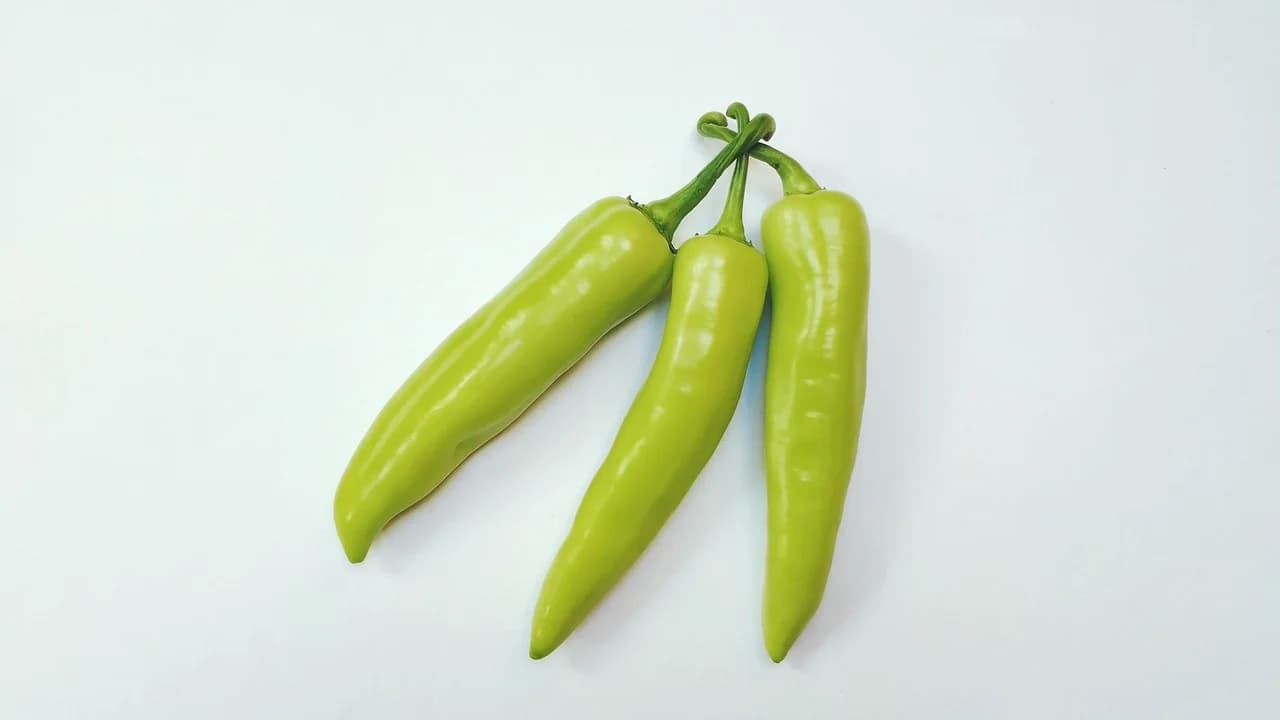
Banana peppers are mild, sweet Capsicum annuum peppers that grow best in full sun with evenly moist soil. Start seeds indoors about 6 to 8 weeks before the last frost, then set plants out after frost danger has passed.
Quick facts
- Germination time
- Not yet verified
- Germination temperature
- 27–32 °C81–90 °F
- Sowing depth
- 6 mm¼ in
- Spacing between plants
- 30 cm12 in
- Days to maturity
- 70–85 days from transplanting
- Sun
- Full sun
Safety for cats and dogs: not yet verified.
By SeedBattle EditorsUpdated
Spotted a mistake or missing detail? Improve this page
01 · Overview
About banana pepper
Banana peppers are a mild, sweet type of pepper, grouped with bell and sweet cherry peppers as mild types. They belong to the species Capsicum annuum, which also includes many hot peppers. Peppers are very tender to frost and need warm weather to grow, so frost will injure the top growth.
Growing details
- Start indoors
- 6–8 weeks before the last frost
- Sow outdoors
- Not yet verified
- Water
- Moderate
- Containers
- Yes, 19 L or largerYes, 5 gal or larger
- Height
- 0.3–1.1 m1–3½ ft
- Spread
- 15–30 cm6–12 in
- Frost tolerance
- Tender (no frost)
- Soil pH
- pH 6.0–6.5
- Life cycle
- Not yet verified
Sowing timeline
When to sow banana pepper seeds
Counted from your area's average last spring frost date. Find yours from a local weather service or garden center, then count back or forward.
- Germination temperature
- 27–32 °C81–90 °F
- Days to maturity
- 70–85 days from transplanting
- Frost tolerance
- Tender (no frost)
02 · How to grow
How to grow banana pepper from seed
Start seeds indoors about 6 to 8 weeks before the last frost date. Some guides suggest starting them 8 to 10 weeks before the average frost-free date instead. Pepper seeds germinate very slowly in cool soil, so aim for soil around 80 to 90 °F (27 to 32 °C) when possible. Sow the seeds about ¼ inch (6 mm) deep; another guide says ½ inch (1.3 cm) deep. Wait to plant outdoors until after the last chance of frost, and transplant when the soil is warm and the weather is settled. Space plants 12 inches (30 cm) apart in the row. Plants need full sun, which means at least 6 hours of direct sun a day.
03 · Care
Caring for banana pepper
Keep the soil consistently and evenly moist. The most important time for moisture is during fruit set and fruit development, when the soil should not be allowed to dry out between waterings. Pinch young plants to encourage a bushier shape. Plant stems can become brittle, so support them with cages or short trellises.
At a glance
How banana pepper compares with other vegetables
Worked out from the growing facts of the 79 seeds in Vegetables on SeedBattle.
- Banana Pepper
- Each of the other vegetables
- Their average
- Days to maturityAbout average
70–85 days from transplanting
Average for vegetables: 73 days, from 14 other seeds
- Germination temperatureWarmer than average
27–32 °C81–90 °F
Average for vegetables: 22 °C72 °F, from 38 other seeds
- Sowing depthShallower than average
6 mm¼ in
Average for vegetables: 1 cm½ in, from 58 other seeds
- Spacing between plantsCloser than average
30 cm12 in
Average for vegetables: 35 cm14 in, from 43 other seeds
- HeightShorter than average
0.3–1.1 m1–3½ ft
Average for vegetables: 94 cm3 ft, from 57 other seeds
04 · Problems
Common banana pepper problems
Common pests include aphids, whiteflies, cutworms, pepper maggots and Colorado potato beetles. The plant is also sensitive to Verticillium wilt and mosaic virus. Blossom end rot can appear when soil moisture is uneven, so keep the soil uniformly moist but not soggy. Very hot evenings, above 75 °F (24 °C), can slow or stop pod production.
05 · Harvest
Harvesting banana pepper
Banana peppers are usually ready about 70 to 85 days after transplanting. They can be picked green or left on the plant to change color. Cut the stems rather than pulling the fruit, to avoid breaking branches.
06 · Storage
Storing banana pepper
Store peppers at 45 to 50 °F (7 to 10 °C) with 80 to 90 percent humidity for two to three weeks.
07 · Safety
Banana Pepper safety
Banana peppers are mild, but some people are sensitive to capsaicin. If you are, wear rubber gloves when handling peppers and avoid touching your eyes and other sensitive areas.
Banana Pepper questions
When should I start banana pepper seeds indoors?
Start seeds indoors about 6 to 8 weeks before the last frost date. Another guide suggests 8 to 10 weeks before the average frost-free date.
How long until banana peppers are ready to pick?
Banana peppers are usually ready about 70 to 85 days after transplanting.
Can I grow banana peppers in a pot?
Yes, peppers can be grown in containers, with a 5-gallon (about 19 liter) minimum pot size.
How much sun do banana peppers need?
Peppers need full sun, which means at least 6 hours of direct sunlight a day.
Quick answers
More banana pepper questions
Short answers taken from the growing facts on this page.
How deep should I sow banana pepper seeds?
Sow them 6 mm¼ in deep.
How far apart should I plant banana pepper?
Space the plants 30 cm12 in apart.
What temperature do banana pepper seeds need to sprout?
Banana pepper seeds germinate at 27–32 °C81–90 °F.
How tall does banana pepper grow?
Banana pepper grows 0.3–1.1 m1–3½ ft tall.
Can banana pepper survive frost?
No. Banana pepper is tender, so it can't take frost.
What soil pH does banana pepper need?
Aim for soil at pH 6.0–6.5.
Side by side
Compare banana pepper with…
Two seeds, every growing fact lined up, so you can pick the one that suits your space.
Vegetables
More seeds like banana pepper
Related seeds, plus others in the Vegetables category.
Find your next seed to grow
Browse all 223 seeds by sun, difficulty or pot size, or line banana pepper up against another seed.