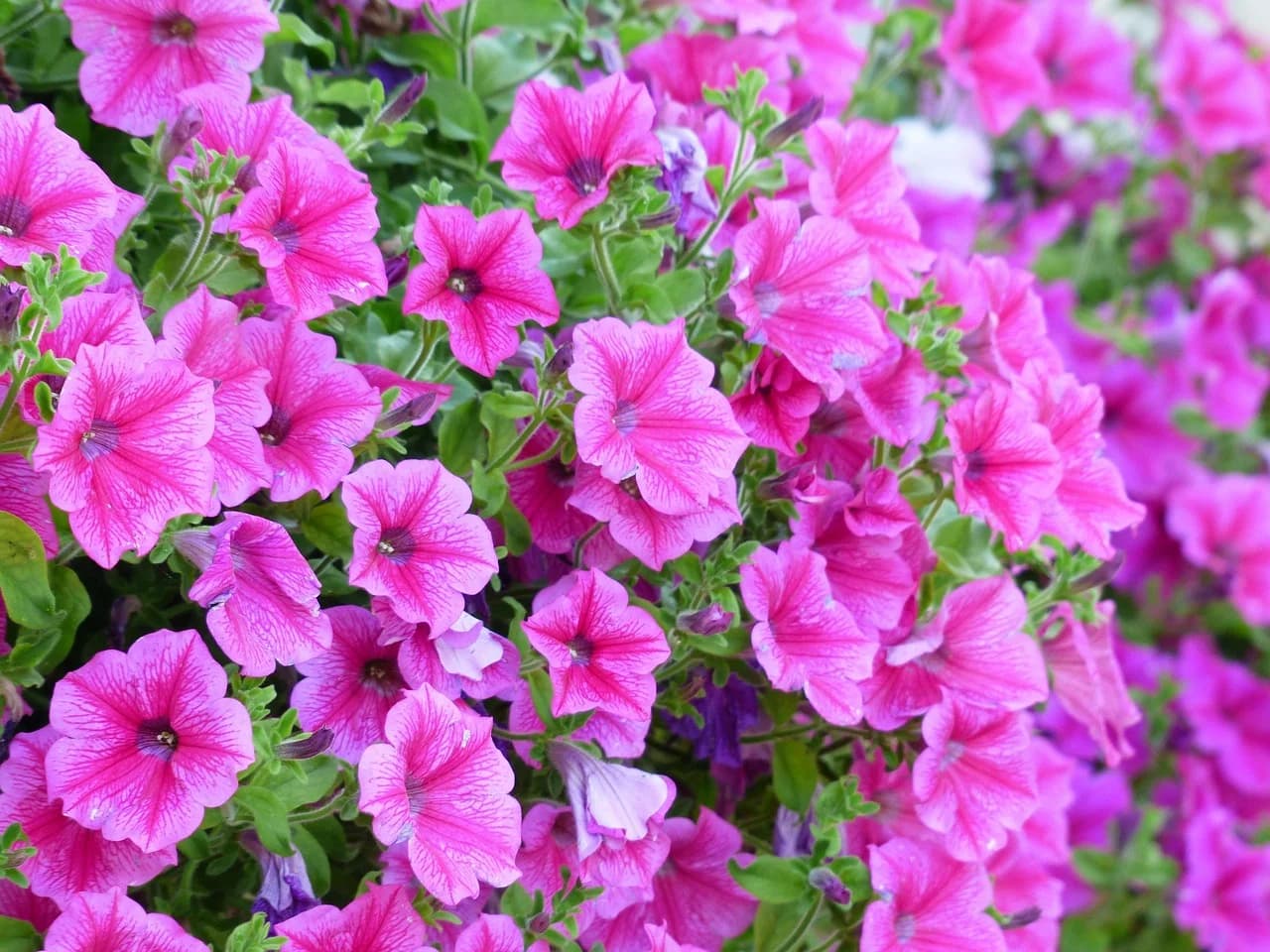
Petunia
Petunia × atkinsiana
Long-flowering favorites for beds, pots and hanging baskets. Sow the dust-fine seed on the surface indoors about 10 weeks early, then plant out in full sun after frost.
Quick facts
- Germination time
- 7–10 days
- Germination temperature
- Not yet verified
- Sowing depth
- On the surface
- Spacing between plants
- Not yet verified
- Days to maturity
- Not yet verified
- Sun
- Full sun
Non-toxic to cats and dogs
By SeedBattle EditorsUpdated
Spotted a mistake or missing detail? Improve this page
01 · Overview
About petunia
Petunias are among the most popular flowering annuals: they flower for a long time, are easy to grow and come in many forms and colors. Garden petunia is actually a tender perennial in the nightshade family, hardy only in USDA zones 10 and 11, so most gardeners grow it as an annual. The flowers can be large or small, ruffled, fringed or double, many are sweetly scented, and they bloom from spring until frost.
Types. Grandifloras have the largest flowers but are easily damaged in hot, humid summers. Multifloras are tough and very free-flowering, millifloras have tiny flowers in huge numbers, and spreading or trailing types stay low but can spread 3 to 4 feet (0.9–1.2 m). Most petunias grow 6 to 18 inches (15–46 cm) tall.
Growing details
- Start indoors
- Not yet verified
- Sow outdoors
- Not yet verified
- Water
- Not yet verified
- Containers
- Yes
- Height
- 15–46 cm6–18 in
- Spread
- Not yet verified
- Frost tolerance
- Tender (no frost)
- Soil pH
- pH 6.0–7.0
- Life cycle
- Annual
02 · How to grow
How to grow petunia from seed
Start seeds indoors in late winter. Sow seeds indoors about 10 weeks before you plan to plant them outside; gardening experts suggest 8 to 10 weeks.
Sow on the surface and don’t cover. Petunia seed is very fine and needs light to germinate. Scatter it on the surface of a moist seed-starting mix, press it in gently with a pencil or a small block of wood, and don’t bury or cover it. Pelleted seed, which is coated to make it bigger, is easier to handle.
Keep it warm, bright and moist. Cover the container with clear plastic wrap or a dome and put it somewhere warm, 75–80 °F (24–27 °C), in bright light but out of direct sun. Seedlings should appear in 7 to 10 days.
Grow seedlings cool. Once they’re up, remove the cover and grow them under lights or in a sunny window at 60–65 °F (16–18 °C). Move them into cell packs or small pots when they have three true leaves.
Plant out after frost. Harden the plants off, then plant them outside once the danger of frost has passed. Pinch off the top inch (2.5 cm) of each plant at planting to make it branch, and for good ground cover space plants 12 to 18 inches (30–46 cm) apart.
Sun and soil. Plant petunias in full sun; in shade they get spindly and flower poorly. They grow in most soils but do best in light, well-drained soil of medium fertility with a pH of 6.0 to 7.0. Shelter from drying winds helps.
Pots and baskets. Petunias are great in containers and hanging baskets. Millifloras are excellent in containers and baskets, and spreading types suit window boxes and hanging baskets.
03 · Care
Caring for petunia
Watering. Once established, petunias need at least 1 to 2 inches (2.5–5 cm) of water every 7 to 10 days. Water deeply rather than little and often, because frequent light watering encourages shallow roots. Keep water off the leaves and flowers to help prevent disease.
Feeding. Feed monthly with a balanced fertilizer to support their fast growth and heavy flowering.
Deadheading and cutting back. Large-flowered and double petunias need deadheading, but many small-flowered varieties are self-cleaning. If plants become leggy or stop flowering, cut the shoots back by about half, then feed and water well to push out new growth and flowers.
Self-seeding. Petunias often reseed themselves, but the seedlings won’t look like the parent plants.
Overwintering. You can keep a favorite plant indoors over winter in a bright spot away from heated air.
At a glance
How petunia compares with other flowers
Worked out from the growing facts of the 79 seeds in Flowers on SeedBattle.
- Petunia
- Each of the other flowers
- Their average
- Germination timeSprouts sooner than average
7–10 days
Average for flowers: 12 days, from 42 other seeds
- Sowing depthShallower than average
On the surface
Average for flowers: 4 mm⅛ in, from 25 other seeds
- HeightShorter than average
15–46 cm6–18 in
Average for flowers: 71 cm2½ ft, from 68 other seeds
04 · Problems
Common petunia problems
Petunias have few serious pest or disease problems. The main pests are aphids, flea beetles, slugs and snails, and the main diseases are root rot, gray mold and tobacco mosaic virus. Petal blight can be a problem in rainy, very humid weather, and gardening experts also mentions fungal foot rot.
Grandiflora types often struggle in hot, humid summers, when their large, heavy flowers are easily damaged and can rot. Multifloras resist petal blight.
05 · Safety
Petunia safety
Pet poison experts list petunias as non-toxic to dogs, cats and horses, and gardening experts also tags garden petunia as non-toxic for cats and dogs.
Petunia questions
Do petunia seeds need light to germinate?
Yes. Sow them on the surface of the mix and press them in gently, but don’t bury or cover them.
How long do petunia seeds take to germinate?
About 7 to 10 days in a warm spot, 75–80 °F (24–27 °C), with bright light.
When should I start petunia seeds indoors?
About 10 weeks before you plan to plant them outside. Plant them out once the danger of frost has passed.
Can I grow petunias in hanging baskets?
Yes. Spreading types work well in hanging baskets and window boxes, and millifloras are excellent in containers and baskets.
Why are my petunias leggy?
Too little sun is one cause: petunias get spindly in shade. To fix leggy plants, cut the shoots back by about half, then feed and water well to encourage new growth.
Quick answers
More petunia questions
Short answers taken from the growing facts on this page.
How deep should I sow petunia seeds?
Sow them on the surface.
How tall does petunia grow?
Petunia grows 15–46 cm6–18 in tall.
Can I grow petunia in a pot?
Yes, petunia grows in containers.
Can petunia survive frost?
No. Petunia is tender, so it can't take frost.
Is petunia an annual or a perennial?
Petunia is an annual.
What soil pH does petunia need?
Aim for soil at pH 6.0–7.0.
Side by side
Compare petunia with…
Two seeds, every growing fact lined up, so you can pick the one that suits your space.
Flowers
More seeds like petunia
Other seeds in the Flowers category.
Find your next seed to grow
Browse all 223 seeds by sun, difficulty or pot size, or line petunia up against another seed.
