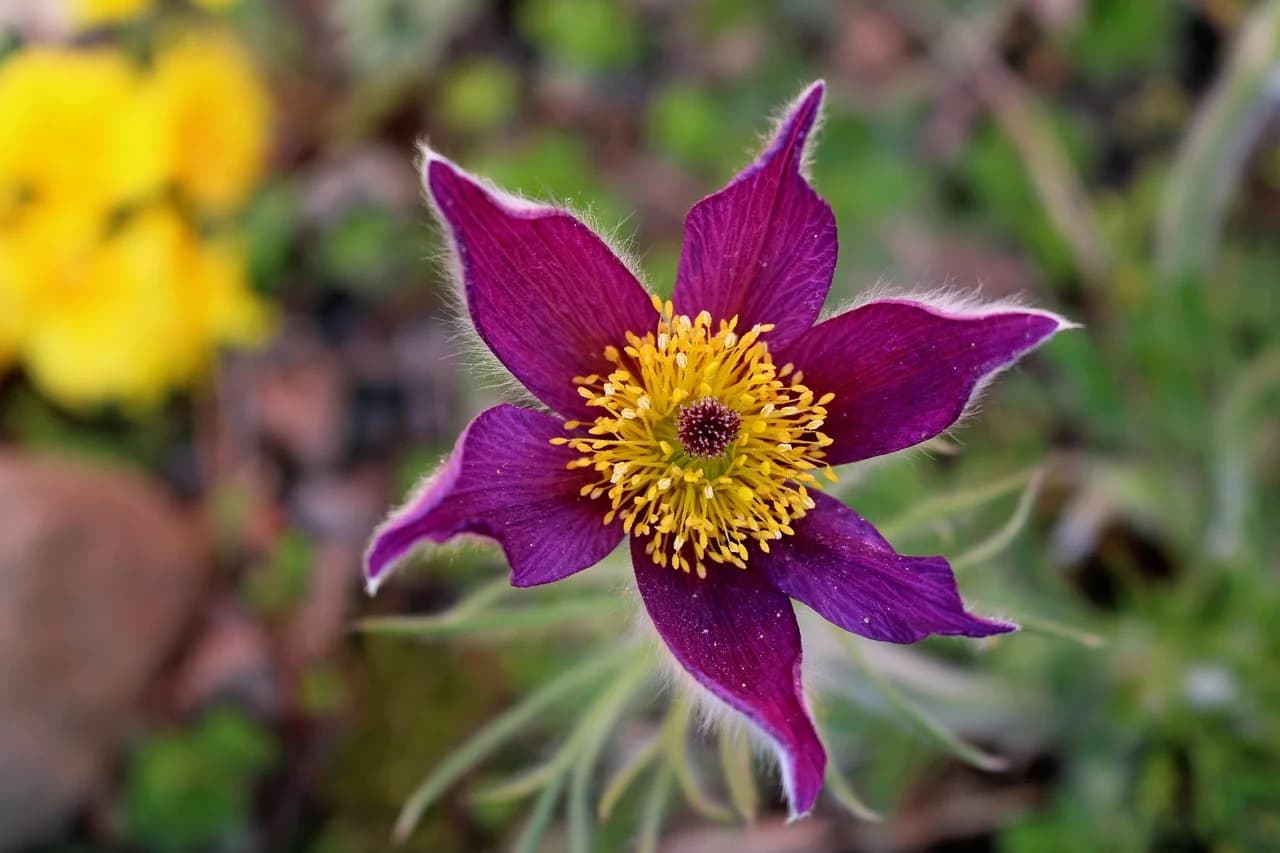
Pasque Flower
Pulsatilla vulgaris
Also called pulsatilla
Pasque flower is a European perennial with bell-shaped purple spring flowers and silky seedheads. All parts are toxic if eaten, and the sap can blister skin.
Quick facts
- Germination time
- Not yet verified
- Germination temperature
- Not yet verified
- Sowing depth
- Not yet verified
- Spacing between plants
- Not yet verified
- Days to maturity
- Not yet verified
- Sun
- Full sun, partial shade
Toxic to people Read the safety notes
Safety for cats and dogs: not yet verified.
By SeedBattle EditorsUpdated
Spotted a mistake or missing detail? Improve this page
01 · Overview
About pasque flower
About the plant. Pasque flower (Pulsatilla vulgaris) is a perennial herb from Europe and southwestern Asia. It is one of the first perennials to bloom in spring, with bell-shaped purple flowers followed by silky, plume-like seedheads. It is also known as meadow anemone, wind flower, and Easter flower, and it was once classified as Anemone pulsatilla.
The plant grows from a thick rootstock and has finely divided leaves covered in soft, silvery hairs. It stays attractive through the summer, although the leaves may die back in late summer. Its flowers are described as violet-purple and silky on the undersides.
Growing details
- Start indoors
- Not yet verified
- Sow outdoors
- Not yet verified
- Water
- Not yet verified
- Containers
- Yes
- Height
- 25–30 cm10–12 in
- Spread
- 10–50 cm4–20 in
- Frost tolerance
- Not yet verified
- Soil pH
- Not yet verified
- Life cycle
- Perennial
- Hardiness zones
- USDA zones 4–8
02 · How to grow
How to grow pasque flower from seed
Sowing. Sow the seed when it is ripe, either directly in the garden or in small containers that you later transplant while the plants are still small. Plants may also self-seed.
Site. Choose a spot in full sun in well-drained soil. Partial shade is also listed as a light level the plant grows in.
Propagation. Besides seed, pasque flower can be grown from root cuttings or division, and one mature plant can be divided into 4 to 6 new plants.
03 · Care
Caring for pasque flower
Watering. Once established, the plant is quite drought tolerant. Plants need steady moisture in hot summer weather.
Feeding. Avoid heavy fertilizing.
Moving plants. Pasque flower does not handle root disturbance well, but it can be transplanted. Cut back all open flowers and large buds before moving, and the plant should regrow and rebloom in about 4 weeks. Plants are best left undisturbed once established.
At a glance
How pasque flower compares with other flowers
Worked out from the growing facts of the 79 seeds in Flowers on SeedBattle.
- Pasque Flower
- Each of the other flowers
- Their average
- HeightShorter than average
25–30 cm10–12 in
Average for flowers: 71 cm2½ ft, from 68 other seeds
04 · Problems
Common pasque flower problems
Pests and disease. No serious insect or disease problems are listed for this plant.
Deer. Deer like this plant, so it may need protection in some areas.
Skin contact. Fresh sap can cause inflammation and blistering on the skin.
05 · Safety
Pasque Flower safety
Toxicity to people. All parts of this plant are toxic and may cause severe pain and digestive upset if eaten. Keep children and anyone else from eating any part of the plant.
Skin. The sap can cause skin inflammation and blistering.
Pasque Flower questions
When should I plant pasque flower seeds?
Sow the seed when it is ripe, either directly in the garden or in small containers for later transplanting.
Can I grow pasque flower in a pot?
Yes. Seed can be sown in small containers and transplanted while the plants are still small.
Is pasque flower toxic?
Yes. All parts are toxic if eaten, and the sap can cause skin inflammation and blistering.
How tall does pasque flower grow?
The leaves form a mound about 10 to 12 inches (25 to 30 cm) tall, and the flowers are borne on stems 5 to 8 inches tall.
Does pasque flower need full sun?
It is grown in full sun, and partial shade is also listed as a suitable light level.
Quick answers
More pasque flower questions
Short answers taken from the growing facts on this page.
Is pasque flower an annual or a perennial?
Pasque flower is a perennial.
Which USDA zones can pasque flower grow in?
Pasque flower is hardy in USDA zones 4–8.
Side by side
Compare pasque flower with…
Two seeds, every growing fact lined up, so you can pick the one that suits your space.
Flowers
More seeds like pasque flower
Other seeds in the Flowers category.
Find your next seed to grow
Browse all 223 seeds by sun, difficulty or pot size, or line pasque flower up against another seed.
